What does eorl mean?
An eorl was a man of noble rank in Anglo-Saxon England — a warrior-aristocrat who commanded personal retinues, held land, and owed service to his king. The word belongs to the earliest stratum of English society, where it stood near the top of a hierarchy whose lower rung was the churl, the ordinary freeman. Over time, as Norman influence reshaped England after 1066, 'eorl' gave way to its later form 'earl', which survives today as a hereditary title of the British peerage. Modern readers therefore meet 'eorl' mainly in translations of Old English poetry such as Beowulf, in historical novels about pre-Conquest England, and in academic discussions of Anglo-Saxon social structure. Used deliberately in contemporary writing, the word lends an archaic, heroic colour, summoning a world of mead-halls, sworn loyalty between lord and thane, and sea-borne raids. It is a noun with no common derived forms in present-day English.
nounAn eorl is a man of noble rank or a warrior-chief in Anglo-Saxon England; the term is the Old English predecessor of the modern word 'earl' and survives chiefly in historical, literary, or scholarly contexts.
- A man of high rank or noble birth in Anglo-Saxon England, especially one of military standing
- More broadly (in literary use), any warrior-chief or leader of men
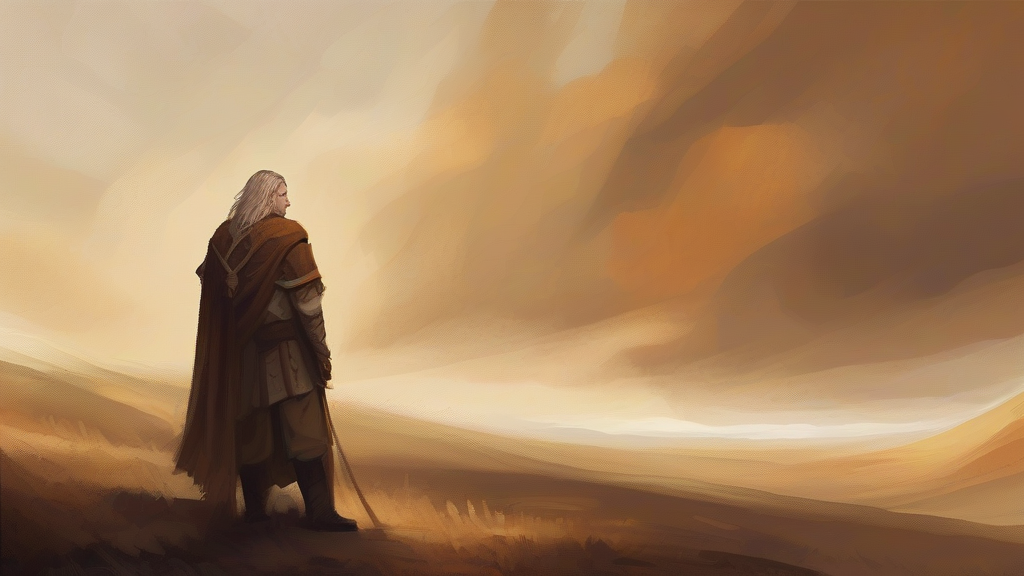
"The young eorl rode at the head of his retainers, his banner unfurled against the grey Saxon sky."
"In Beowulf's world, a loyal eorl was expected to stand beside his lord even unto death."
"The chronicler recorded how the eorls gathered their fyrd to meet the Danish raiders."
The plural simply adds -s; it appears mainly in historical and scholarly writing about Anglo-Saxon society.
"The eorls of Mercia swore their oaths together at the royal assembly."
Before England had earls, it had eorls — and the word that once meant a sword-swinging nobleman eventually softened into the title on today's House of Lords roll call.
Reviewed by Deb Chak, Editor. AI-assisted content curated by RJS Tech Solutions LLP.
Etymology of eorl
'Eorl' comes from Old English eorl, meaning 'nobleman, warrior, chief'. It is cognate with Old Norse jarl, the title borne by the great chieftains of Scandinavia, and the two words derive from a common Germanic root. The word passed into Middle English and developed into the modern 'earl', which became fixed as a title of nobility after the Norman Conquest. The original sense of a high-ranking warrior survives only in historical and literary usage.
How eorl is actually used
'Eorl' is archaic: modern readers encounter it almost exclusively in translations of Old English poetry, historical fiction set in Anglo-Saxon England, and scholarly writing. In everyday English, 'earl' has entirely replaced it. When used deliberately in modern prose, it carries an evocative, deliberately antique flavour.
Easily confused with eorl
'Earl' is the living modern English title of nobility ranking below a marquess, while 'eorl' is the obsolete Old English form of the same word, used only in historical or literary discussion of the Anglo-Saxon period.
A 'churl' was a freeman of the lowest rank in Anglo-Saxon society — the social opposite of an 'eorl', though the two words are sometimes confused because both describe Anglo-Saxon social stations.