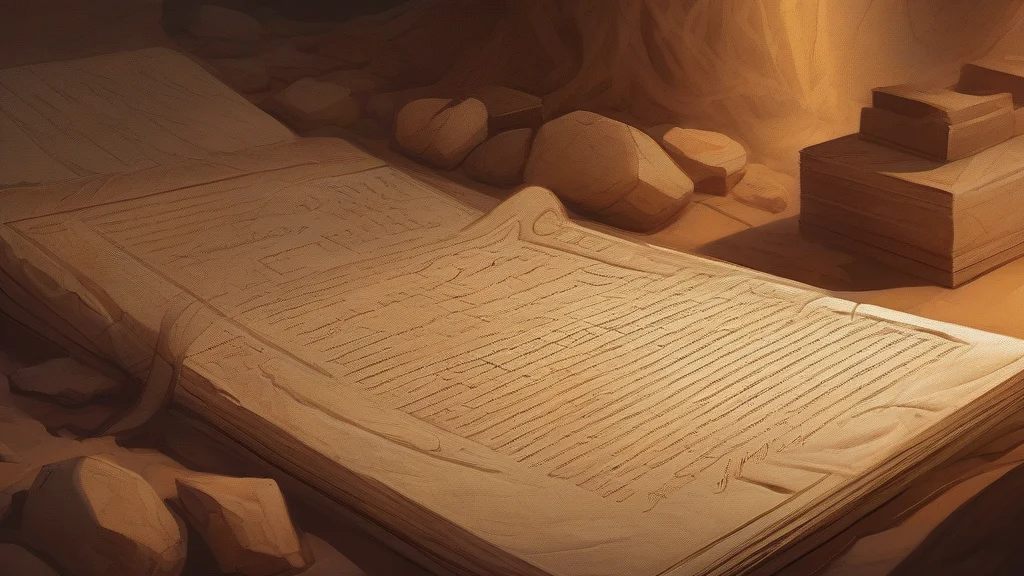
What does epigraphy mean?
Epigraphy is the scholarly study of inscriptions — texts that have been deliberately incised or engraved onto durable surfaces such as stone, metal, pottery, or wood. As a discipline, it sits at the crossroads of history, archaeology, and linguistics: inscriptions record laws, decrees, dedications, epitaphs, and everyday messages, often providing evidence that survives nowhere else. Scholars known as epigraphists examine letterforms, language, and physical context to date artifacts, identify their authors, and reconstruct ancient societies. The word is formal and academic in register, appearing mainly in classical studies, where Greek and Latin epigraphy are especially well-developed subfields. Beyond its technical sense, epigraphy can also refer collectively to the inscriptions themselves. Related terms include epigraph, meaning an individual inscription or a quotation at the head of a literary work. For anyone interested in how the ancient world speaks directly to us, epigraphy names the craft of listening.
nounThe study or interpretation of inscriptions, especially ancient ones engraved on stone, metal, or other durable materials. It also refers to inscriptions collectively.
- The scientific study and interpretation of inscriptions, particularly those of antiquity engraved on durable materials such as stone or metal.
- Inscriptions in general, considered as a body of material (a less common collective sense).
"Her expertise in Greek epigraphy allowed her to date the marble fragment to the fifth century BCE."
"The museum's new curator specializes in the epigraphy of the ancient Near East."
"Advances in digital imaging have transformed modern epigraphy, revealing letters worn away by centuries of weathering."
Rarely used in the plural; when it occurs, it typically refers to distinct bodies or traditions of inscription, such as the epigraphies of different cultures.
"Comparative work across the epigraphies of Mesopotamia and Anatolia remains in its infancy."
Every carved Roman tombstone and Greek decree is a primary source — and epigraphy is the detective work that reads them.
Reviewed by Deb Chak, Editor. AI-assisted content curated by RJS Tech Solutions LLP.
Etymology of epigraphy
Epigraphy derives from the Greek 'epigraphē', meaning 'an inscription', formed from 'epi-' ('upon' or 'on') and 'graphein' ('to write'). The term entered English in the nineteenth century as the systematic study of ancient inscriptions became a recognized scholarly discipline. It shares its root with words such as epigram, epigraph, graphic, and calligraphy, all ultimately traceable to the Greek verb for writing.
Related word forms
How epigraphy is actually used
A formal, academic term used chiefly in archaeology, classics, and history. The practitioner is called an epigraphist, and the adjective is epigraphic (or epigraphical).
Easily confused with epigraphy
An epigram is a brief, witty saying or poem, whereas epigraphy is the scholarly study of inscriptions.
An epigraph is a quotation placed at the start of a book or an individual inscription; epigraphy is the academic discipline that studies such inscriptions.