What does episcia mean?
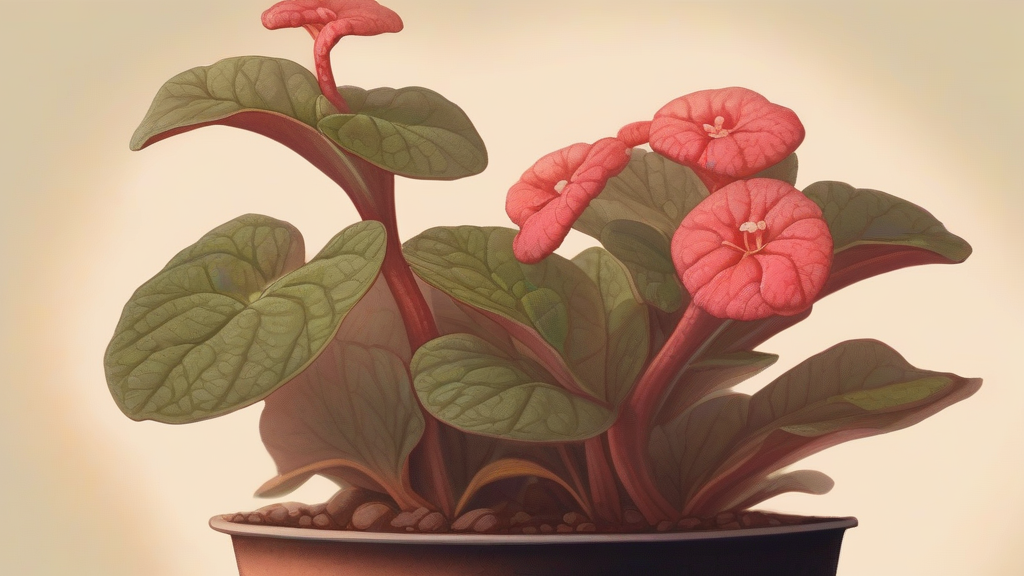
An episcia is any member of a small genus of trailing perennial herbs native to tropical Central and South America, classified within the gesneriad family alongside African violets and gloxinias. Prized chiefly for its decorative foliage — which ranges from deep green to bronze and silver-patterned forms — the episcia also produces small, tubular flowers in shades of orange, red, or yellow, earning it the popular name "flame violet." Like strawberries, episcias spread by sending out stolons, or runners, that root where they touch soil, making them easy to propagate and well suited to hanging baskets where their stems can cascade freely. They require warmth, humidity, and filtered light, which has kept them largely a specialty of dedicated indoor gardeners and plant collectors rather than casual growers.
nounA plant of a genus (Episcia) of tropical American perennial herbs in the African violet family (Gesneriaceae), grown as houseplants for their colorful, often textured leaves and small tubular flowers.
- Any plant of the genus Episcia, tropical American gesneriads cultivated as ornamental houseplants.
"The trailing episcias spilled over the edge of the hanging basket, their bronzed leaves catching the morning light."
"She propagated her episcia easily from the runners it sent out along the potting bench."
"Among collectors, Episcia cupreata is prized for its coppery foliage more than its modest orange blooms."
Standard English plural, used both for multiple plants and loosely for members of the genus.
"Her collection of episcias filled every bright windowsill in the greenhouse."
The episcia is nicknamed the "flame violet" — a fiery cousin of the African violet that spreads by runners like a strawberry.
Reviewed by Deb Chak, Editor. AI-assisted content curated by RJS Tech Solutions LLP.
Etymology of episcia
The genus name Episcia was coined in the nineteenth century from Greek elements: the prefix epi-, meaning "upon," combined with skia, meaning "shade," an allusion to the plant's habit of growing in shaded tropical habitats. The same Greek root skia survives in English technical terms such as "skiagram," an X-ray image. The word entered English through botanical Latin as part of the scientific naming of New World flora.
How episcia is actually used
A botanical term used mainly in gardening and horticultural contexts; among houseplant growers the plural "episcias" is common, while botanists may italicize the genus name when referring to the taxon itself.
Easily confused with episcia
"Episcopal" relates to bishops or church governance, while "episcia" is a trailing tropical houseplant; the two share only a similar spelling.