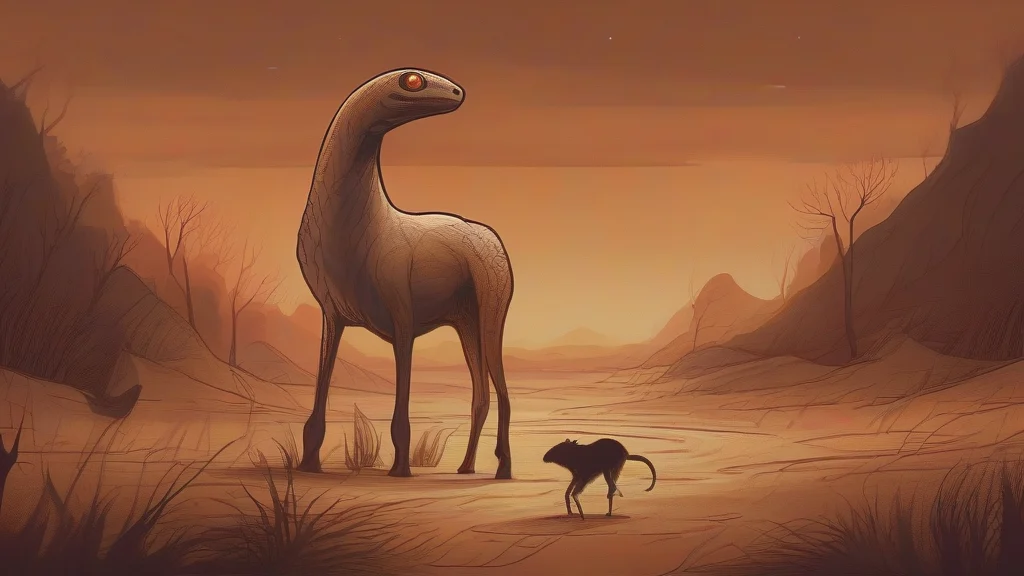
What does epizoon mean?
An epizoon (plural: epizoa) is an animal that lives on the outside surface of another animal, usually as a parasite — drawing nourishment from, or otherwise exploiting, its host without immediately killing it. The term derives from Greek roots meaning literally "upon an animal," and it belongs to the vocabulary of zoology, veterinary medicine, and parasitology rather than to everyday conversation. Familiar creatures that qualify include ticks, fleas, lice, and mites, all of which cling to the skin, fur, or feathers of their hosts. Its counterpart is the endoparasite, which dwells inside the body, such as intestinal worms. The adjective form is "epizoic." While precise and useful in scientific writing, the word is uncommon in general usage; speakers more often reach for "ectoparasite" or simply name the organism in question. Knowing it, however, offers a tidy, etymologically transparent label for one of nature's most persistent arrangements.
nounAn animal that lives on the exterior of the body of another animal, typically as a parasite; an ectoparasite.
- An animal living parasitically on the outer surface of another animal's body (plural: epizoa).
"The lice infesting the badger's coat were classic examples of an epizoon thriving at its host's expense."
"Ticks and lice are familiar epizoa, feeding on the blood or skin of their hosts from the outside."
"The veterinarian examined the dog's ears for any sign of an epizoon such as a mite."
Follows the Greek second-declension neuter pattern (-on → -a), common in scientific Latin borrowings.
"Heavy rains can increase the population of epizoa on livestock pastures."
From Greek roots meaning 'on top of an animal,' epizoon is the scientific name for every freeloading creature that sets up housekeeping on another's skin or fur.
Reviewed by Deb Chak, Editor. AI-assisted content curated by RJS Tech Solutions LLP.
Etymology of epizoon
Epizoon comes from ancient Greek, combining the preposition "epi" (upon, on) with "zōion" (animal), so the word literally means "[something] upon an animal." It was formed in modern scientific Latin on this Greek model and entered English in the nineteenth century alongside other zoological terms built on the same root. That root also underlies words such as zoo, zoology, and protozoan, making epizoon part of a large family of animal-related vocabulary.
Related word forms
How epizoon is actually used
A technical term used chiefly in zoology, veterinary medicine, and parasitology; rare in everyday speech. The plural is 'epizoa' (following Greek-style declension), and the related adjective is 'epizoic.'
Easily confused with epizoon
An endoparasite lives inside the host's body (e.g., tapeworms), whereas an epizoon lives on the outside surface.