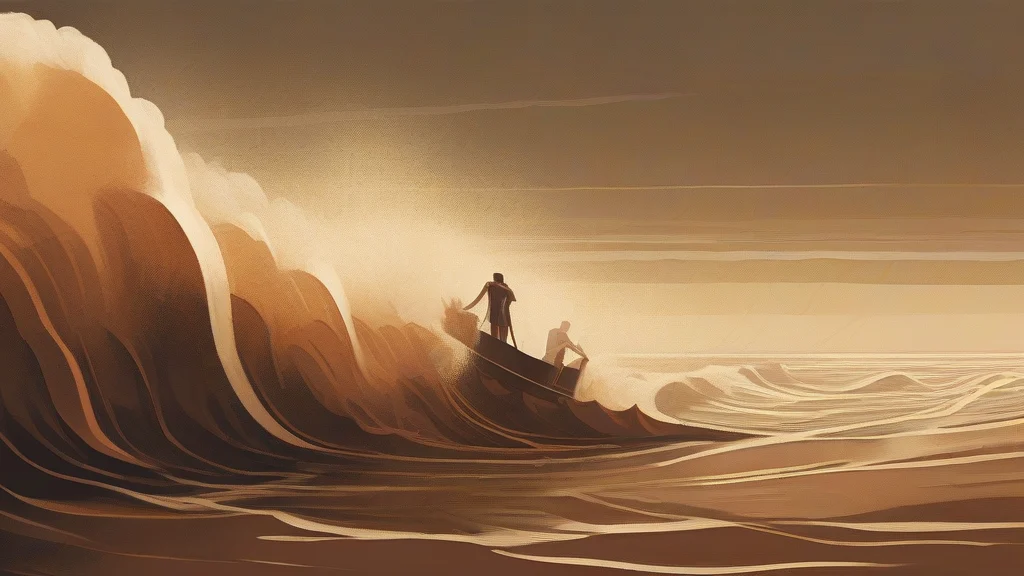
What does eroding mean?
Eroding is the present participle of the verb 'erode,' which describes the process of being gradually worn away or destroyed. In its literal sense, it refers to the action of wind, water, ice, or other natural forces wearing down rock, soil, and coastlines over time. Figuratively — and perhaps more frequently in everyday usage — it describes the steady weakening of intangible things: eroding trust between allies, eroding profits, eroding civil liberties, or eroding standards. The word carries a distinctly negative connotation of slow, incremental loss that may go unnoticed until significant damage has been done. It derives from the Latin 'rodere,' meaning 'to gnaw,' the same root that produced 'rodent' and 'corrode.' This shared origin captures the word's essence perfectly: erosion works like a patient animal gnawing away bit by bit. Whether describing geological change over centuries or the quiet decline of an institution's credibility, 'eroding' conveys gradual, persistent destruction rather than sudden collapse.
verbPresent participle of 'erode': to gradually wear away, diminish, or destroy something through the action of wind, water, or other forces — literally of physical material, or figuratively of abstract things like trust, rights, or profits.
- To wear away physical material such as rock or soil by the gradual action of wind, water, or other natural forces
- To gradually weaken or destroy something abstract, such as confidence, support, values, or purchasing power
"Years of flooding have been steadily eroding the cliffs along the coast."
"Wind and rain are slowly eroding the sandstone cliffs."
"Inflation has been steadily eroding workers' purchasing power."
The same Latin verb that gave us 'rodent' — an animal that gnaws — gives us 'eroding': nature itself, slowly gnawing away at rock, soil, and even public trust.
Reviewed by Deb Chak, Editor. AI-assisted content curated by RJS Tech Solutions LLP.
Etymology of eroding
Eroding comes from the Latin verb 'rodere,' meaning 'to gnaw,' combined with the prefix 'e-' meaning 'out of.' The same root gave English 'rodent' (a gnawing animal) and 'corrode' (to gnaw away chemically). The English verb 'erode' entered the language around the early 17th century, borrowed via French or directly from Latin forms, with the geological sense becoming especially prominent during the 19th century as earth sciences developed.
Related word forms
How eroding is actually used
Used both in its literal geological sense and very commonly in figurative contexts involving politics, economics, and social institutions; the figurative use typically carries a negative connotation of slow, often unnoticed loss.
Easily confused with eroding
'Irradiating' means exposing something to radiation, whereas 'eroding' means gradually wearing something away; the two share a similar sound but nothing else.