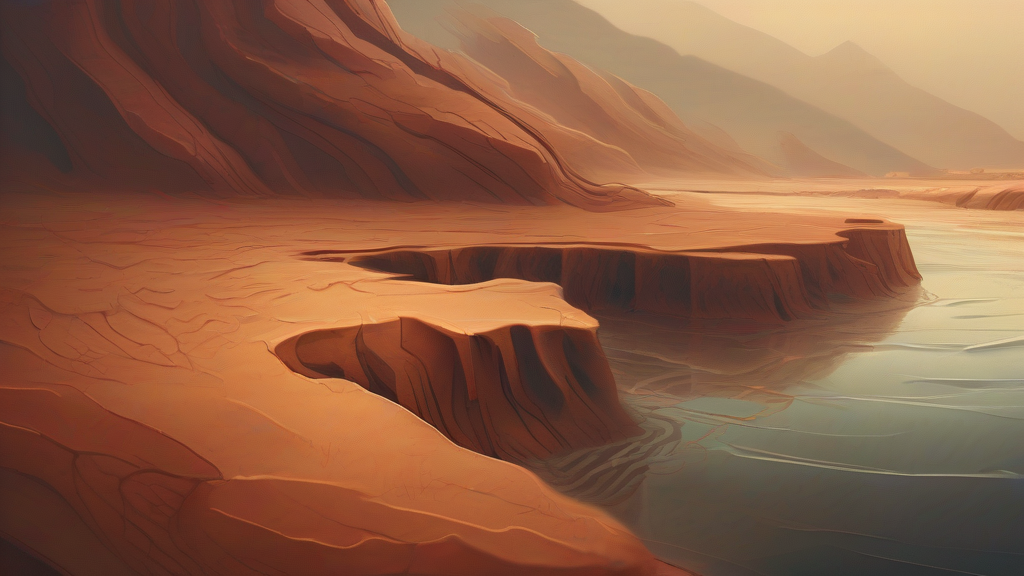
What does erosion mean?
Erosion is the process of gradual wearing away. In its original scientific sense, it describes the removal and transport of soil and rock by natural agents — flowing water, wind, glaciers, and waves — as seen in river valleys, eroding coastlines, and shifting deserts. The word also extends to abstract domains: economists speak of the erosion of purchasing power through inflation, while commentators describe the erosion of trust, privacy, or civil liberties when these are slowly undermined over time. Because erosion implies steady, incremental loss rather than sudden collapse, it carries a distinctly negative connotation in figurative use, suggesting something valuable slipping away bit by bit. It functions only as a noun, with related forms including the verb erode and the adjective erosive. Whether applied to landscapes or institutions, erosion remains one of English's most versatile terms for describing slow but relentless deterioration.
nounThe gradual wearing away or removal of rock, soil, or other material by natural forces such as water, wind, or ice. More broadly, the slow destruction, diminishment, or weakening of something abstract such as rights, trust, or value.
- The physical process by which soil, rock, or land is gradually worn away by wind, water, ice, or other natural agents.
- The gradual reduction or destruction of something intangible, such as confidence, rights, standards, or purchasing power.
"Coastal erosion has steadily eaten away the cliffs, forcing the lighthouse to be moved inland."
"Deforestation accelerated soil erosion across the hillside, muddying the river below."
"Critics warned that the new legislation represented an erosion of civil liberties."
Rarely used in the plural; erosion is typically uncountable when referring to the general process. A plural form appears occasionally in technical contexts referring to multiple localized instances of wearing away, particularly in medical descriptions of tissue erosions.
"Endoscopy revealed several small erosions along the lining of the stomach."
Erosion has carved the Grand Canyon over millions of years — yet the same word now describes how quickly a single scandal can wear away public trust.
Reviewed by Deb Chak, Editor. AI-assisted content curated by RJS Tech Solutions LLP.
Etymology of erosion
Erosion derives from the Latin verb 'erodere', meaning 'to gnaw away' or 'eat out', formed from 'e-' (out) and 'rodere' (to gnaw) — the same root that gives English 'rodent'. The word entered English in the mid-16th century, initially carrying both literal and figurative senses of gradual consumption. It shares its Latin root with corrosion (from 'com-' + 'rodere'), which developed along a parallel path to describe chemical rather than mechanical wearing away.
Related word forms
How erosion is actually used
Erosion is primarily a formal or technical term, common in geography, environmental science, economics, and political commentary. In its figurative sense it almost always carries a negative connotation, implying a loss that happens gradually and often imperceptibly rather than suddenly.
Easily confused with erosion
Corrosion refers specifically to the chemical eating away of materials, especially metals, while erosion is the physical wearing away of surfaces by wind, water, ice, or other abrasive forces.