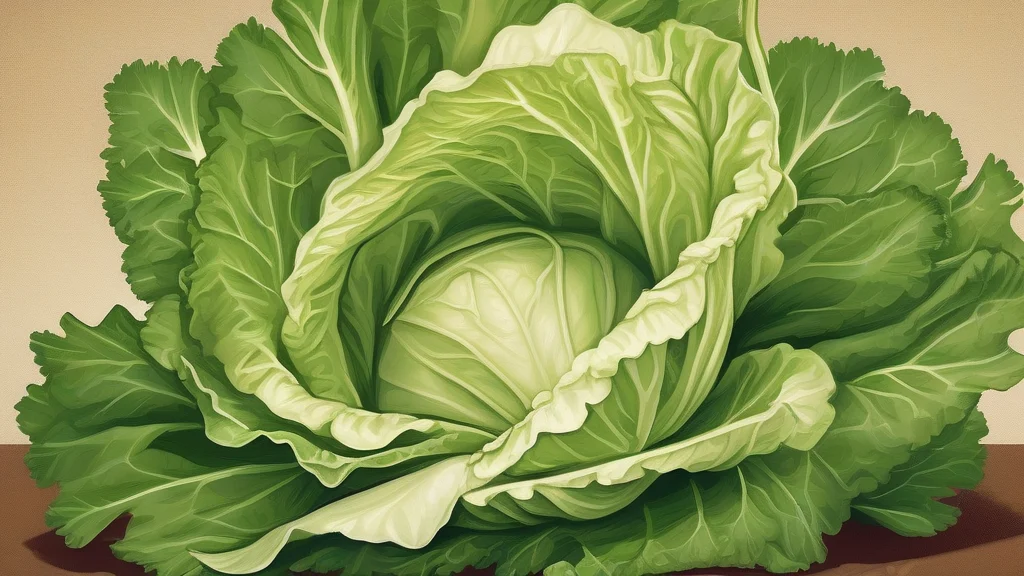
What does escarole mean?
Escarole is a leafy green vegetable belonging to the endive family, distinguished by its broad, somewhat crinkled leaves and a pleasantly mild bitterness that sets it apart from its sharper relative, curly endive. The outer leaves are darker and more assertive in flavor, while the pale inner heart is tender enough for delicate salads, making the whole head versatile in the kitchen. Escarole appears frequently in Mediterranean and Italian-American cooking: it stars in raw salads dressed simply with oil and acid, wilts beautifully into soups such as the classic Italian wedding soup, and stands up well to braising with garlic. The word entered English in the late nineteenth century by way of French and ultimately traces to Latin roots connected with food. For cooks and readers alike, escarole names a specific, useful green whose gentle bitterness adds depth without overwhelming a dish.
nounA variety of endive (Cichorium endivia) having broad, curly-edged green leaves with a mildly bitter flavor, eaten raw in salads or cooked.
- A broad-leaved variety of endive with slightly bitter green leaves, used in salads and cooked dishes.
"The soup called for a head of escarole wilted into the broth at the last minute."
"She tossed the torn escarole with olive oil, lemon, and shaved Parmesan for a simple winter salad."
"The Italian wedding soup is traditionally made with meatballs and chopped escarole simmered in chicken broth."
The plural is uncommon; the uncountable singular is preferred when speaking of the vegetable as an ingredient, while 'heads of escarole' handles counting.
"The market stall displayed several crisp escaroles beside the radicchio."
Despite its fancy-sounding name, escarole is just the mild-mannered cousin of bitter endive — and it's the green that gives Italian wedding soup its soul.
Reviewed by Deb Chak, Editor. AI-assisted content curated by RJS Tech Solutions LLP.
Etymology of escarole
The word escarole was borrowed into English in the nineteenth century from French escarole, which itself derives from the Neapolitan Italian scariola or scarola, a regional form of the word for endive. Its deeper origin lies in Late Latin, from a diminutive related to Latin esca, meaning 'food,' the same root that gives us English words like 'esculent.' It thus belongs to a small family of culinary terms descending from the Latin vocabulary of eating.
How escarole is actually used
A culinary term used mainly in cooking contexts; it is a mass noun when referring to the vegetable as an ingredient but takes plural or partitive forms ('heads of escarole') when counting whole plants. Common especially in Italian-American cuisine.
Easily confused with escarole
In American usage 'endive' often refers narrowly to the narrow-leaved, more bitter curly type, while escarole is the broad-leaved, milder variety of the same species.
Frisée is the finely cut, frizzy, intensely bitter curly endive, whereas escarole has broad, less bitter leaves.