
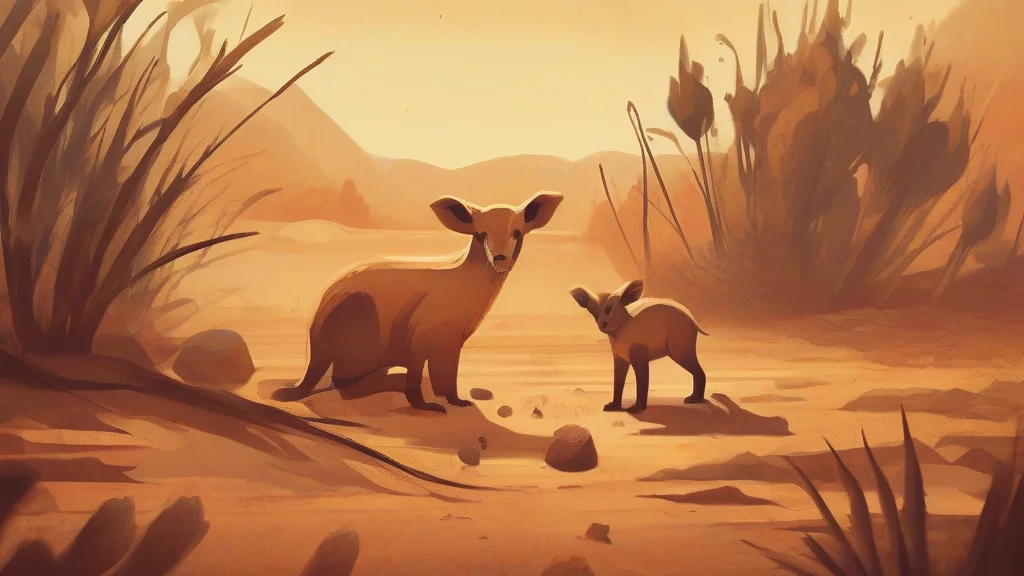
What does estivation mean?
Estivation is a state of dormancy that certain animals enter during hot, dry weather, most often in summer. Rather than enduring extreme heat or drought directly, creatures such as land snails, lungfish, desert tortoises, and various amphibians seal themselves away — in mud, soil, or a closed shell — and drastically slow their metabolism until conditions improve. The strategy conserves water and energy, allowing survival through periods that would otherwise be lethal. The word carries a formal, scientific tone and appears mainly in zoological and ecological writing, though it occasionally surfaces in nature journalism for its vivid image of sleeping through summer. It is sometimes confused with hibernation, its cold-weather counterpart: the two processes are physiologically similar but occur in opposite seasons and are triggered by different stresses. A rarer botanical sense, usually spelled 'aestivation', describes how petals and sepals are folded within a flower bud before it blooms. For readers interested in how life copes with harsh climates, estivation is a precise and memorable term.
A period of dormancy or torpor in animals during hot, dry seasons, comparable to hibernation but occurring in response to heat or drought rather than cold.
"The desert frog spends most of the year underground, surviving the dry season through estivation."
Chiefly used in zoology and ecology; formal register.
(Botany, usually spelled 'aestivation') The manner in which sepals and petals are arranged or folded within a flower bud prior to opening.
"The aestivation of the petals in this genus is described as imbricate."
Specialist botanical usage; rarely encountered outside technical literature.
Rarely pluralized; the uncountable form is standard, though plurals appear in scientific writing when referring to multiple distinct episodes or species-specific instances of dormancy.
"Field studies recorded repeated estivations across several generations of snails."
Some desert snails spend up to half their lives asleep — sealed inside their own shells to sleep through summer itself.
Reviewed by Deb Chak, Editor. AI-assisted content curated by RJS Tech Solutions LLP.
Etymology of estivation
Estivation derives from Latin 'aestivus', meaning 'of summer', itself from 'aes'/'aestas' (summer), via the verb 'aestivare', 'to spend the summer'. It entered English as a scientific borrowing, with the spelling 'aestivation' reflecting the Latin diphthong and 'estivation' being the common American simplification. The adjective 'estival', meaning relating to summer, shares the same root.
Related word forms
How estivation is actually used
Formal, scientific register, used chiefly in zoology and ecology. The botanical sense is normally written 'aestivation' in British sources and is rare in everyday use.
Easily confused with estivation
"Aestivation" is simply the British spelling of the same word, not a different meaning.
Hibernation is winter dormancy triggered by cold, whereas estivation is dormancy during hot or dry periods.