
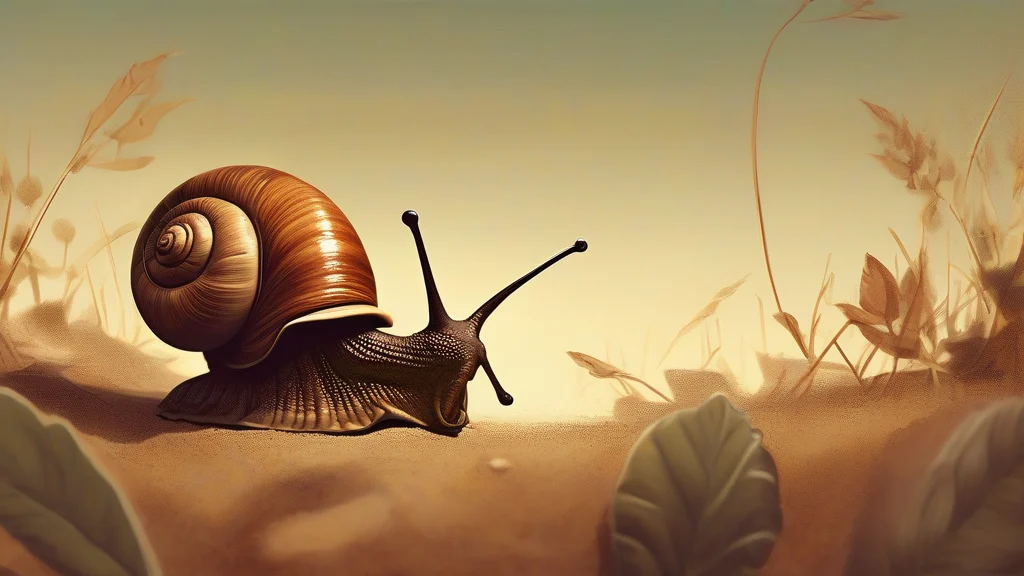
What does estivating mean?
"Estivating" is the present participle of "estivate," meaning to spend the summer in a dormant or torpid state. It describes a survival strategy employed by various animals—including certain snails, lungfish, frogs, and other creatures—in hot, arid environments. When conditions become too hot or dry, these animals seal themselves away, slow their metabolism dramatically, and wait out the season much as hibernating mammals wait out winter. The word derives from the Latin "aestivare," meaning "to spend the summer," itself rooted in "aestas," the Latin word for summer. Though primarily a scientific term found in zoology and ecology writing, it occasionally appears in more literary contexts simply to describe passing the summer. Its counterpart, "hibernation," refers to the same strategy applied to cold rather than heat. Knowing "estivating" adds precision when discussing how life endures extreme climates, and its seasonal symmetry with "hibernating" makes it easy to remember.
verbPresent participle of "estivate" (also spelled aestivate): to spend the summer in a dormant or torpid state, as certain snails, fish, and other animals do to survive heat and drought. More broadly, to pass the summer.
- To pass the summer in a state of dormancy or torpor, as an adaptation to heat or drought (used chiefly of certain animals such as snails, lungfish, and amphibians).
- (Less common, somewhat literary) To spend or pass the summer.
"Desert snails survive by estivating sealed inside their shells until the rains return."
"During the dry season, lungfish burrow into mud and remain estivating for months."
"The snails spend the hottest weeks of the year estivating beneath rocks."
Some animals sleep through summer the way bears sleep through winter — and it's called estivating.
Reviewed by Deb Chak, Editor. AI-assisted content curated by RJS Tech Solutions LLP.
Etymology of estivating
"Estivate" comes from the Latin "aestivare," meaning "to spend the summer," derived from "aestas," the Latin word for summer. It entered English in the early 17th century, initially meaning simply to pass the summer, before acquiring its specialized zoological sense of summer dormancy. A variant spelling, "aestivate," preserves the original Latin diphthong and is especially common in British English. The adjective "estival" shares the same root.
Related word forms
How estivating is actually used
"Estivate" is primarily a technical term used in zoology and ecology, though the spelling "aestivate" (with ae) is common in British usage. The word carries no strong connotation of laziness in people; applying it to humans is usually playful rather than standard.
Easily confused with estivating
Hibernating is winter dormancy to escape cold, while estivating is summer dormancy to escape heat and drought.