
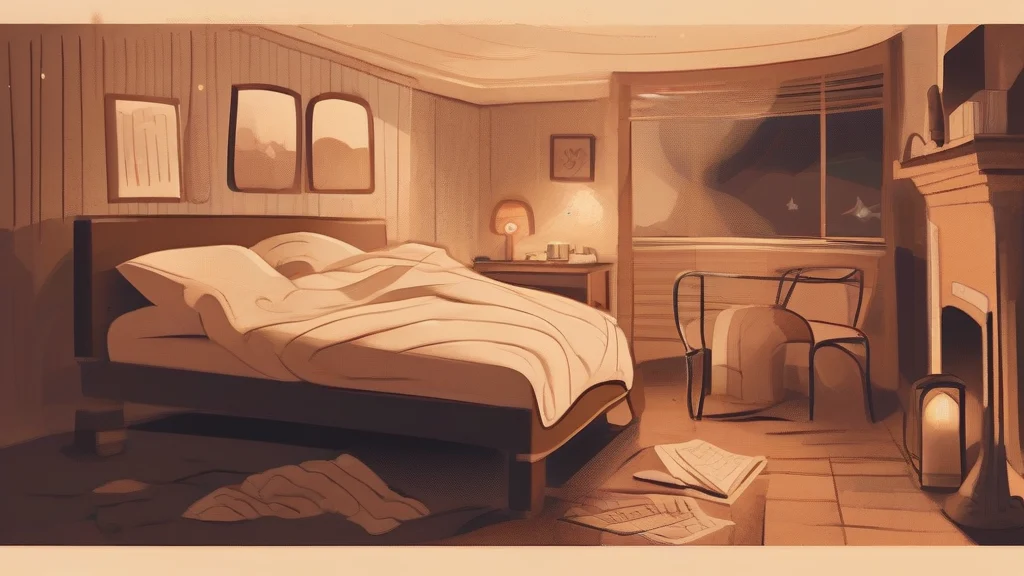
What does slumbering mean?
Slumbering means sleeping or participating in sleep, but its distinctive use is figurative: a person, place, organization, or natural feature may be described as slumbering when it is inactive, dormant, or quietly developing. The word carries a gentle, restful tone in its literal sense and often implies something powerful or consequential in its figurative use. A “slumbering giant,” for example, may be a sleeping giant, but it can also describe a person or institution whose influence has not yet been fully recognized or exerted. Slumbering is also the present participle of the verb “slumber,” allowing constructions such as “the village lay slumbering.” Although it remains understandable in everyday English, it sounds more literary and evocative than the ordinary word “sleeping,” making it especially effective in descriptions that emphasize peace, stillness, concealed activity, or impending change.
Sleeping or participating in sleep; figuratively, dormant or inactive.
"The slumbering child stirred when the door opened."
The figurative sense is often used of latent power, conflict, or activity that has not yet become apparent.
Present participle of “slumber,” meaning to sleep.
"The old house sat slumbering at the end of the lane."
Commonly literary; often implies peaceful or prolonged sleep.
A slumbering giant can describe both a peacefully sleeping giant and a force that appears inactive until it suddenly becomes powerful.
Reviewed by Deb Chak, Editor. AI-assisted content curated by RJS Tech Solutions LLP.
Where does slumbering come from?
The present participle “slumbering” was formed from “slumber” with the suffix “-ing.” The verb “slumber” developed in Middle English from the Old English “slumerian,” meaning to sleep. Its literary associations developed alongside related forms such as “slumberer” and “slumberous,” all of which retain the older word’s association with sleep.
Related word forms
How slumbering is actually used
The word is now mainly literary or poetic. As an adjective it often has a figurative sense suggesting temporary inactivity, hidden power, or a threat that has not yet materialized.