What does excavator mean?
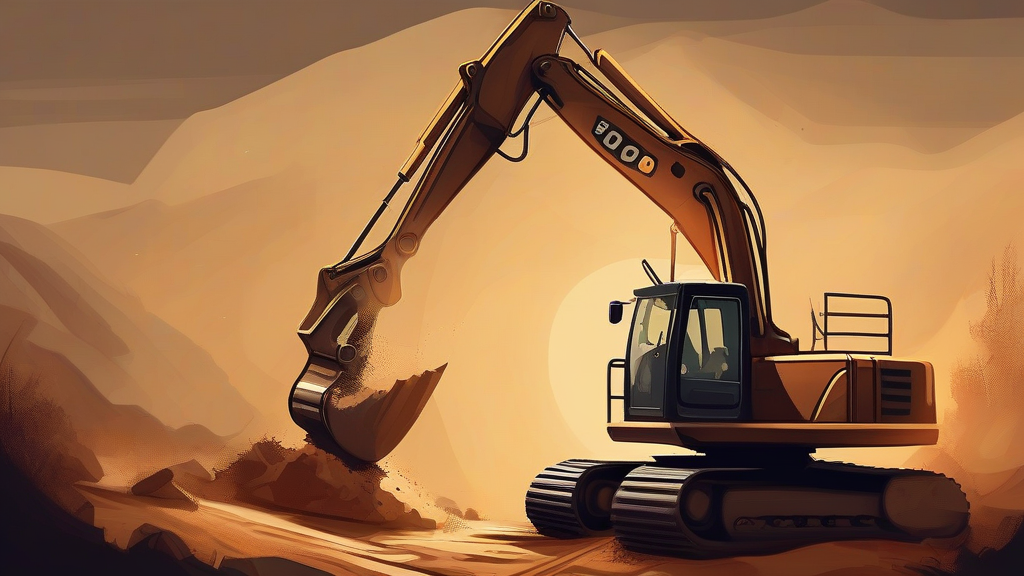
An excavator is primarily a heavy piece of construction machinery designed to dig, lift, and move earth and other materials. It typically consists of a cab mounted on a rotating platform atop tracks or wheels, with a long articulated arm ending in a bucket that can be raised, lowered, and swung with great precision. Powered by hydraulics, excavators are indispensable on construction sites, in mining operations, and during demolition and roadwork, where they perform tasks ranging from digging foundations to loading trucks. The word can also denote a person who excavates — most commonly an archaeologist methodically uncovering artifacts at a dig site. In everyday speech, however, the mechanical sense overwhelmingly dominates. Related terms include the verb 'excavate' and nouns such as 'excavation', all tracing back to the Latin 'excavare', meaning to hollow out. Whether describing a towering machine reshaping a landscape or a patient researcher brushing away centuries of sediment, 'excavator' conveys the careful, deliberate act of unearthing what lies beneath the surface.
nounA large, powerful machine equipped with a boom, dipper, bucket, and cab on a rotating platform, mounted on tracks or wheels, used for digging and moving large quantities of earth. Also, a person who excavates, especially an archaeologist who digs sites.
- A heavy construction machine with a hydraulically operated bucket used to dig and move earth.
- A person who excavates, especially in archaeology or mining.
"The excavator swung its arm across the site and lifted a full bucket of soil from the foundation trench."
"An excavator cleared the rubble within hours after the building was demolished."
"The lead excavator at the Roman villa carefully brushed soil away from the mosaic floor."
Regular plural formation; applies equally to both the machine sense and the person sense.
"Three excavators worked in tandem along the new highway route."
The word 'excavator' once referred to Victorian steam shovels — machines so iconic that one of them, a rusting giant in Alaska, is still celebrated as the last of its kind.
Reviewed by Deb Chak, Editor. AI-assisted content curated by RJS Tech Solutions LLP.
Etymology of excavator
Excavator derives from the Latin verb 'excavare', formed from 'ex-' (out) plus 'cavare' (to hollow), which itself comes from 'cavus' (hollow) — the same root that gives English words like 'cave' and 'cavity'. The term entered English in the mid-19th century as mechanized digging equipment emerged during the industrial era, though earlier uses referred to human diggers. Cognates appear across Romance languages, including French 'excavateur' and Spanish 'excavador'.
Related word forms
How excavator is actually used
In everyday and industrial contexts, 'excavator' almost always means the machine rather than a person; when referring to people, it is most often heard in archaeological or historical writing. The machine sense is neutral register and common in both British and American English.
Easily confused with excavator
To exhume is to dig out a buried body or remove something from the ground, while an excavator is the machine or person doing such digging work.