
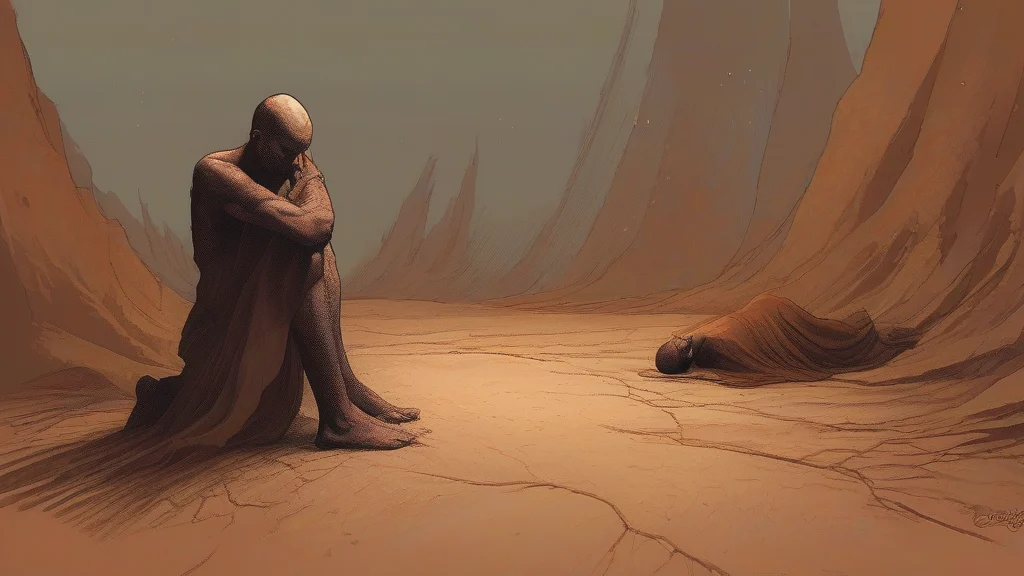
What does excoriation mean?
Excoriation denotes two related ideas: the literal scraping or wearing away of skin, leaving it raw and abraded, and the figurative act of attacking someone with severe, cutting criticism. In medical contexts, an excoriation is a surface lesion — for example, the damage caused by repeated scratching in conditions such as eczema, where 'excoriation disorder' describes compulsive skin-picking. In journalism and public discourse, the word describes denunciation so fierce that it seems to strip away a person's standing, as in 'the article was an excoriation of the administration.' Derived from the Latin verb excoriare, meaning to flay or strip off the hide, the word retains that vivid image of removal: whether of skin or of dignity. Formal in register and more common in professional than everyday writing, it rewards readers who encounter it with an unusually concrete metaphor for both injury and rebuke.
An abrasion or raw area on the skin produced by scraping or friction; the action of stripping or wearing away the skin.
"The nurse documented several excoriations along the patient's ankles."
This is the primary clinical sense.
Severe criticism or public denunciation of someone or something.
"The editorial was a merciless excoriation of the council's handling of the crisis."
Standard plural, most often used clinically to refer to multiple lesions; less commonly used for multiple acts of verbal condemnation.
"Repeated scratching produced numerous excoriations across her shoulders."
Dermatologists and drama critics use the same word — one for skin scraped raw, the other for reputations flayed in print.
Reviewed by Deb Chak, Editor. AI-assisted content curated by RJS Tech Solutions LLP.
Etymology of excoriation
Excoriation comes from the Latin verb excoriare, formed from ex- ('out of') and corium ('hide' or 'skin'), literally 'to flay' or 'to strip off the skin.' The word passed into English in the early modern period, initially carrying its literal sense of removing skin before developing the figurative sense of harsh verbal assault. It shares this Latin root with the related English verb excoriate and, more distantly, with cutaneous vocabulary such as corium and dermal terminology.
Related word forms
How excoriation is actually used
In medicine and dermatology the word carries precise clinical meaning; in general usage it is formal and often figurative, describing scathing verbal attacks. The plural 'excoriations' is standard when referring to multiple lesions.
Easily confused with excoriation
Excoriation means scraping off skin or harsh verbal attack, while excruciation refers to intense physical or mental torment.