What does exonuclease mean?
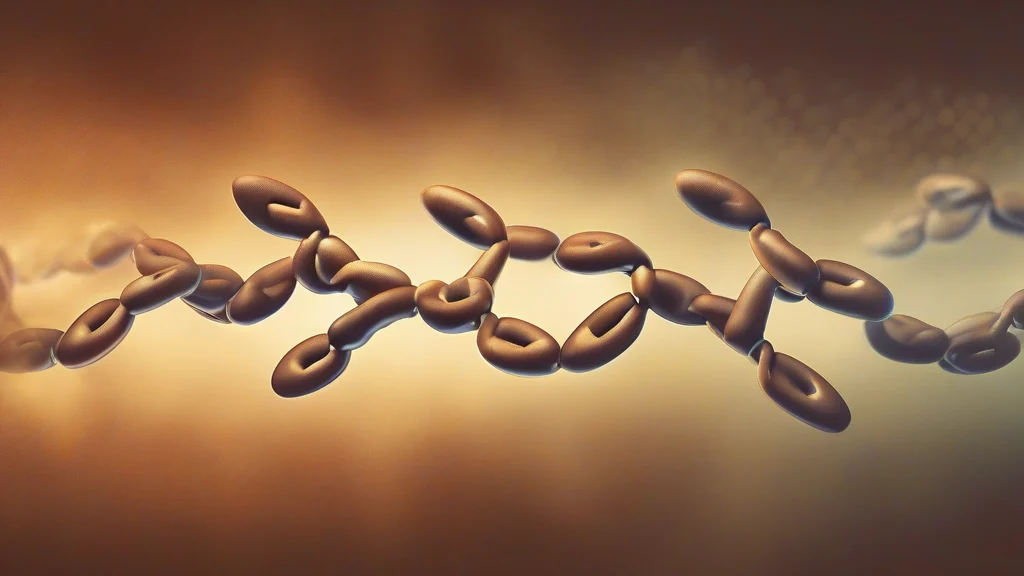
An exonuclease is a type of nuclease — an enzyme that breaks down nucleic acids — distinguished by the way it works: rather than severing a DNA or RNA strand in the middle, it removes nucleotides one at a time from the molecule's end. This directional trimming is essential to life itself, because many exonucleases serve as proofreading tools during DNA replication, excising incorrectly paired bases before they become permanent mutations. Others degrade worn-out or damaged strands so their components can be recycled. Biochemists typically classify exonucleases by which end they attack, referring to them as 5' or 3' exonucleases. The term belongs chiefly to the vocabulary of biochemistry and molecular biology laboratories, where it appears in phrases like 'exonuclease activity.' It contrasts with its counterpart, the endonuclease, which cleaves within a chain — a distinction fundamental to how scientists describe and manipulate genetic material.
nounAn enzyme that cleaves nucleotides one at a time from the end of a DNA or RNA polymer chain, as opposed to cutting within the chain.
- Any of various enzymes that hydrolyze nucleotides sequentially from the end of a polynucleotide chain, either from the 3' end or the 5' end; important in DNA replication, repair, and degradation.
"DNA polymerase carries an exonuclease activity that removes mismatched bases during replication."
"The enzyme's 3' to 5' exonuclease activity allows it to proofread newly synthesized DNA."
"Researchers treated the sample with exonuclease to remove residual single-stranded fragments."
Standard English plural; commonly used when discussing multiple enzymes or families of related enzymes.
"Several exonucleases participate in the base-excision repair pathway."
Without exonucleases, your cells couldn't proofread their own DNA — these molecular editors snip off mistakes letter by letter, from the ends inward.
Reviewed by Deb Chak, Editor. AI-assisted content curated by RJS Tech Solutions LLP.
Etymology of exonuclease
Exonuclease was coined in the twentieth century from scientific combining forms: the Greek-derived prefix 'exo-' meaning 'outside' or 'outer', 'nucleic' from 'nucleus', the Latin diminutive for kernel, and the enzyme-forming suffix '-ase'. The prefix signals its defining behavior of attacking a nucleic acid chain from the outside, i.e., from its terminal end. It shares the 'nucleo-' root with related terms such as nuclease, endonuclease, and deoxyribonucleic acid.
Related word forms
How exonuclease is actually used
A technical term used almost exclusively in biochemistry and molecular biology contexts; in laboratory usage it is often specified by directionality (5' or 3' exonuclease) since different enzymes act on different ends of the chain.
Easily confused with exonuclease
An exonuclease removes nucleotides from the ends of a nucleic acid chain, whereas an endonuclease cuts the phosphodiester backbone at sites within the chain.