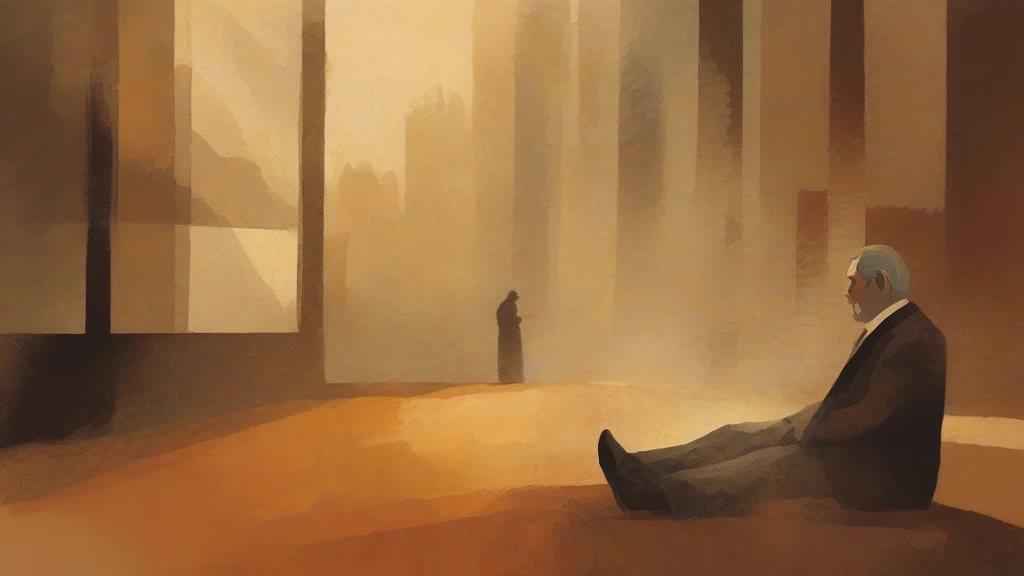
What does expressionism mean?
Expressionism is an artistic and cultural movement that emerged in the early twentieth century, most strongly associated with Germany, in which painters, writers, composers, and filmmakers rejected faithful representation of the external world in favour of conveying intense inner feeling. Instead of depicting things as they appear, expressionist works distort shape, colour, sound, and language to evoke anxiety, ecstasy, anguish, or spiritual intensity. Edvard Munch's painting 'The Scream' anticipated the movement, which flourished in groups such as Die Brücke and Der Blaue Reiter before influencing film, theatre, and architecture. The term also functions more broadly: any work that privileges raw emotional truth over realism can be called expressionist, as in abstract expressionism, the American post-war school of Pollock and Rothko. Used mostly in critical and academic writing, the word connotes boldness, subjectivity, and deliberate departure from naturalism.
An early twentieth-century movement in art, literature, music, and film, originating especially in Germany, that sought to express subjective emotion through distortion, exaggeration, and vivid colour rather than objective representation.
"Kandinsky's early abstractions grew directly out of expressionism."
Usually capitalized when referring to the specific historical movement.
Any style or approach in art characterized by the heightened, non-naturalistic expression of feeling.
"The director's staging has a raw expressionism that suits the play's hysteria."
Typically uncapitalized in this broader sense.
Rarely pluralized; the plural appears only in scholarly writing comparing distinct regional or period varieties of the movement, such as German versus Austrian expressionisms.
"The conference compared the different European expressionisms of the interwar years."
The Expressionists didn't paint what they saw — they painted what they felt, twisting faces and skies until reality itself seemed to scream.
Reviewed by Deb Chak, Editor. AI-assisted content curated by RJS Tech Solutions LLP.
Etymology of expressionism
Expressionism was formed in English from the verb 'express', ultimately derived from Latin 'exprimere' ('to press out'), combined with the suffix '-ism', which denotes movements and doctrines. The term arose in the early twentieth century among critics describing the new emotionally charged art of Germany and central Europe. It shares this Latin root with related words such as 'expressive', 'expression', and, by contrast of formation rather than root, 'impressionism'.
Related word forms
How expressionism is actually used
Expressionism is an uncountable noun used mainly in art-historical, critical, and academic contexts. When capitalized it refers specifically to the historical movement; lowercase, it can describe any emotionally driven, non-naturalistic style. The adjective 'expressionist' is far more common in everyday use than the noun itself.
Easily confused with expressionism
Impressionism captures fleeting visual impressions of light and everyday scenes with loose brushwork, whereas expressionism distorts form and colour to convey intense inner emotion.