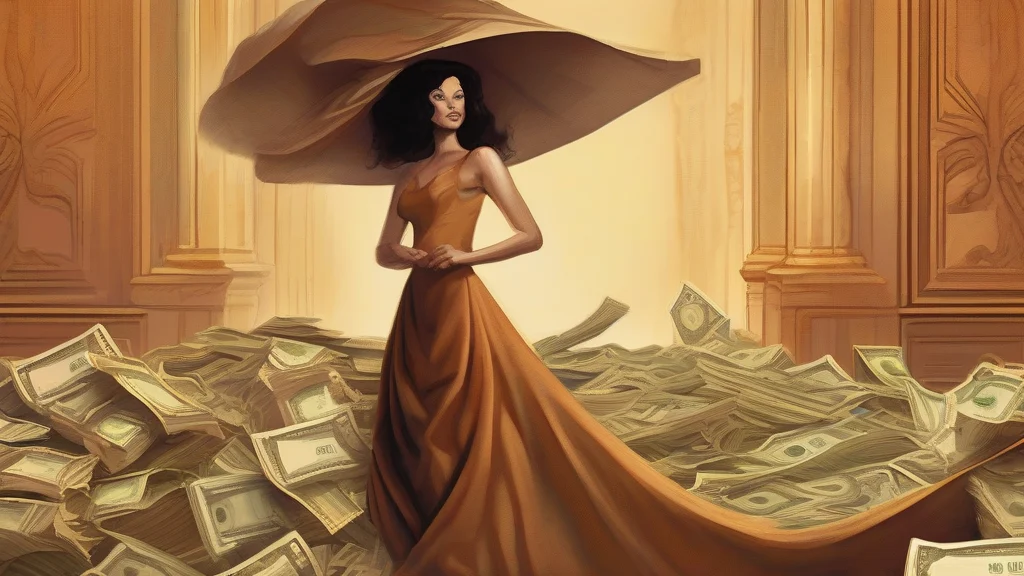
What does extravagance mean?
Extravagance refers to excessive or wasteful spending, or more broadly to any quality of being elaborate, showy, or unrestrained beyond what reason or necessity would justify. It is most often used disapprovingly in financial contexts — an extravagance is an outlay that cannot be justified by need or prudence — as in criticising the extravagance of a lavish ceremony or a politician's spending habits. Yet the term also appears in aesthetic contexts, where it may carry a neutral or even positive charge: one might speak admiringly of the extravagance of Baroque ornamentation or a designer's extravagant vision. The word derives from Latin roots meaning 'to wander beyond', suggesting behaviour that strays past acceptable limits. Its adjective form, 'extravagant', and adverb 'extravagantly' are closely related and equally common. Because it spans both moral judgement and stylistic description, extravagance is a versatile and frequently encountered term in journalism, criticism, and everyday conversation about money and taste.
Excessive or wasteful spending of money, or behaviour characterised by such spending.
"Her only extravagance was an annual trip to Paris."
Often used in the plural to refer to individual instances of indulgent spending.
The quality of being elaborate, ornate, or excessive to a degree that goes beyond what is reasonable or tasteful.
"Critics praised the film's visual extravagance while questioning its thin plot."
In this sense the connotation is often neutral or positive, emphasising richness and boldness rather than waste.
The plural typically refers to specific instances or items of indulgent or excessive expenditure rather than the general quality of excess.
"After losing his job, he cut out all his little extravagances."
The word 'extravagance' literally means 'wandering outside' — from Latin 'extra' (beyond) and 'vagari' (to wander), so an extravagant spender is etymologically someone whose money has wandered off the map.
Reviewed by Deb Chak, Editor. AI-assisted content curated by RJS Tech Solutions LLP.
Etymology of extravagance
Extravagance comes from Medieval Latin 'extravantia', derived from Late Latin 'extravagans', the present participle of 'extravagari', meaning 'to wander beyond'. This combines Latin 'extra' ('outside, beyond') with 'vagari' ('to wander'), the same root that gives us 'vagrant' and 'vagary'. The word entered English in the early modern period via Old French and Italian, initially carrying a sense of straying beyond proper bounds before settling into its dominant financial meaning of wasteful overspending.
Related word forms
How extravagance is actually used
Extravagance carries a strongly negative connotation when applied to money, implying waste and lack of self-restraint. When describing art, architecture, or design, it can be neutral or even admiring, suggesting boldness and opulence rather than moral fault. The word is standard in both formal and informal registers.
Easily confused with extravagance
'Extravagance' is the noun naming the quality or act of excess; 'extravagant' is the adjective describing something characterized by that excess.