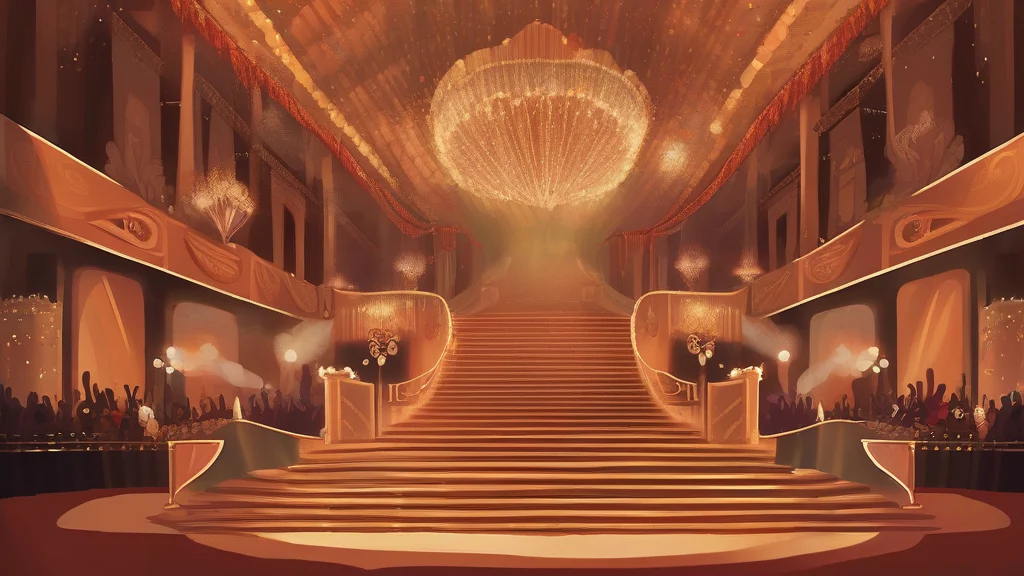
What does extravaganza mean?
An extravaganza is an elaborate, lavishly produced entertainment — think grand musicals, circus-style variety shows, or gala spectacles filled with ornate costumes, dazzling lighting, and sweeping choreography. The word has since broadened to describe almost any unusually elaborate or flamboyant occasion, from a wedding reception to a televised awards ceremony, and it often appears in promotional copy precisely because it promises excitement on a grand scale. Its tone is energetic and enthusiastic, sometimes bordering on hyperbole: calling a modest bake sale an 'extravaganza' is playfully ironic rather than literal. The term entered English in the seventeenth century as the name for a type of Italian theatrical entertainment noted for its fantastical elements, and it derives ultimately from the same root as 'extravagant', literally suggesting something that 'wanders beyond' the ordinary. Today it remains a favorite way to signal that an event is not merely good but gloriously over the top.
nounA lavish or spectacular entertainment or production, typically one characterized by elaborate staging, costumes, and effects. More broadly, any extravagant, elaborate display or event.
- A large-scale, lavishly staged entertainment such as a musical or variety show.
- Any elaborate, extravagant event, display, or production (often used loosely and approvingly).
"The fashion house closed the week with a glittering extravaganza of sequins, smoke machines, and surprise guest performances."
"The opera season opened with a lavish extravaganza featuring a cast of two hundred."
"Her birthday party turned into a full-blown extravaganza, complete with a live band and fireworks."
The regular plural adds -s; it follows standard English pluralization with no irregularities.
"Broadway history is dotted with extravaganzas that pushed staging technology to its limits."
Extravaganza began as a theatrical genre name before the word itself went showbiz — now it headlines everything from rock concerts to Christmas markets.
Reviewed by Deb Chak, Editor. AI-assisted content curated by RJS Tech Solutions LLP.
Etymology of extravaganza
Extravaganza comes from Italian, where it originally denoted a kind of fantastic or extravagant theatrical entertainment; it was adopted into English in the seventeenth century with that theatrical sense. It shares its ultimate origin with 'extravagant' and 'extravagance', tracing back through medieval Latin 'extravagans', meaning 'wandering beyond', from Latin 'extra' ('beyond') and 'vagari' ('to wander'). Related English words from the same wandering root include 'vague' and 'divagate'.
Related word forms
How extravaganza is actually used
The word carries a connotation of exuberance and abundance, usually positive or affectionately hyperbolic. It is common in journalistic and advertising language, where it can shade into cliché when applied to ordinary events.
Easily confused with extravaganza
Extravagance refers to excessive spending or wastefulness in general, whereas extravaganza is a noun for a lavish entertainment or spectacle itself.