
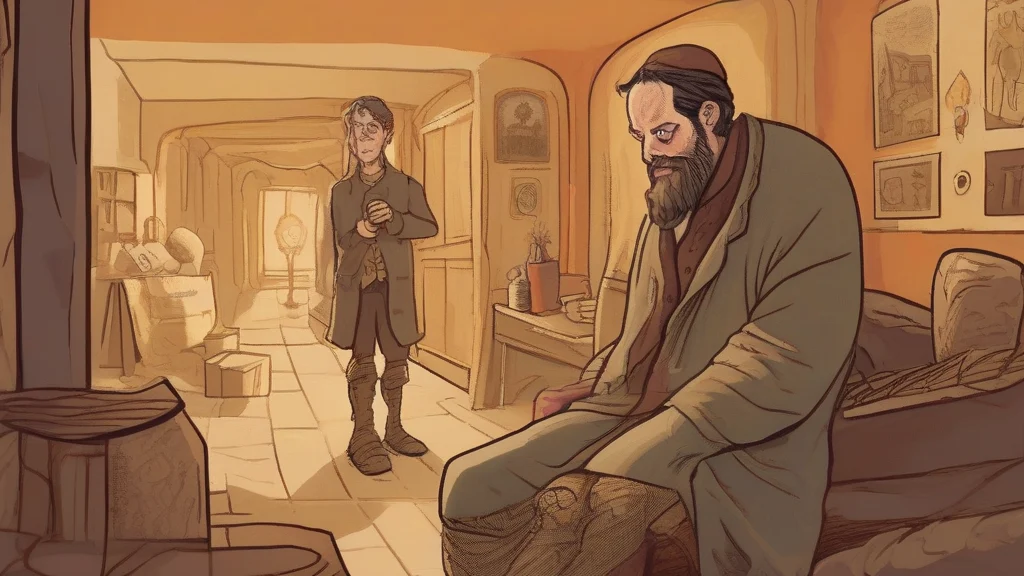
What does fabliau mean?
A fabliau is a short comic tale in verse that flourished in northern France between roughly the twelfth and fourteenth centuries. Fabliaux are marked by their bawdy, often scatological humour and by their focus on ordinary people — merchants, craftsmen, priests, and peasants — rather than the knights and saints who dominated other medieval genres. Plots typically revolve around trickery, adultery, and revenge, with cleverness rewarded and hypocrisy exposed. The form crossed into English through Geoffrey Chaucer, whose Miller's Tale and Reeve's Tale are widely regarded as fabliaux in spirit if not in French. The plural is fabliaux, retaining its French ending, and the word derives from the same root as fable, ultimately from Latin fabula, meaning a story or narrative. Today the term appears chiefly in literary criticism and discussions of medieval literature, carrying connotations of earthy wit and irreverent social satire.
nounA short comic or satirical tale in verse, popular in medieval French literature, typically bawdy and depicting ordinary middle-class characters in humorous or ribald situations.
- A short comic or satirical verse tale of medieval French origin, characterized by bawdy humour and realistic depictions of ordinary people.
- (Extended use) Any literary work in the style of such tales.
"Chaucer's 'Miller's Tale' owes much to the French fabliau tradition."
"The Miller's Tale is often described as an English fabliau in all but language."
"Scholars trace many of Boccaccio's racier stories back to Old French fabliaux."
The plural retains the French spelling and pronunciation, rhyming roughly with 'oh'.
"The manuscript contains several previously unknown fabliaux."
The fabliau was medieval Europe's dirty joke — and Chaucer borrowed shamelessly from it.
Reviewed by Deb Chak, Editor. AI-assisted content curated by RJS Tech Solutions LLP.
Where does fabliau come from?
The word fabliau comes from Old French, where it was a diminutive form derived from fable, itself from Latin fabula meaning a story or tale. It entered English in the nineteenth century when scholars adopted it to classify this genre of medieval French comic verse. Its cognates include fable, fabulous, and confabulate, all tracing back to the Latin root fari, meaning to speak.
Related word forms
How fabliau is actually used
A literary term used mainly in academic and scholarly contexts; plural is 'fabliaux', following French form. Often capitalized when referring to the genre as a whole.
Easily confused with fabliau
A fable is a moralizing tale often featuring animal characters, whereas a fabliau is a bawdy, realistic comic tale about human (usually middle-class) characters.