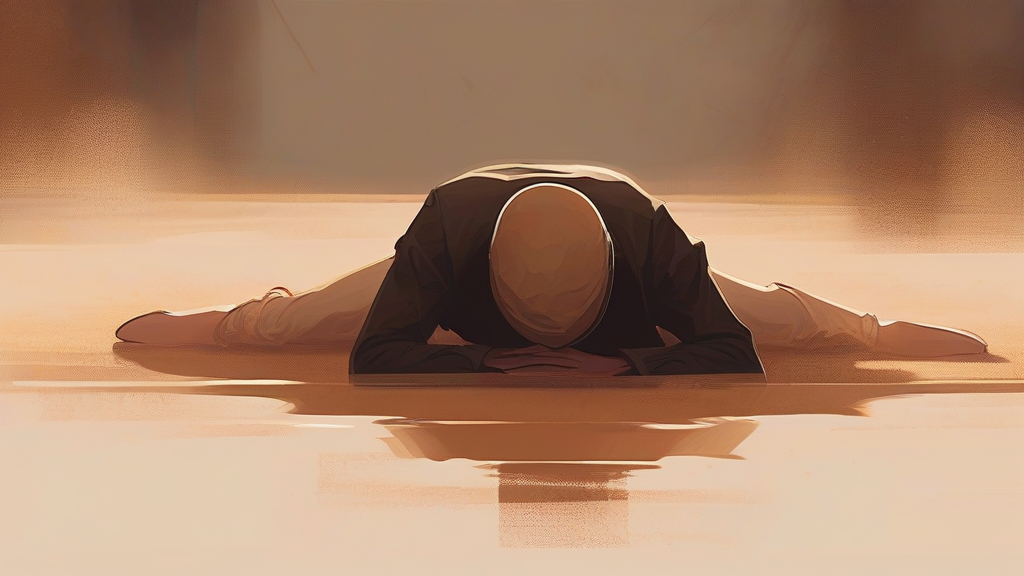
What does facedown mean?
A facedown is a tense confrontation in which one party openly defies another and refuses to withdraw until the opponent gives way. The word captures not just the clash itself but the psychological standoff at its center — each side holding firm, waiting for the other to blink. It is especially common in American English and appears frequently in journalism about international crises, labor disputes, and political brinkmanship, as in descriptions of a 'nuclear facedown' during the Cold War. The term also has an older, more literal sense in card games such as poker, where the facedown is the moment players reveal their hands to settle the game. Whether describing diplomats, strikers, or gamblers, facedown connotes courage, nerve, and high stakes — it implies that someone must eventually yield, making it a vivid choice whenever a conflict has reached its decisive, unyielding moment.
A direct confrontation or defiant standoff in which one party refuses to back down until the other yields.
"The week-long facedown between the two governments ended without either side firing a shot."
Often modified by an adjective emphasizing stakes, e.g. 'a nuclear facedown'.
In poker and certain other card games, the final laying down of cards face up to reveal the winner.
"With the pot enormous, all four players agreed to a facedown."
Regular plural, used when referring to multiple confrontations.
"History remembers the great facedowns of the Cold War more than its quiet compromises."
In poker, the 'facedown' was literally the moment cards were laid face up on the table — and the word walked straight out of the card room into Cold War diplomacy.
Reviewed by Deb Chak, Editor. AI-assisted content curated by RJS Tech Solutions LLP.
Etymology of facedown
Facedown is a compound of 'face' and 'down', both ancient English words — 'face' ultimately deriving from Latin 'facies' (appearance, form) via Old French, and 'down' from Old English 'dūne'. It arose in nineteenth-century American English, first in the literal sense of turning something face downward and in card playing, where players would lay their hands down to end a game. From this gambling context it developed figuratively into the sense of a defiant confrontation, a usage that became widespread in twentieth-century political reporting, notably in coverage of Cold War standoffs. Its Latin-rooted cousin 'face' connects it to words like facial, facet, and superficial.
How facedown is actually used
Most common in American English and often found in political or military journalism describing standoffs between states or institutions. The related phrase 'face down' used as a verb ('she faced down her critics') is written as two words.
Easily confused with facedown
A showdown is the decisive final contest or confrontation that settles a dispute, while a facedown emphasizes one party's defiant refusal to yield in the confrontation itself.