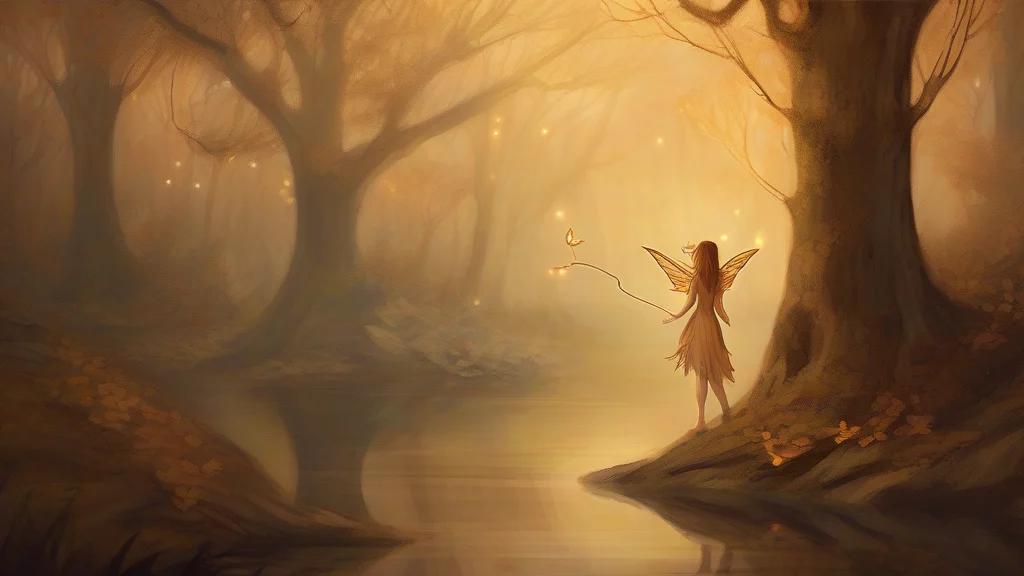
What does fairiest mean?
"Fairiest" is the superlative form of "fairy" used as an adjective, describing something that most fully embodies the qualities associated with fairies: delicacy, enchantment, lightness, and whimsical beauty. A garden strung with tiny lights might be called the fairiest spot in the neighborhood, or a dancer costumed in gossamer wings the fairiest figure on stage. The word is genuinely rare — it does not appear in most standard dictionaries and is largely confined to literary, poetic, or playful usage where a speaker wants maximum fairy-tale flavor. Its close resemblance in sound and spelling to "fairest" (the superlative of "fair") makes it easy to misread, so careful writers ensure surrounding context signals the intended sense. For readers and writers drawn to evocative description, "fairiest" offers a precise, if uncommon, way to express the height of fairy-like charm.
adjectiveThe superlative form of the adjective "fairy," meaning most resembling or characteristic of a fairy; most delicate, enchanting, or whimsical in a fairy-like way.
- Most resembling or characteristic of a fairy in appearance or atmosphere; supremely dainty, delicate, or enchanting.
"Of all the gardens in the village, hers was the fairiest, with its tiny toadstools and twinkling lights."
"Her costume — gossamer wings and a wand of twisted silver — was judged the fairiest of all at the masquerade."
"The ballet's second act unfolded in the fairiest setting imaginable: a glade lit by paper lanterns and drifting petals."
"Fairiest" is so rare that many dictionaries don't list it at all — yet it's exactly what you reach for when "enchanted" and "magical" simply aren't delicate enough.
Reviewed by Deb Chak, Editor. AI-assisted content curated by RJS Tech Solutions LLP.
Etymology of fairiest
As an inflected form, "fairiest" derives from "fairy," which entered English in the Middle Ages from Old French "faerie" — denoting both the land of the fays and enchantment itself. The root ultimately traces to the Latin "Fata," meaning the Fates, which also gave English the word "fay." Forming the comparative "fairier" and superlative "fairiest" follows ordinary English adjective morphology, though such forms remain far less common than periphrastic alternatives like "more fairylike."
Related word forms
How fairiest is actually used
"Fairiest" is an uncommon, somewhat literary or playful formation. Because it sounds nearly identical to "fairest," writers should take care that context makes the intended meaning clear. It appears mostly in descriptive prose about settings, costumes, or imagery evoking fairy tales.
Easily confused with fairiest
"Fairest" is the superlative of "fair" (most beautiful or just), while "fairiest" is the rare superlative of "fairy" (most fairylike); they are often confused because of their near-identical spelling.