
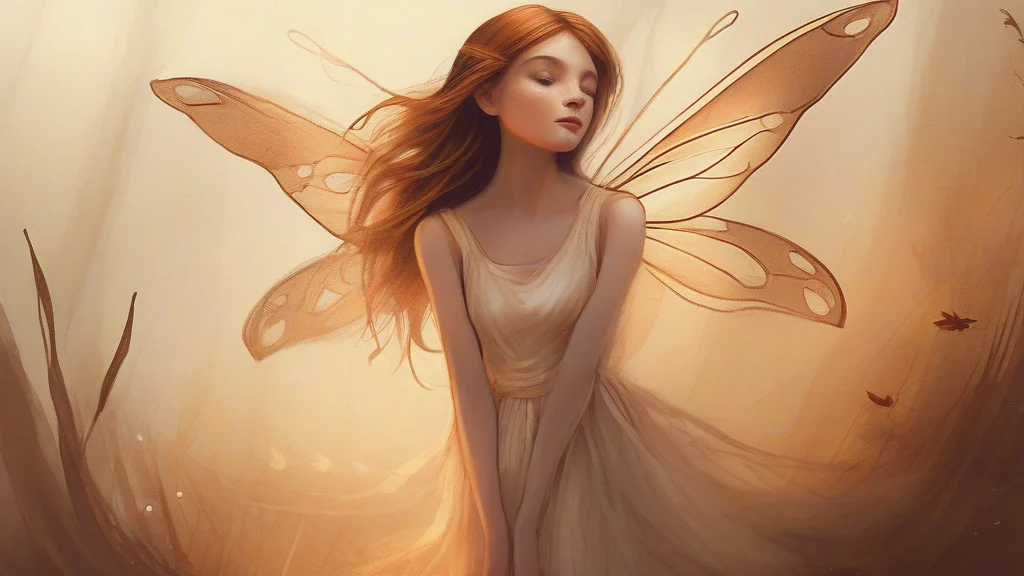
What does fairylike mean?
"Fairylike" is an adjective used to describe anything that resembles or evokes a fairy — that is, something strikingly delicate, graceful, light, or enchantingly beautiful. It appears most often in literary and descriptive writing: a fairylike gown might be made of sheer, floating fabric; a fairylike figure suggests slightness and ethereal charm; a fairylike atmosphere hints at magic and wonder. The word carries an almost entirely positive connotation, conjuring images of whimsy, fragility, and otherworldly elegance rather than anything sinister. It can be written either as one word or hyphenated as "fairy-like," with both forms accepted. Because it draws directly on centuries of European folklore about diminutive, magical beings, it lends writing a touch of the fantastical. Related terms include "elfin" and "sylphlike," which convey similar delicacy, though "fairylike" more strongly suggests the shimmering, enchanted world of fairy tales.
adjectiveResembling or characteristic of a fairy; delicate, light, and graceful in a way that suggests enchantment or otherworldly beauty.
- Delicate, light, and beautiful in a way that suggests a fairy or the enchanted realm of folklore.
- Having qualities associated with fairies — smallness, gracefulness, or a magical, whimsical air.
"She wore a fairylike gown of gossamer silk that seemed to float around her."
"A fairylike mist hung over the meadow at dawn, catching the first light like spun silver."
"The dancer moved with such fairylike lightness that she barely seemed to touch the stage."
The word 'fairy' traces back through Old French 'faerie' to the Latin 'fata' — the Fates themselves — so calling someone 'fairylike' quietly links them to the ancient goddesses who spun the threads of destiny.
Reviewed by Deb Chak, Editor. AI-assisted content curated by RJS Tech Solutions LLP.
Etymology of fairylike
The word 'fairylike' is formed by combining 'fairy', which entered English from Old French 'faerie' (meaning 'enchantment' or 'the land of fairies'), with the suffix '-like'. 'Faerie' itself derives ultimately from the Latin 'fata', meaning 'the Fates', the goddesses of destiny in Roman mythology. As a compound, 'fairylike' developed naturally within English as a descriptive term for things possessing the qualities attributed to fairies in folklore — delicacy, grace, and enchantment.
How fairylike is actually used
Fairylike is a literary or descriptive adjective, more common in fiction, poetry, and evocative prose than in everyday conversation. It carries an unambiguously positive connotation of delicacy and enchantment. The hyphenated variant 'fairy-like' is also widely accepted.
Easily confused with fairylike
'Fairly' is an adverb meaning 'to a moderate degree' or 'justly', whereas 'fairylike' is an adjective describing something resembling a fairy.
'Fairyland' is a noun referring to the imaginary realm of fairies, while 'fairylike' is an adjective describing fairy-like qualities in something.