
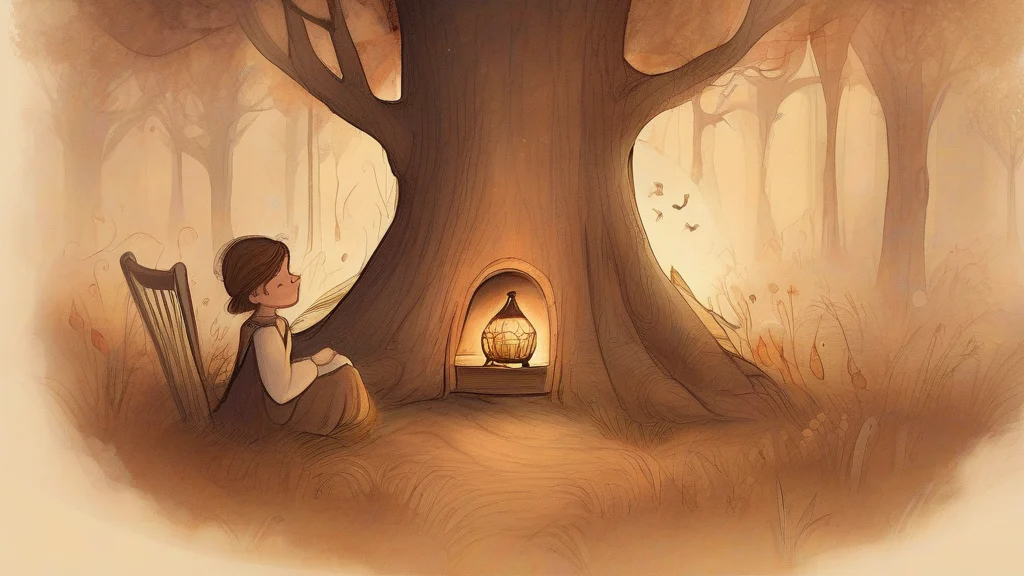
What does fairytale mean?
A fairytale is a kind of traditional narrative, usually told to children, in which magical creatures, enchanted objects, and impossible events drive a story that often ends happily or delivers a clear moral lesson. Classic examples include Cinderella, Snow White, and Hansel and Gretel, many of them collected and published by figures such as Charles Perrault and the Brothers Grimm. Beyond storytelling, 'fairytale' functions figuratively: a 'fairytale ending' describes a blissfully happy outcome, while calling someone's account 'a fairytale' suggests it is fanciful or untrue. Spelling splits between the two-word 'fairy tale' and the one-word 'fairytale'; both are accepted, with the single-word form especially common when the word acts as an adjective. The term evokes childhood, wonder, and wish-fulfilment, making it one of the most emotionally resonant words in English literary vocabulary.
nounA traditional story, typically for children, involving magical beings, enchantments, and fantastical events; also, by extension, an implausibly wonderful or fabricated account of events.
- A children's story of magic, wonder, and often moral resolution, featuring enchanted beings or events.
- An adjective use describing something wonderfully improbable or idyllic, as in 'a fairytale ending'.
- A fabricated or wildly unrealistic account of events.
"Cinderella remains one of the most beloved fairytales in the Western tradition."
"The Grimm brothers collected hundreds of German folk fairytales in the early nineteenth century."
"Against all odds, the underdog team's season ended in a fairytale victory."
"His explanation of where he'd been all night was pure fairytale."
When written as two words, the plural is 'fairy tales'; the closed compound takes regular -s.
"The library holds an entire shelf of illustrated fairytales."
The word 'fairytale' literally descends from 'fee', an old English word for a fairy — which itself traces back to the Latin 'fata', the Fates who spun every mortal's destiny.
Reviewed by Deb Chak, Editor. AI-assisted content curated by RJS Tech Solutions LLP.
Etymology of fairytale
The word derives from 'fairy tale', first attested in English in the mid-eighteenth century as a translation of the French 'conte de fées'. The element 'fairy' comes through Old French 'faerie' (enchantment, land of the fays) from Late Latin 'fata', meaning the Fates, the goddesses who determined human destiny. The compound was later closed into the single form 'fairytale', now standard in adjectival use. Related Romance descendants of the same Latin root include French 'fée' and Italian 'fata'.
How fairytale is actually used
Spelling varies: 'fairy tale' (two words) is the older and still more common form in careful prose, while 'fairytale' (one word) is fully standard, especially as a modifier. The plural may be 'fairy tales' or 'fairytales' accordingly. In figurative use ('a fairytale romance'), the word carries strongly positive connotations of wonder and wish-fulfilment, but it can also imply naivety or unreality ('that's just a fairytale').
Easily confused with fairytale
Fairy tale (two words) is the more traditional spelling for the story form, while fairytale (one word) is an accepted modern variant and the standard form when used attributively as an adjective meaning 'wonderful but improbable'.