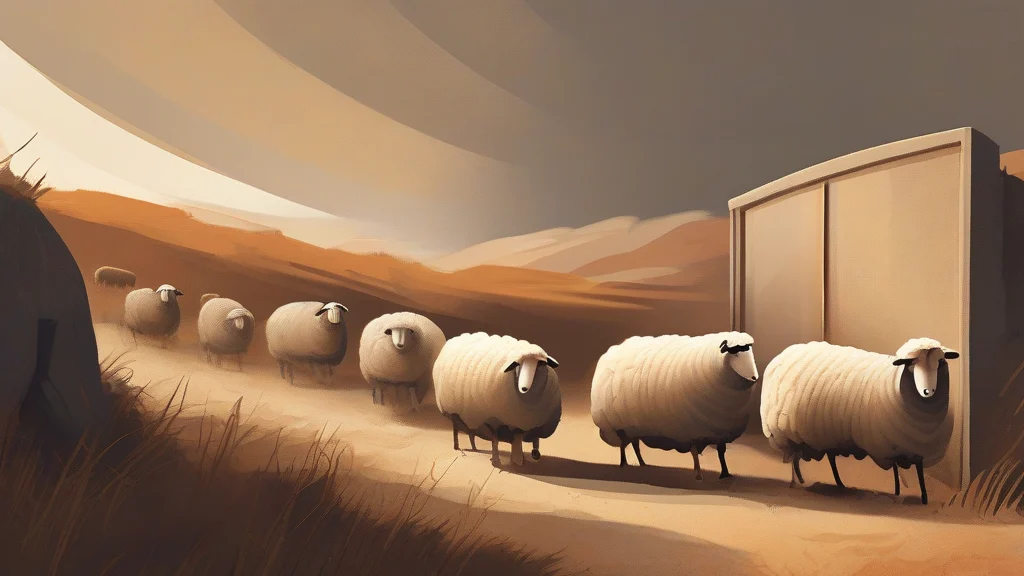
What does fank mean?
A fank is a sheep enclosure, used mainly in Scotland and northern England, where flocks are driven for sorting, shearing, dipping, or veterinary treatment. Typically a curved or angular pocket of ground enclosed by dry-stone walls or temporary hurdles, the fank is designed so that sheep can be funneled in and handled efficiently — a shape that reflects centuries of accumulated shepherding practice. The word remains part of the living vocabulary of hill farming: phrases such as 'at the fank' or 'clipping day at the fank' are heard wherever traditional sheep gatherings persist. Beyond its practical sense, fank carries strong rural connotations, evoking communal labour, crofting life, and the seasonal rhythms of the farming year. For readers outside these regions it is a genuinely obscure word, which makes it a rewarding discovery for anyone interested in agricultural history or dialect English. Its cousin form 'fankle', meaning a tangle or muddle, derives from the same root.
nounA curved enclosure or pen, typically formed by a bend in a stone wall or a temporary structure, into which sheep are driven for sorting, shearing, or treatment.
- A sheep enclosure or pen, especially one formed by a curve or angle in a wall or by movable hurdles, into which sheep are driven for sorting, shearing, dipping, or treatment.
"The shepherd waved his crook and sent the flock streaming into the fank for dipping."
"The crofters gathered at the fank on clipping day to sort the lambs from the ewes."
"He repaired the crumbling stones of the old fank before the autumn gathering."
Regular plural; uncommon outside regional agricultural contexts.
"Several ruined fanks dot the hillside above the village."
Before sheep had modern pens, Scottish shepherds built 'fanks' — clever curved traps of dry-stone wall that funnel a whole flock exactly where it needs to go.
Reviewed by Deb Chak, Editor. AI-assisted content curated by RJS Tech Solutions LLP.
Etymology of fank
Fank derives from Old Norse, transmitted through the Northern Isles and northern mainland Scotland into Scots dialect. It is connected to the Old Norse root fang, denoting a grasp or capture, which also gives English the verb 'fang' in its older sense of seizing. The word has been established in Scots usage since at least the medieval period and survives today as a standard term among sheep farmers in Scotland and northern England.
Related word forms
How fank is actually used
A chiefly Scottish and northern English agricultural term, still current in farming communities in the Highlands, Borders, and similar sheep-farming regions; rarely encountered elsewhere and generally unfamiliar to speakers outside these areas.
Easily confused with fank
Flank means the side of a person, animal, or formation, whereas fank is a regional term for an enclosure used to hold and sort sheep.