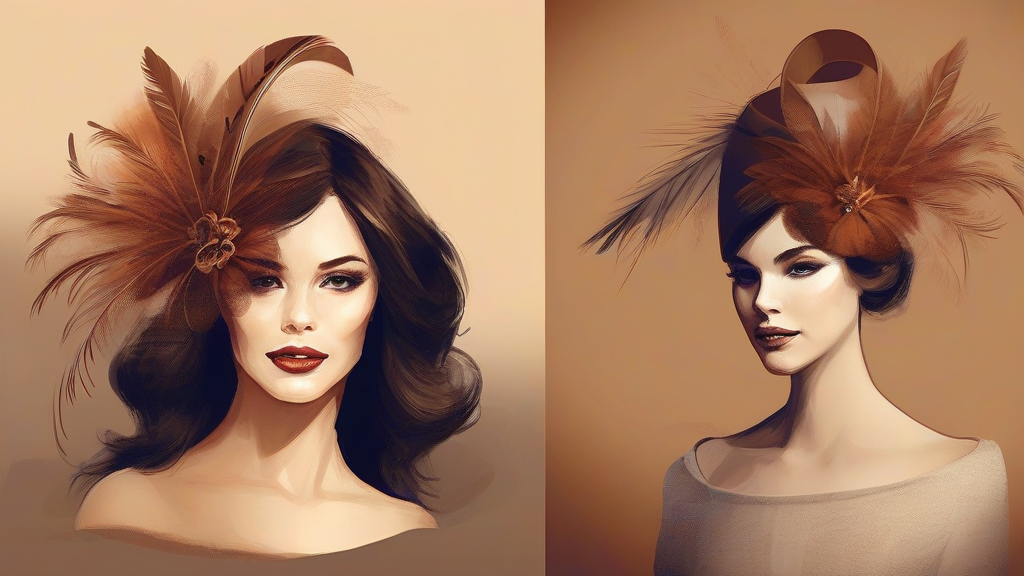
What does fascinator mean?
A fascinator is a decorative headpiece worn by women, most often at formal events such as weddings, horse races, and royal ceremonies. Unlike a conventional hat, a fascinator is typically a light, ornamental construction of feathers, flowers, netting, veiling, or beads, perched on the head at an angle and secured by a comb, clip, or headband. The style became especially iconic in Britain, where race meetings such as Royal Ascot have helped make the fascinator a fixture of high-society dress, sometimes to extravagant or deliberately whimsical effect. The word derives from 'fascinate', reflecting an earlier sense of something that enchants or captivates the beholder, and an older, now rare meaning of the term referred to a person who charms or bewitches others. Today the name almost always refers to the headpiece, an item associated with glamour, occasion dressing, and a distinctly British sense of sartorial flair.
A decorative headpiece made of feathers, flowers, netting, or beads, attached with a comb, clip, or band and worn at formal occasions.
"Her peacock-feather fascinator drew compliments all afternoon at the races."
This is by far the dominant modern sense, particularly in British English.
(Historical) A person or thing that fascinates, enchants, or casts a spell over others.
"The novel portrayed the countess as a dangerous fascinator of men."
An older sense now largely confined to historical literature.
Standard regular plural; commonly used when referring to collections or varieties of the headpiece.
"The milliner's window displayed fascinators in every color imaginable."
At British Royal Ascot, a fascinator isn't just fashion — certain enclosures practically require one, making it one of the few hats in the world with its own dress code.
Reviewed by Deb Chak, Editor. AI-assisted content curated by RJS Tech Solutions LLP.
Etymology of fascinator
The word fascinator comes from the verb 'fascinate', which traces back through Latin 'fascinare' (to bewitch or cast a spell on) and ultimately relates to Latin 'fascinum', a charm believed to ward off enchantment. Originally, a fascinator denoted a person or thing that fascinated or cast a spell over others. By the nineteenth century the term had come to describe articles of dress, notably lightweight head coverings, and in modern usage it settled on the ornamental feathered or beaded headpieces now familiar from British formal occasions.
How fascinator is actually used
In modern usage the word is overwhelmingly associated with formal women's headwear and carries a somewhat glamorous, playful connotation; it is especially common in Britain and Commonwealth countries, where it features prominently at weddings, races, and royal occasions. The older sense of 'one who fascinates' survives mainly in historical texts.