What does fazenda mean?
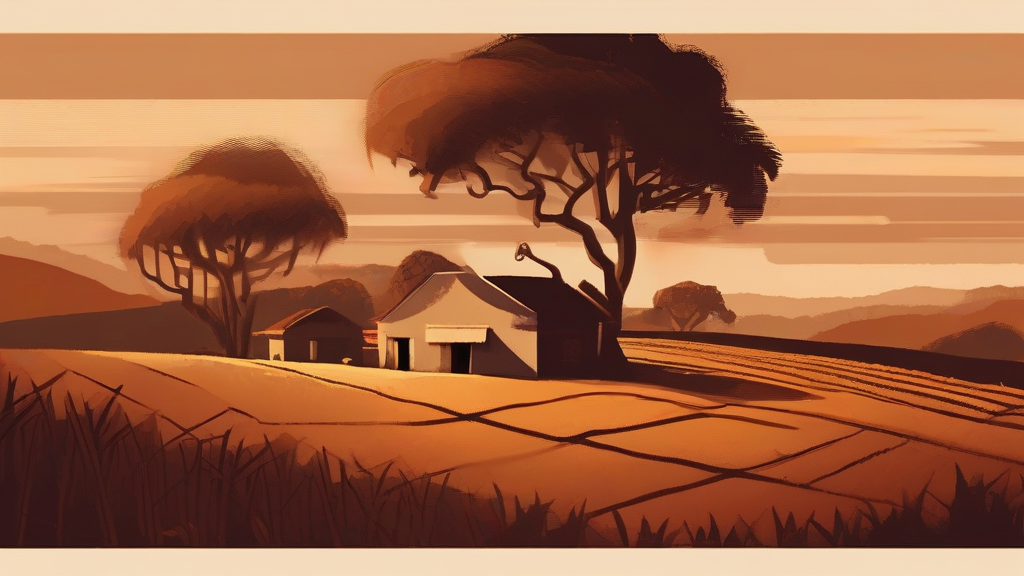
A fazenda is a large agricultural estate in Brazil — typically a plantation devoted to coffee, sugar, or cotton, or a ranch raising cattle. The term entered English from Portuguese, where 'fazenda' can refer both to the farmland and to the estate as a whole, including its manor house and outbuildings. In English usage it functions much as 'hacienda' does for Spanish-speaking Latin America, and it appears most often in historical, travel, and economic writing about Brazil. The word carries powerful historical resonance: the great coffee fazendas of the nineteenth century drove Brazil's rise as the world's dominant coffee producer, but their prosperity rested on enslaved labor until abolition in 1888, and many former fazendas survive today as heritage sites, boutique hotels, or working farms. For readers of Brazilian history and literature, 'fazenda' remains an indispensable term for understanding the country's land, economy, and past.
nounA large plantation or ranch in Brazil, typically producing coffee, sugar, or cattle. Historically, a fazenda was also the landed estate itself, including its main house and associated buildings.
- A large plantation, farm, or ranch in Brazil, especially one growing coffee, sugar cane, or raising livestock.
- The main house and buildings of such an estate (less common).
"The coffee fazenda had been in her family since the 1870s."
"Visitors toured the historic fazenda in São Paulo state, where rows of coffee trees stretched to the horizon."
"By the mid-nineteenth century, the region's fazendas depended heavily on enslaved labor, a legacy the country still confronts today."
Standard English pluralization is used; the Portuguese plural 'fazendas' happens to coincide, so no special treatment is needed.
"The valley was dotted with coffee fazendas, each with its own chapel and drying grounds."
The word 'fazenda' literally means 'thing to be done' in Latin — a Brazilian plantation is, etymologically speaking, a giant to-do list.
Reviewed by Deb Chak, Editor. AI-assisted content curated by RJS Tech Solutions LLP.
Etymology of fazenda
The word comes from Portuguese 'fazenda', meaning a farm or estate, which derives from the Latin 'facentia', meaning 'things to be done' (from 'facere', 'to do or make'). The same Latin root gives English words such as 'facility' and 'factotum'. The Portuguese term entered English in the nineteenth century through travel and trade accounts of Brazil, alongside its Spanish cognate 'hacienda'.
How fazenda is actually used
The word is almost always used in reference to Brazil and carries strong historical associations with the colonial and imperial plantation economy. It is generally treated as a loanword and italicized in some formal writing, though it is well established in English. The plural is 'fazendas', anglicized rather than retaining the Portuguese form.
Easily confused with fazenda
A hacienda is the Spanish-language equivalent — a large estate in Spain or Latin America's Spanish-speaking countries — while a fazenda is specifically the Portuguese/Brazilian term.