What does feathering mean?
Feathering refers to any technique of creating a soft, gradual transition instead of a hard edge. Painters feather brushstrokes, photographers feather selection borders, makeup artists feather color along the skin, and hairstylists feather layers so they fall naturally. Beyond the visual arts, the word has precise technical meanings: rowers feather their oars by rotating the blades flat above the water between strokes, and pilots feather a propeller by turning its blades edge-on to the airflow to minimize drag after an engine failure. The word also denotes a bird's plumage, particularly young or developing feathers. Derived from 'feather,' which traces back to Old English 'fether,' feathering carries connotations of lightness, delicacy, and control — the opposite of a blunt or abrupt treatment. Its range across craft, sport, and engineering makes it a vivid example of how a single concrete image can name many refined skills.
A gradual blending or tapering of an edge, surface, or texture so that it merges smoothly with what surrounds it.
"The retoucher used subtle feathering around the subject to make the composite look natural."
In rowing, the act of turning the oar blade flat during the recovery stroke.
"Good feathering keeps the boat balanced and prevents the blade from clipping the water."
In aviation, the adjustment of a propeller's blades to align edge-on with the airflow to reduce drag.
"After the engine failed, the pilot carried out propeller feathering to keep the aircraft flying efficiently."
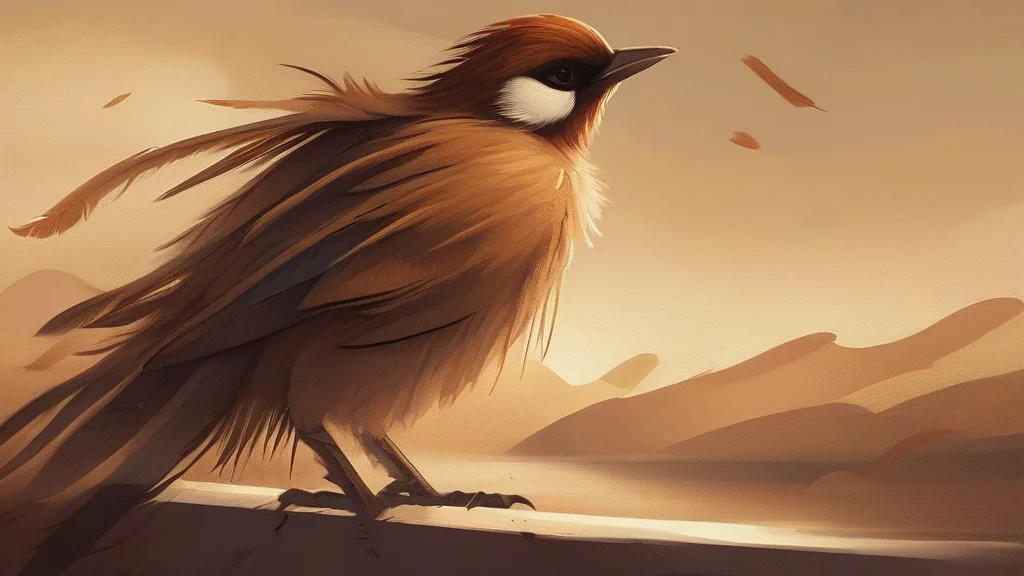
A bird's feathers collectively; plumage.
"The chick's first feathering appeared within two weeks of hatching."
Rarely pluralized; the noun 'feathering' is normally uncountable, referring to a process or technique. A plural occasionally appears for multiple instances of plumage development, but this is uncommon.
"Different species show distinct featherings at each stage of maturity."
In rowing, 'feathering' means rotating the oar blade flat on the return stroke so it skims the water — a move so smooth it gave its name to blending effects in art and aviation.
Reviewed by Deb Chak, Editor. AI-assisted content curated by RJS Tech Solutions LLP.
Etymology of feathering
Feathering derives from 'feather,' from Old English 'fether', common Germanic in origin and related to Dutch 'veer' and German 'Feder'. The literal sense of a bird's plumage came first, while the figurative senses — tapering an edge like the soft webbing of a feather, or turning a propeller blade like a feather's vane viewed edge-on — developed later, largely from technical vocabulary in art, rowing, and aviation.
Related word forms
How feathering is actually used
Mostly technical or specialized: common in art, cosmetics, photography, rowing, and aviation contexts. In everyday speech, the verb 'feather' is more frequent than the gerund 'feathering.' The plumage sense appears chiefly in ornithological or hunting contexts.
Easily confused with feathering
'Weathering' refers to the wearing away or alteration of materials by exposure to the elements, while 'feathering' refers to tapering or blending techniques or a bird's plumage.