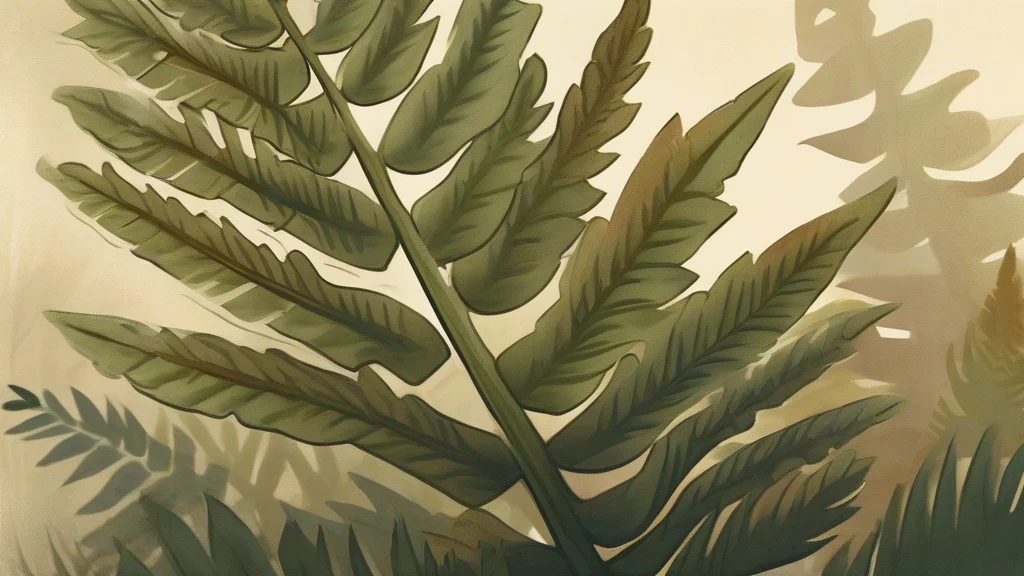
What does ferny mean?
Ferny is an adjective describing places or things that are covered with ferns or that resemble ferns in their soft, feathery character. It appears most often in descriptive and literary writing — a ferny glade, a ferny bank beside a stream — where it evokes damp shade, woodland seclusion, and lush greenery. Gardeners also use it of plants whose finely divided leaves recall fern foliage, such as asparagus or yarrow. The word derives simply from fern, the name of an ancient lineage of flowerless plants, plus the adjectival suffix -y. Its connotations are gentle and romantic rather than technical: to call a landscape ferny is to suggest coolness, privacy, and an almost primeval greenness. Though never a common word, it is a precise and evocative one, prized by nature writers for capturing a quality that plainer adjectives like green or leafy cannot quite convey.
adjectiveCovered with, consisting of, or resembling ferns; having the delicate, feathery character of fern foliage.
- Abounding in or covered with ferns.
- Resembling a fern in appearance; feathery or delicately divided.
"A ferny hollow shaded the stream where mosses grew thick along the stones."
"The path wound through a ferny dell beside the old mill."
"Asparagus has a distinctly ferny foliage that adds texture to the flower bed."
"Ferny" is what gardeners reach for when "green" won't do — it captures that feathery, prehistoric softness ferns have carried since the age of dinosaurs.
Reviewed by Deb Chak, Editor. AI-assisted content curated by RJS Tech Solutions LLP.
Etymology of ferny
Ferny is formed from the noun fern, a word of Old English provenance (fearn), combined with the common adjectival suffix -y. The Germanic root behind fern is ancient, related to words in other Germanic languages, though its ultimate Indo-European origins are debated. English has long used fern as a formative in compounds and derivatives, including filical terms borrowed from Latin filix, such as the botanical adjective filicoid.
How ferny is actually used
A literary and descriptive adjective, most at home in nature writing, gardening prose, and landscape description. It carries pleasant connotations of shade, moisture, and woodland quiet. More common in British usage than American, though well understood in both.
Easily confused with ferny
Fiery means burning or intensely hot and emotional, while ferny relates to fern plants and a soft green lushness.