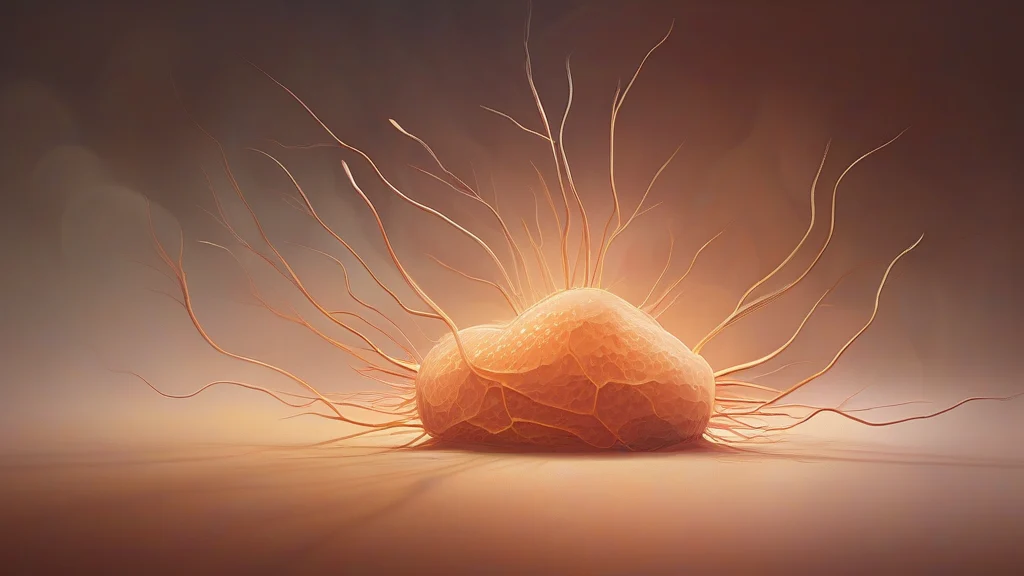
What does fibroblast mean?
A fibroblast is a specialized cell found in connective tissue throughout the body, best known for producing collagen and the other fibers and substances that form the extracellular matrix — the structural scaffolding between cells. Spindle-shaped and remarkably adaptable, fibroblasts are the principal builders of skin, tendons, ligaments, and organ frameworks, and they take center stage whenever tissue is damaged: after an injury they multiply, migrate into the wound, and weave fresh collagen to close and strengthen it. This same activity underlies both healing and scarring, which makes fibroblasts a major focus of research on wound care, burns, aging, and conditions such as fibrosis. The term is technical, appearing mainly in medical and biological contexts, but it describes one of the most industrious cells in the body. Anyone curious about how skin stays firm, wounds close, or scars form will find the fibroblast at the heart of the answer.
nounA cell in connective tissue that produces collagen and other fibers and plays a central role in wound healing and tissue repair.
- A spindle-shaped cell of connective tissue that synthesizes collagen, extracellular matrix, and other fibers, essential to structural support and wound healing.
"The surgeon noted that the wound was healing well, with fibroblasts laying down new collagen at the margins."
"Researchers cultured fibroblasts from the patient's skin to study the mutation."
"In response to injury, fibroblasts migrate into the wound bed and begin depositing collagen."
The standard English plural; overwhelmingly the most common form in biomedical literature, where groups of cells are discussed collectively.
"Fibroblasts harvested from the biopsy were grown in culture for two weeks before analysis."
Every scar you carry was built cell by cell by fibroblasts — the quiet construction workers stitching you back together.
Reviewed by Deb Chak, Editor. AI-assisted content curated by RJS Tech Solutions LLP.
Etymology of fibroblast
The term fibroblast derives from Latin roots: 'fibra,' meaning fiber, combined with the Greek-derived 'blast' element, denoting a germ or budding cell. Like other '-blast' terms coined during the nineteenth-century rise of histology and cell theory, it names a cell identified by what it produces — in this case, fibrous connective tissue. It shares this 'fibra' root with related scientific terms such as fibrous, fibrin, and fibrosis.
Related word forms
How fibroblast is actually used
Strictly a technical term used in biology, medicine, and dermatology rather than everyday speech. In scientific literature it is often plural when discussing populations of cells in tissue culture or wound healing.
Easily confused with fibroblast
A fibroblast is the living cell; fibrosis is the pathological condition of excessive fibrous tissue buildup.
A fibrocyte is generally considered a less active, quiescent form of the same lineage, whereas a fibroblast is the active, proliferating, matrix-producing state.