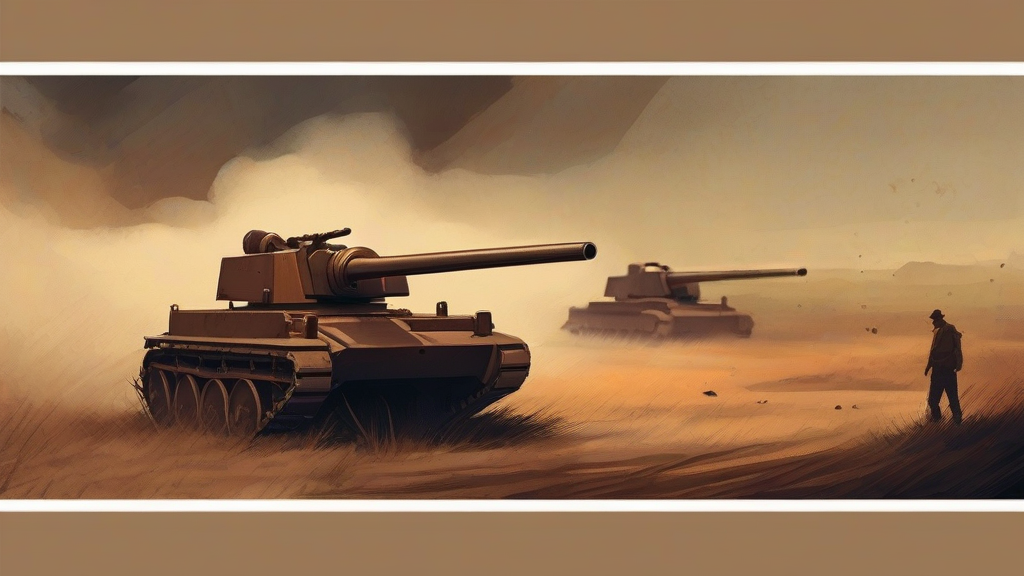
What does fieldpiece mean?
A fieldpiece is a relatively light cannon built for mobility on the battlefield, as distinct from the heavier guns employed in sieges or mounted permanently in fortresses. Because it had to be moved quickly — hauled by horses over rough ground and repositioned by a small crew between volleys — the fieldpiece was engineered to balance firepower with portability, and it became the backbone of tactical artillery from the seventeenth through the nineteenth centuries. The word is a straightforward compound of 'field' and 'piece', the latter long used to mean an individual gun or ordnance item. Today 'fieldpiece' survives mainly in historical writing, museum catalogues, and discussions of Napoleonic-era warfare; contemporary speakers are more likely to say 'field gun' or simply 'gun'. Its connotations are correspondingly antiquarian, evoking smoke-blackened crews, limbered caissons, and the disciplined drill of pre-industrial armies.
nounA light cannon designed to be maneuverable on the battlefield, typically hauled by horses or a small crew rather than mounted in a fixed position. More broadly, any artillery piece used in the field as opposed to siege or fortress guns.
- A light, mobile cannon used on the battlefield rather than in siege or fortress warfare.
- By extension, any artillery piece deployed with an army in the field.
"The regiment hauled its two six-pounder fieldpieces across the muddy ridge at dawn."
"A captured Prussian fieldpiece stood at the entrance to the museum's military wing."
"Well-drilled crews could limber a fieldpiece and be rolling within a minute."
Regular plural; also commonly written as two words ('field pieces').
"The army's fieldpieces were arrayed along the crest of the hill."
Before trucks and tanks, wars were won by crews who could sprint a half-ton bronze cannon across a battlefield — that gun was called a fieldpiece.
Reviewed by Deb Chak, Editor. AI-assisted content curated by RJS Tech Solutions LLP.
Etymology of fieldpiece
The word is an English compound formed from 'field', from Old English 'feld' meaning open or cultivated land, and 'piece', borrowed into English via Old French from a Germanic-rooted Romance word denoting a part or portion. In military usage, 'piece' had come by the early modern period to mean an individual firearm or cannon, so a 'field piece' was literally a gun suited to the field of battle. The compound is attested from around the seventeenth century, when mobile artillery became a defining feature of European warfare. The Afrikaans word 'veld', a cognate of 'field', preserves the same Germanic root.
How fieldpiece is actually used
The term belongs chiefly to historical and military-historical register; it appears most often in accounts of eighteenth- and nineteenth-century warfare and in museum or reenactment contexts. Modern usage favors 'field gun' or 'field artillery'. The closed spelling 'fieldpiece' is traditional but less frequent than the open form 'field piece'.
Easily confused with fieldpiece
They denote the same thing; 'fieldpiece' is simply the closed compound spelling of 'field piece', though the two-word form is more common in modern writing.