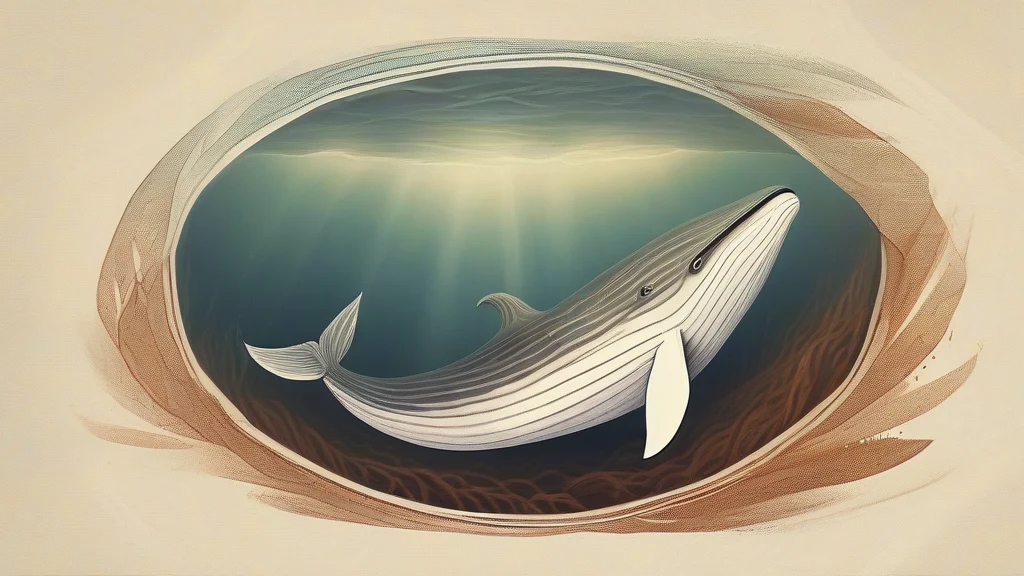
What does finback mean?
A finback is a fin whale, Balaenoptera physalus — an enormous baleen whale of the rorqual family, found in every major ocean. The name comes from the tall, curved dorsal fin set far back on the animal's body, one of its most reliable identifying features at sea. Second only to the blue whale in size, the finback can reach lengths of more than twenty metres and is famed among mariners for its speed, earning it the nickname 'the greyhound of the sea'. Like other rorquals it feeds by lunging through swarms of small schooling prey — krill and fish — filtering them through baleen plates. The word appears frequently in whaling records and natural-history writing, where 'finback' and 'finback whale' are used alongside the now more standard 'fin whale'. For readers of maritime and zoological texts, recognising 'finback' is essential to following descriptions of these ocean giants.
nounA finback is a fin whale (Balaenoptera physalus), a large rorqual of the world's oceans, named for the prominent dorsal fin on its back. The term is used interchangeably with 'fin whale' and also appears in compounds such as 'finback whale'.
- The fin whale (Balaenoptera physalus), a large baleen whale with a prominent dorsal fin, found in all major oceans.
"The naturalists spent the morning watching a finback surface and blow off the headland."
"A finback can exceed twenty metres in length and swim at remarkable speed."
"From the research vessel they logged three finbacks feeding along the shelf edge."
Regular plural; used when referring to multiple individuals of the species.
"Finbacks gather in summer feeding grounds across the North Atlantic."
The finback is the second-largest animal ever to live on Earth — yet it's so sleek and fast that whalers called it 'the greyhound of the sea'.
Reviewed by Deb Chak, Editor. AI-assisted content curated by RJS Tech Solutions LLP.
Etymology of finback
Finback is a straightforward English compound of 'fin' and 'back', formed to describe the whale's conspicuous dorsal fin. The element 'fin' derives from Old English 'finn', of Germanic origin, which has cognates in other Germanic languages. The compound arose in the era of commercial whaling, when English-speaking whalers coined descriptive names for the great rorquals, and it has been in use since at least the eighteenth century.
How finback is actually used
"Finback" and "finback whale" are common especially in North American usage and in older whaling literature; "fin whale" is the standard scientific and general term today. The plural is typically "finbacks" or, referring to individuals of the species collectively, simply "fin whale".
Easily confused with finback
A humpback is a different rorqual whale (Megaptera novaeangliae) known for its long pectoral fins and acrobatic breaching, whereas the finback or fin whale is larger, faster, and named for its distinct dorsal fin.