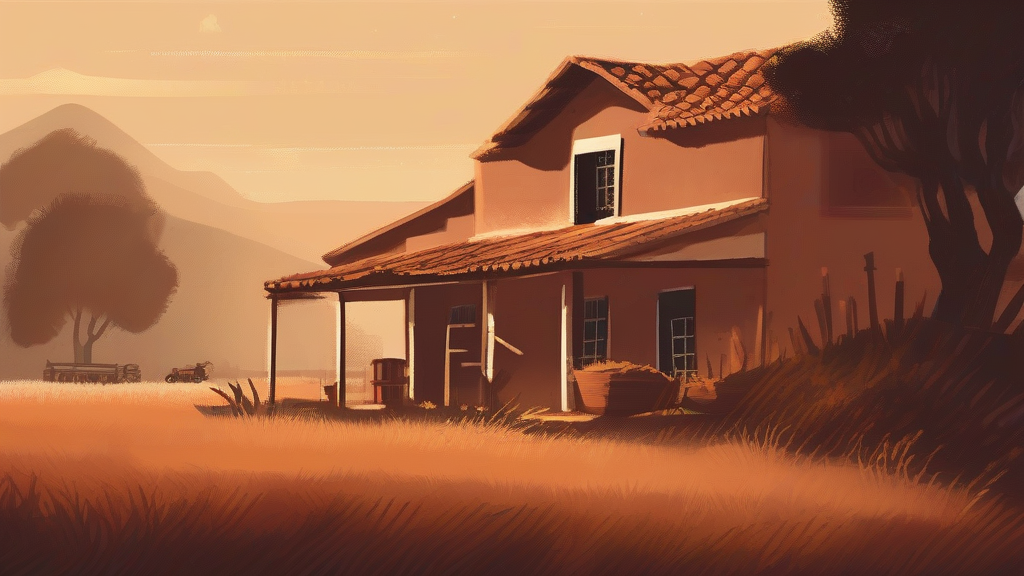
What does finca mean?
A finca is a rural property — essentially a farm or country estate — in Spain or a Spanish-speaking country, usually comprising farmland together with a house and outbuildings. The term, borrowed directly from Spanish into English, is most often encountered by travellers, property hunters, and readers of writing about Iberia and Latin America. A finca may be anything from a modest smallholding to an extensive estate producing olives, wine, almonds, or coffee; in Latin America, highland fincas are especially associated with coffee cultivation. In modern usage among British and other foreign buyers, the word has taken on connotations of rustic charm: a 'restored finca' suggests a stone farmhouse sympathetically modernized while retaining traditional character. Though it functions in English as a noun denoting a place, it retains its foreign origin and is frequently italicized in print. Its ultimate root lies in Latin figere, 'to fasten', reflecting the idea of fixed, immovable property.
nounA rural property or country estate in Spain or Latin America, typically farmland with a house on it, often used for growing crops such as olives, vines, or coffee.
- A piece of rural land, typically farmland, together with its farmhouse or buildings, in Spain or Spanish-speaking countries.
"They spent their honeymoon at a restored finca in the hills of Andalusia."
"The couple sold their London flat and bought a crumbling finca on Mallorca, replanting its terraces with olive trees."
"Coffee from the family's highland finca in Guatemala is exported directly to roasters in Europe."
The plural follows standard English s-pluralization even though the word is a Spanish loanword.
"The valley is dotted with whitewashed fincas surrounded by almond groves."
Borrowed straight from Spanish, 'finca' ultimately traces back to the Latin word for something 'fixed' — because land is the one thing that can't be moved.
Reviewed by Deb Chak, Editor. AI-assisted content curated by RJS Tech Solutions LLP.
Etymology of finca
The word comes from Spanish finca, meaning 'property' or 'estate', which developed from Medieval Latin fixa, 'fixed property', derived from Latin figere, 'to fasten or fix'. The underlying notion is that land and buildings constitute immovable — literally fixed — possessions. This makes finca a cousin of everyday English words like 'fix', 'fixture', and 'affix', all descendants of the same Latin verb. English adopted the term from Spanish, where it remains the standard word for a rural holding.
How finca is actually used
'Finca' is a loanword used in English chiefly by travellers, property buyers, and writers about Spain and Latin America; it carries connotations of rustic charm and rural authenticity, especially for restored holiday homes. It remains a foreign term rather than a fully naturalized English word, so it is often italicized in formal writing.
Easily confused with finca
A hacienda is specifically a large Spanish-American estate, often historically worked with dependent labor, while a finca is generally any rural farm property and is more closely associated with Spain.