
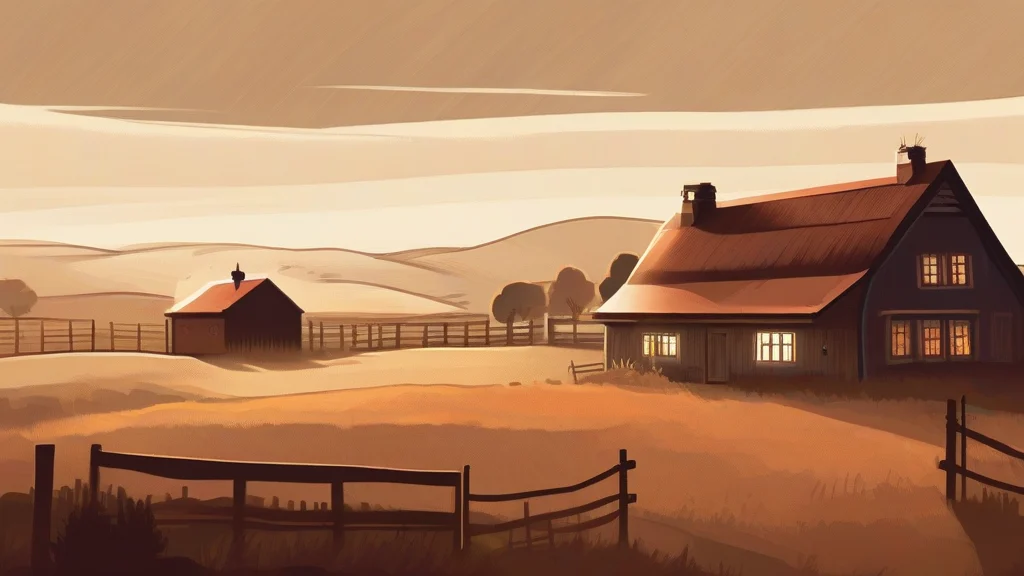
What does homestead mean?
A homestead is a place where someone lives, usually a house together with the land and buildings associated with it. The word often implies a rural property that is settled and worked, rather than merely a residence in a town. It can also have a legal and historical meaning, referring to land occupied under a claim or law granting someone the right to settle it. The verb “to homestead” means to establish or occupy such a place, especially by making a home and improving the land. In American history, the word became closely associated with westward settlement and the Homestead Act of 1862. Its cultural connotations include self-reliance, family labor, rural life, and the idea of creating a lasting home. Today, it remains useful when describing both an actual property and the traditional ideal of building a self-sufficient life on the land.
A house and the surrounding land occupied as a home, especially a rural property settled and worked by its occupants; also, historically or legally, land claimed for settlement.
"The homestead was known for its orchard and its uninterrupted view of the hills."
The word can be used broadly for a home, but its strongest associations are with rural settlement, agricultural life, and legal or historical claims to land.
To establish or occupy a place as a homestead, especially by settling on and working the land.
"Her ancestors homesteaded the northern plains in the late nineteenth century."
This verb is less common in everyday speech and is especially natural in historical, rural, and narrative contexts.
The plural is regular and is used for multiple homesteads or distinct rural properties.
"The map identifies several homesteads along the river."
In 1862, the U.S. Homestead Act turned the word into a national promise: land, a house, and a chance to build a life.
Reviewed by Deb Chak, Editor. AI-assisted content curated by RJS Tech Solutions LLP.
Where does homestead come from?
The word comes from Old English and is formed from elements meaning “home” and “place.” Its development reflects the longstanding English distinction between a household and the site or land where that household is established. The related words “stead” and “steady” preserve the older sense of a fixed place, while “homely” belongs to the family of words connected with “home.”
Related word forms
How homestead is actually used
The noun is common in rural, agricultural, historical, and legal contexts. In the United States, it has strong associations with the Homestead Act and westward settlement; the verb is less frequent but is idiomatic in historical and narrative writing.
Easily confused with homestead
Homely means simple, ordinary, or domestic in manner, whereas a homestead is a place where someone lives, usually a house and its surrounding land.