
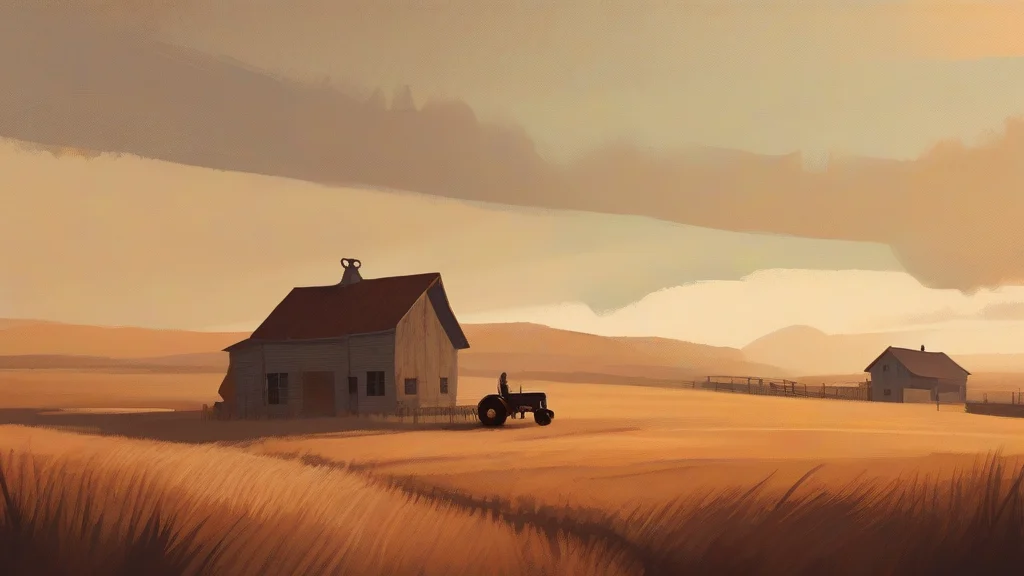
What does homesteader mean?
A homesteader is someone who settles on and develops a homestead, especially land claimed under a government program. In the United States, the term became particularly prominent through the Homestead Act of 1862, which allowed eligible people to acquire and improve public land for farming. The word also has a broader modern meaning: a person who lives on a smallholding or in a rural area and tries to be self-sufficient. In that sense, homesteaders may grow their own food, manage animals, and reduce dependence on outside employment or services. The word can sound historical and idealized, especially when it evokes the hardships and family labour associated with settlement, but it remains useful for describing both past land policies and present-day rural lifestyles.
nounA person who settles on and develops a homestead, especially under a land-grant or homesteading system. In modern usage, it may also refer to someone who lives in a rural area and aims to be largely self-sufficient.
- A person who settles on and develops a homestead, especially one who claims land under a government land-grant system.
- A rural dweller who lives on and works a smallholding, often with an emphasis on self-sufficiency.
"The family became homesteaders after claiming land under the Homestead Act."
"The museum tells the story of the homesteaders who built homes on the plains."
"Modern homesteaders often combine small-scale farming with renewable energy and direct sales."
Plural of homesteader, referring to multiple people who settle on or work homesteads.
"The exhibition presents the stories of several pioneering homesteaders."
In the United States, “homesteader” became closely associated with the Homestead Act of 1862, a law that helped transform federal land into family farms.
Reviewed by Deb Chak, Editor. AI-assisted content curated by RJS Tech Solutions LLP.
Where does homesteader come from?
“Homesteader” was formed in the 19th century from “homestead” plus the suffix “-er,” meaning a person who holds or works a homestead. “Homestead” itself combines “home” with “stead,” an Old English word associated with a place or position, and reflects the idea of a family establishing a settled home and livelihood. The best-known historical development of the term followed the expansion of land-settlement policies, especially the United States Homestead Act of 1862.
Related word forms
How homesteader is actually used
The term is most strongly associated with North American land policy and the 19th-century expansion of farms on public land. In contemporary use, it can carry a broader and sometimes romanticized sense of independent rural self-sufficiency, so it is less neutral than simply “farmer.”
Easily confused with homesteader
A settler is anyone who establishes a new community or residence, while a homesteader specifically claims and works land under a homesteading or similar system.