
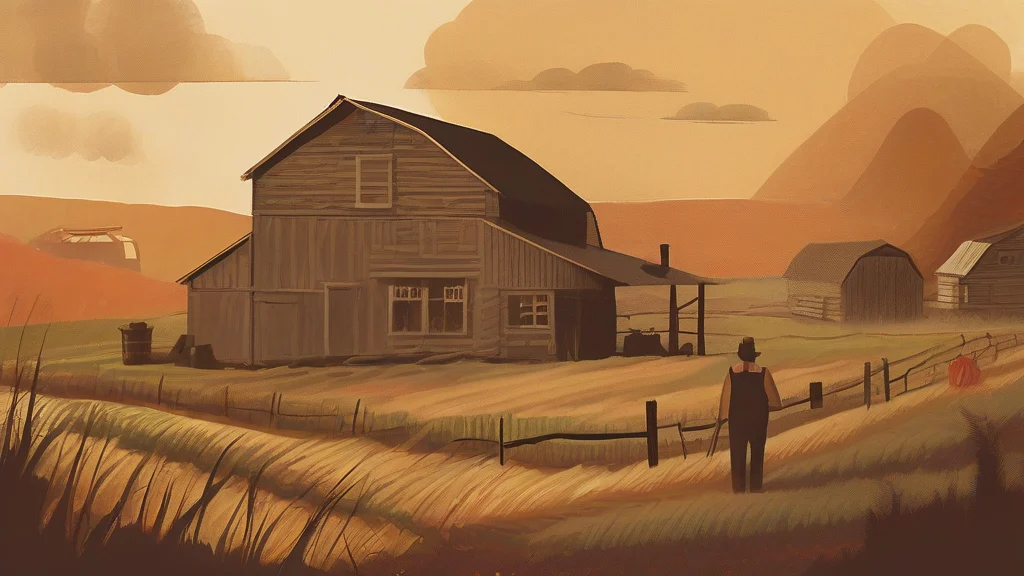
What does homesteading mean?
Homesteading is the practice of establishing, maintaining, and often making productive a homestead, typically a smallholding where some food and other necessities are produced. It may be pursued for self-sufficiency, rural independence, or connection to the land. In a historical and legal sense, it also means taking up land under a statute such as the U.S. Homestead Act of 1862, which granted eligible claimants ownership after they occupied and improved the land. The term commonly evokes the settlement of the American West and the nineteenth-century Homestead Act, although similar settlement practices occurred elsewhere. Modern usage often has a more general, voluntary, and sometimes nostalgic tone, referring to back-to-the-land living, small-scale agriculture, and reducing dependence on purchased goods. “Homesteading” can describe either the activity or the broader way of life. Because it can imply self-provisioning, land stewardship, and independence, it is distinct from simply renting or working on someone else’s farm. The context should clarify whether the word denotes a legal land claim, an occupation, or a contemporary lifestyle.
The activity or practice of establishing and working a homestead, often with an emphasis on self-sufficiency and producing food.
"Their approach to homesteading combined gardening, renewable energy, and careful use of the land."
The abstract activity is normally treated as an uncountable noun, though “homesteadings” can be used for separate instances or settlements.
To establish and work a homestead, especially as a settler or as someone seeking self-sufficiency.
"The family homesteaded a small parcel of land near the river."
This verbal use commonly describes a person's activities or way of life and may have historical or self-sufficiency connotations.
The plural is uncommon because the abstract activity is normally uncountable, but it can refer to multiple settlements or instances.
"Museum exhibits document early homesteadings across the Great Plains."
The U.S. Homestead Act of 1862 offered settlers 160-acre claims—and helped accelerate the displacement of Indigenous peoples.
Reviewed by Deb Chak, Editor. AI-assisted content curated by RJS Tech Solutions LLP.
Where does homesteading come from?
“Homesteading” developed in nineteenth-century American English by adding the suffix “-ing” to “homestead.” “Homestead” combines “home” with “stead,” a word that continues Old English stēde, meaning “place”; “hame” is a cognate of “home” that retains a similar sense. The developing political and legal meaning of homesteading was strongly associated with nineteenth-century settlement laws, especially the U.S. Homestead Act of 1862.
How homesteading is actually used
The word is neutral to favorable in modern discussions of self-sufficiency, though it can carry nostalgic or romantic associations with rural life. In United States historical contexts, it is closely associated with federal land policy and the displacement of Indigenous peoples.
Easily confused with homesteading
Homesteading is the activity of establishing or working a homestead, whereas a homestead is the house and associated land itself.
A homesteader is a person who establishes or works a homestead, while homesteading names the activity or process.