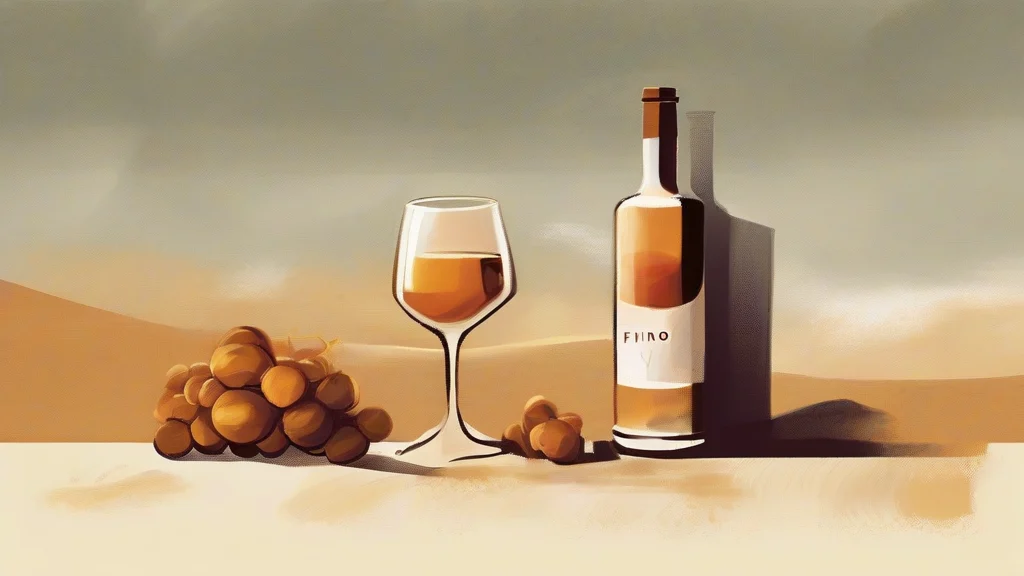
What does fino mean?
Fino is the palest and driest category of sherry, the fortified wine produced around Jerez de la Frontera in Andalusia, southern Spain. What distinguishes fino from other sherries is its unique ageing process: the wine matures in barrels that are deliberately left only partly full, under a natural layer of yeast cells known as flor, which shields the wine from contact with air and preserves its remarkably light colour and crisp, bone-dry character. The result is a delicate white wine with subtle notes of almond and green apple and a faintly saline tang, traditionally served chilled alongside tapas such as olives, seafood, and cured ham. The name derives from the Spanish fino, meaning 'fine', reflecting its status as the most refined and delicate of the sherry styles. Once opened, a bottle of fino loses its freshness quickly, so it is best enjoyed within a few days.
nounA pale, dry Spanish sherry, produced mainly in the Jerez and Montilla-Moriles regions of southern Spain and aged under a layer of yeast known as flor.
- The palest, driest style of sherry, aged under a film of flor yeast in southern Spain.
"She ordered a chilled glass of fino to accompany the salted almonds."
"A well-chilled fino is the classic partner for olives, jamón, and seafood tapas."
"The bartender poured two finos from a bottle kept in the fridge, as fino should never be served warm."
Used when referring to multiple glasses, bottles, or styles of the wine; the plural is regular.
"We ordered two finos and a plate of anchovies."
Fino is protected by an invisible blanket of live yeast called flor, which floats on top of the wine inside the barrel and keeps oxygen out — without it, the wine would simply turn to vinegar.
Reviewed by Deb Chak, Editor. AI-assisted content curated by RJS Tech Solutions LLP.
Etymology of fino
The word fino entered English from Spanish, where it literally means 'fine', deriving ultimately from the Latin finis, 'end' or 'boundary'. It was adopted into English wine vocabulary during the nineteenth century as British merchants — long the dominant force in the sherry trade — catalogued the distinct styles of Jerez by their ageing methods. Its Latin root makes it a cousin of everyday English words such as fine, finish, refine, and finite.
How fino is actually used
Fino is always a countable or mass noun referring to the wine itself; it is best served well chilled and, once opened, should be consumed within days since its delicate character fades quickly.
Easily confused with fino
Manzanilla is a particularly light style of fino aged specifically in the coastal town of Sanlúcar de Barrameda, whereas fino refers to the broader style.
An amontillado is a sherry that begins like a fino but is later aged oxidatively after the flor dies, giving it a darker colour and nuttier flavour.