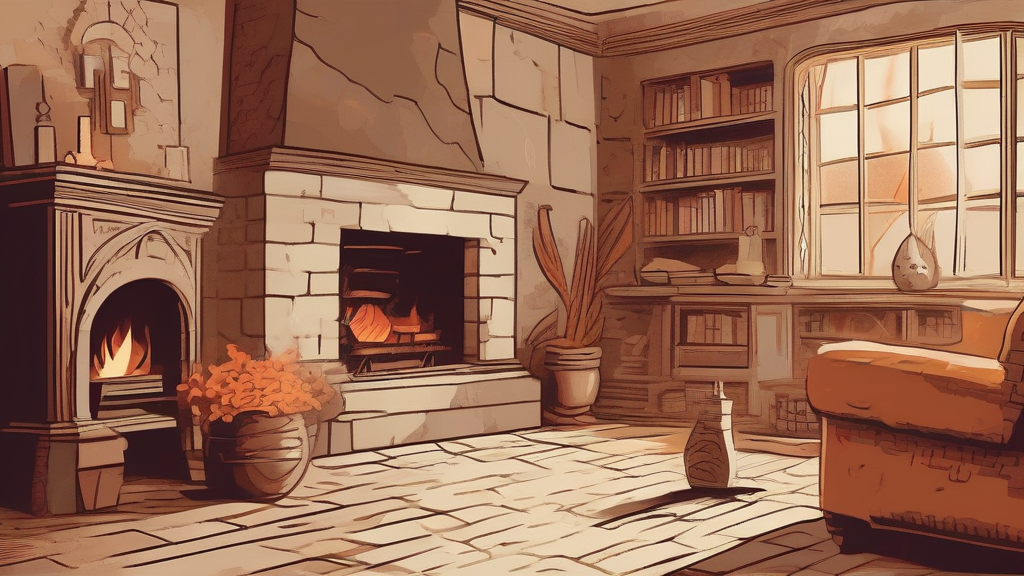
What does fireback mean?
A fireback is a thick plate, most often made of cast iron, positioned upright against the rear wall of a fireplace. Its practical purposes are twofold: it shields the fragile masonry at the back of the hearth from direct flame, and its mass absorbs heat before radiating it steadily forward into the room, improving the efficiency of an open fire. Many surviving firebacks date from the seventeenth to nineteenth centuries and carry decorative relief work — heraldic devices, biblical scenes, or classical figures — which makes them sought-after by collectors and restorers of period properties. The word also names a group of Southeast Asian pheasants, such as the crested fireback, whose males display richly colored plumage suggestive of glowing coals. In modern usage the term appears chiefly in interior design, architectural conservation, and ornithology, and it remains a precise, unambiguous label for both the object and the birds.
A plate of cast iron or other metal placed at the back of a fireplace to protect the wall and radiate heat into the room.
"She had the Georgian fireback cleaned and mounted behind the new wood-burning stove."
Often discussed in the context of antique hearth furnishings; decorative examples can be historically significant.
Any of several Southeast Asian pheasants, especially the crested fireback (Lophura ignita), named for the fiery coloring of the male's plumage.
"The crested fireback forages quietly on the forest floor of lowland Borneo."
Typically used within the compound species name rather than alone.
Regular plural. Used for multiple plates or, in ornithology, multiple birds.
"The salvage yard had a row of Victorian firebacks leaning against the wall."
That plain iron slab at the back of an old fireplace may be centuries old — 17th-century firebacks often bore royalist slogans and coats of arms, making them treasured antiques today.
Reviewed by Deb Chak, Editor. AI-assisted content curated by RJS Tech Solutions LLP.
Etymology of fireback
Fireback is a transparent English compound formed from 'fire' and 'back', first recorded around the early seventeenth century as cast-iron fireplace plates became common in Britain and continental Europe. The element 'fire' descends from Old English fȳr, ultimately from the Proto-Indo-European root *per-, which also produced Greek 'pyr' and hence English borrowings such as 'pyre'. The ornithological sense arose later, applying the same image of glowing color to the plumage of certain pheasants.
How fireback is actually used
The hearth sense is the standard one in everyday English, especially in discussions of antique furnishings and period homes. The bird sense usually appears as part of the compound name (e.g. 'crested fireback', 'fireback pheasant') rather than standing alone, and is largely confined to ornithological contexts. The word carries no strong connotation — it is neutral and slightly technical.
Easily confused with fireback
Feedback is evaluative or responsive information returned to a source, while a fireback is a physical iron plate at the rear of a fireplace.