What does fireclay mean?
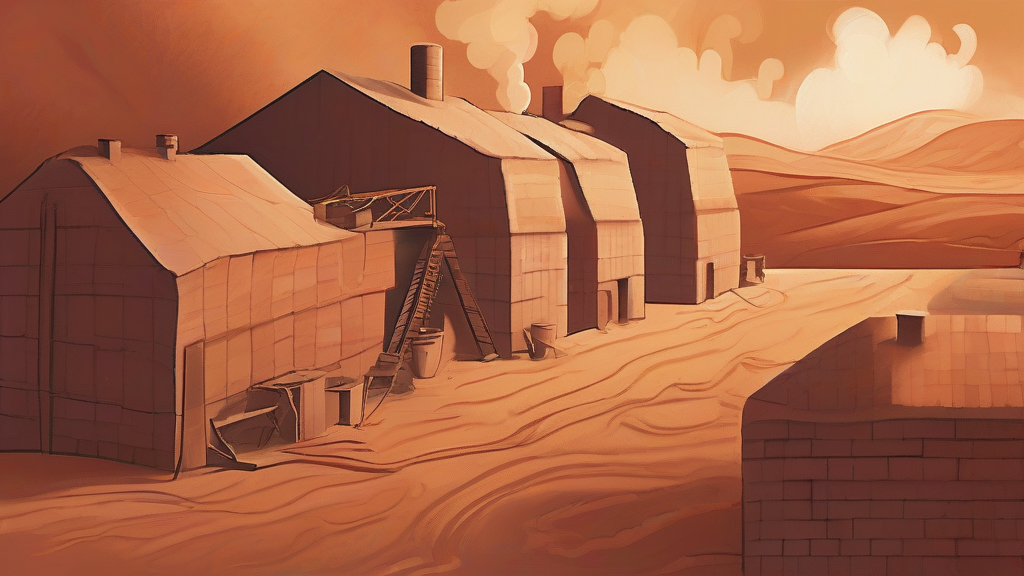
Fireclay is a dense, refractory clay prized for its ability to withstand extremely high temperatures without softening, warping, or fusing. This resistance to heat makes it indispensable wherever furnaces, kilns, boilers, and fireplaces are built: it is formed into firebricks, shaped into crucibles that hold molten metal, and mixed into mortars that seal chimneys and stove linings. The word combines the two plain English elements that define it — 'fire' and 'clay' — and it belongs chiefly to technical registers, appearing in ceramics, metallurgy, masonry, and building trades rather than casual speech. Deposits of genuine fireclay, often found beneath coal seams, have been mined for centuries because few natural materials can endure conditions that would destroy ordinary clay. For readers interested in how industry harnesses geology, fireclay is a small but essential word: an unglamorous substance whose quiet reliability literally holds together the hottest working environments humans have created.
A refractory clay that resists high temperatures, used to manufacture firebricks, crucibles, furnace linings, and similar heat-resistant products.
"Crucibles made from fireclay could hold molten bronze without cracking."
Usually treated as an uncountable material noun; the plural 'fireclays' refers to distinct varieties or deposits.
A mortar or ceramic product made from fireclay, used in laying firebrick or sealing fireplaces, stoves, and chimney flues.
"The masonry supply shop sold premixed fireclay for setting fireplace liners."
In trade contexts, 'fireclay' often refers by extension to the prepared mortar rather than the raw clay itself.
Rarely used; 'fireclay' is normally uncountable as a material noun. The plural appears mainly in geology and ceramics literature to denote different types or deposits of refractory clay.
"The geological survey catalogued several fireclays of differing alumina content across the coal measures."
The humble fireclay under your feet is one of the only earths that can stare into a blast furnace and refuse to melt.
Reviewed by Deb Chak, Editor. AI-assisted content curated by RJS Tech Solutions LLP.
Etymology of fireclay
Fireclay is a straightforward English compound of 'fire' and 'clay', both inherited from Old English ('fyr' and 'clǣg'), reflecting the medieval and early modern practice of naming materials by their function. The compound arose when industrial users needed a term for clays that could survive firing and furnace heat, and it became established with the growth of the refractories and ceramics industries. Because it is a native English compound rather than a borrowing, it has no true cognates in other languages, though its components trace back to common Germanic roots shared by words such as German 'Feuer' and Dutch 'vuur' for fire.
How fireclay is actually used
Fireclay is primarily a technical and industrial term, common in ceramics, metallurgy, masonry, and plumbing contexts; it is rare in everyday conversation. It is typically treated as an uncountable material noun, though 'fireclays' can refer to distinct varieties or deposits.
Easily confused with fireclay
A firefly is a bioluminescent beetle, whereas fireclay is a heat-resistant clay used in refractory materials.