What does fireplace mean?
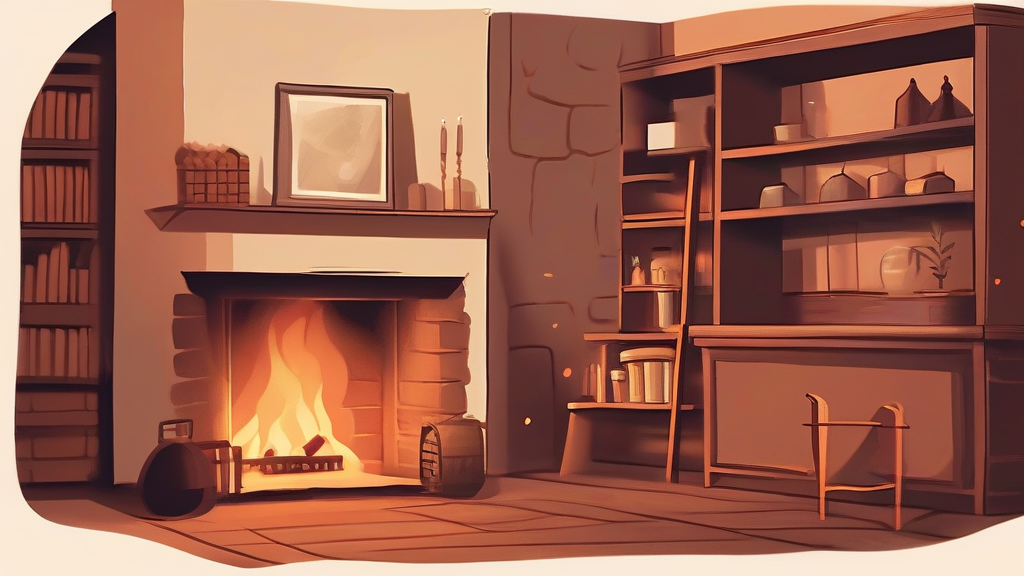
A fireplace is a purpose-built structure — an open recess, usually set into a wall of brick, stone, or tile — designed to safely contain a fire within a room. Most fireplaces include a hearth at their base, a chimney or flue to draw smoke away, and often a mantel above for display or decoration. Fireplaces serve both practical and emotional purposes: historically they heated homes and served as cooking stations, and today they remain valued sources of warmth, light, and atmosphere, whether fuelled by wood, gas, or electricity. The word carries strong connotations of comfort, domesticity, and gathering; few images are more evocative than a family assembled before a crackling fire. In everyday speech, 'fireplace' denotes the structure itself rather than the fire it holds. It appears constantly in interior design, real estate, and seasonal writing, making it a familiar and enduringly useful word across British and American English alike.
nounA fireplace is a constructed space, typically set into a wall and made of brick or stone, in which a fire can be lit for heating a room or for decorative effect. It usually includes a hearth, a chimney or flue for drawing away smoke, and often a mantel above.
- An open recess built into a wall to contain a fire for heating or ambience, typically with a chimney and often a mantelpiece.
- By extension, the decorative surround and mantelpiece framing such a recess.
"They gathered around the fireplace with mugs of cocoa as the storm raged outside."
"The old stone fireplace was the only thing that survived the renovation intact."
"She hung the stockings along the mantel of the marble fireplace."
Standard plural; commonly used in real-estate descriptions to count multiple units in a property.
"The Victorian house boasted six marble fireplaces, one in nearly every room."
For centuries, the fireplace wasn't furniture — it was the beating heart of the home, the one spot where families cooked, warmed themselves, and told their stories.
Reviewed by Deb Chak, Editor. AI-assisted content curated by RJS Tech Solutions LLP.
Etymology of fireplace
The word fireplace is formed from 'fire', which descends from Old English 'fyr', and 'place', borrowed from Old French 'place' (ultimately from Latin 'platea', meaning broad street or open space). The compound arose in English in the early 17th century as houses increasingly featured dedicated, built-in fire recesses set into walls rather than open central hearths. It is thus a native English compound combining a Germanic root with a Romance-derived element, and its cognates lie less in foreign equivalents than in other English compounds pairing 'fire' with another noun.
How fireplace is actually used
Fireplace is a neutral, everyday word used in both casual and formal contexts, common throughout the English-speaking world. It refers primarily to the structure itself rather than the fire burning within it; the terms 'open fire' or 'blaze' describe the flames. In real-estate and interior-design contexts it is frequently used as a selling point ('a home with two fireplaces').
Easily confused with fireplace
The hearth is specifically the floor of a fireplace (or the area immediately in front of it), while the fireplace is the entire structure housing the fire.