What does firry mean?
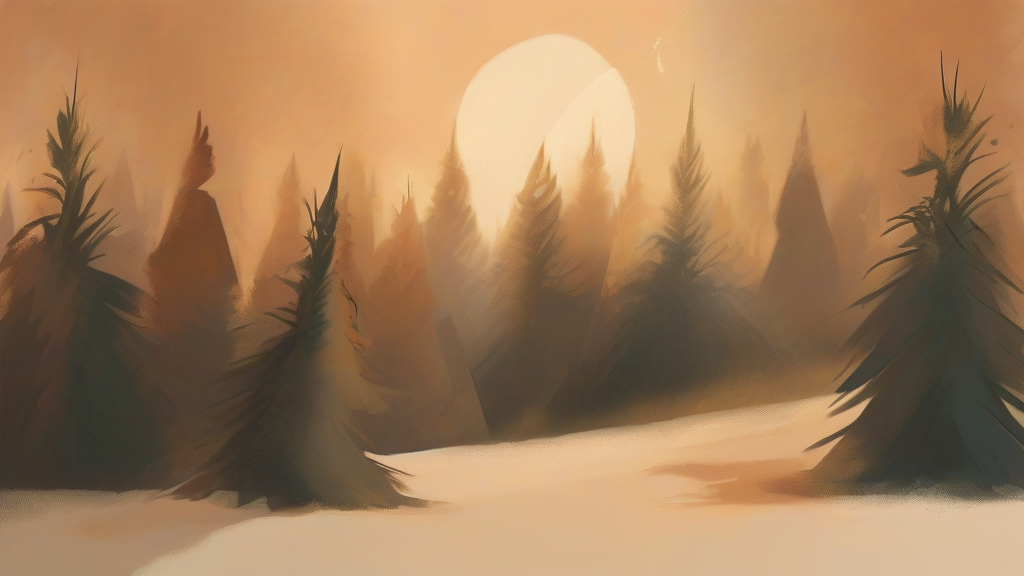
Firry is an uncommon English adjective describing places that consist of, are covered with, or abound in fir trees, as well as things made from fir wood. It belongs to the family of landscape-describing words — like "pinewoods" or "heathy" — that let writers characterise terrain by its dominant vegetation. A hillside described as firry conjures dense stands of dark, conical conifers, cool shade, and the crisp, resinous scent of needles and sap; applied to timber or interiors, it suggests pale, knotty wood with an unmistakable evergreen fragrance. The word is rare today, surfacing mainly in literary nature writing, travel prose, and poetry of the countryside rather than in casual speech, so using it signals an attentive, almost painterly eye for scenery. Its connotations are wholly pleasant: wildness, freshness, alpine air, and rustic calm. For readers and writers who enjoy precise vocabulary for landscape, firry offers a compact way to say "full of firs" without resorting to a clause of description.
adjectiveComposed of, covered with, or abounding in fir trees; also, made of or relating to the wood of the fir.
- Covered with or consisting of fir trees (of land, hillsides, woods)
- Made of or relating to fir wood
"They walked through the firry slopes above the valley, breathing in the sharp scent of resin."
"The trail climbed through firry uplands where the light fell green and cool."
"The cabin's firry beams gave the room a warm, resinous aroma."
Firry is what a forest smells like before you see it — a word for landscapes written entirely in evergreen.
Reviewed by Deb Chak, Editor. AI-assisted content curated by RJS Tech Solutions LLP.
Etymology of firry
Firry derives simply from "fir," the name of the coniferous tree of the genus Abies, combined with the suffix "-y" used to form adjectives meaning "abounding in" or "characterised by." The noun "fir" came into Middle English from Old Norse "fyr(a)" (or possibly Old English "furh"), reflecting Scandinavian influence on English woodland vocabulary. The derivative adjective arose in English usage to describe fir-covered landscapes, paralleling formations such as "oaky" or "pinewooded," though it never achieved wide currency.
How firry is actually used
A rare, chiefly literary word; it appears mostly in descriptive nature writing and older poetry rather than everyday conversation. It carries pleasantly rustic, aromatic connotations.
Easily confused with firry
"Furry" means covered with fur or pertaining to fur (or the anthropomorphic fandom), whereas "firry" refers to fir trees or their wood.