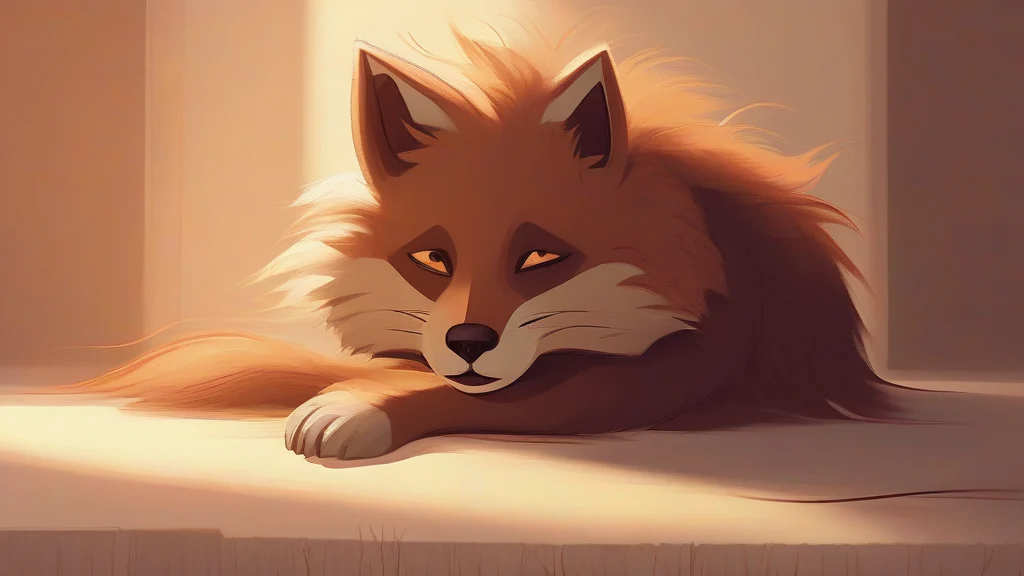
What does furry mean?
'Furry' is primarily an adjective describing something covered in fur or possessing a soft, fur-like texture. It is most often applied to animals — a furry cat, a furry caterpillar — but also extends to fabrics and objects that feel plush or downy. In everyday language it carries warm, affectionate connotations, appearing frequently in phrases like 'furry friend' when people describe beloved pets. Since the late twentieth century, the word has also taken on a second life as a noun within popular culture: a 'furry' is a member of a creative subculture centred on anthropomorphic animal characters — animals given human traits, names, and personalities — often represented through original artwork, costumes known as fursuits, and online communities. Both senses are widely used today, though they rarely overlap in practice. The adjective remains a simple descriptive term useful for anyone writing about animals or textures, while the noun reflects how a centuries-old word can acquire an entirely new cultural meaning.
Covered with fur, or having a soft texture like fur.
"The rabbit's furry paws padded silently across the floor."
Neutral to affectionate in tone.
A person who is a fan of anthropomorphic animal characters, or such a character itself.
"Hundreds of furries gathered at the convention centre over the weekend."
This noun sense dates from 1980s fan culture and should not be confused with the adjective's meaning.
The word 'furry' has come to name one of the internet's most creative subcultures — a community built entirely around animal characters with human personalities.
Reviewed by Deb Chak, Editor. AI-assisted content curated by RJS Tech Solutions LLP.
Etymology of furry
'Furry' derives from 'fur', the fine, soft hair of animals, a word whose origins trace back through medieval trade terminology into Old French 'fourrier' ('feeder of horses', later 'one who lines garments with fur'), itself from Latin 'fodere' meaning 'to dig' via Germanic influence on Romance vocabulary. The adjective form emerged in English around the early seventeenth century as naturalists and writers described animal coats. Its transformation into a noun naming a modern fan community occurred only in the 1980s, when science-fiction convention attendees interested in anthropomorphic animal characters began calling themselves 'furry fans'.
How furry is actually used
As an adjective, 'furry' is neutral and affectionate in tone, common in descriptions of pets. As a noun referring to fandom members, it is well-established within the community and increasingly understood by the general public; some outside the fandom use it mockingly, so context matters.
Easily confused with furry
Furry specifically implies fur from an animal coat, while fuzzy describes any soft, frizzy or downy texture, including non-animal ones like peach skin.