
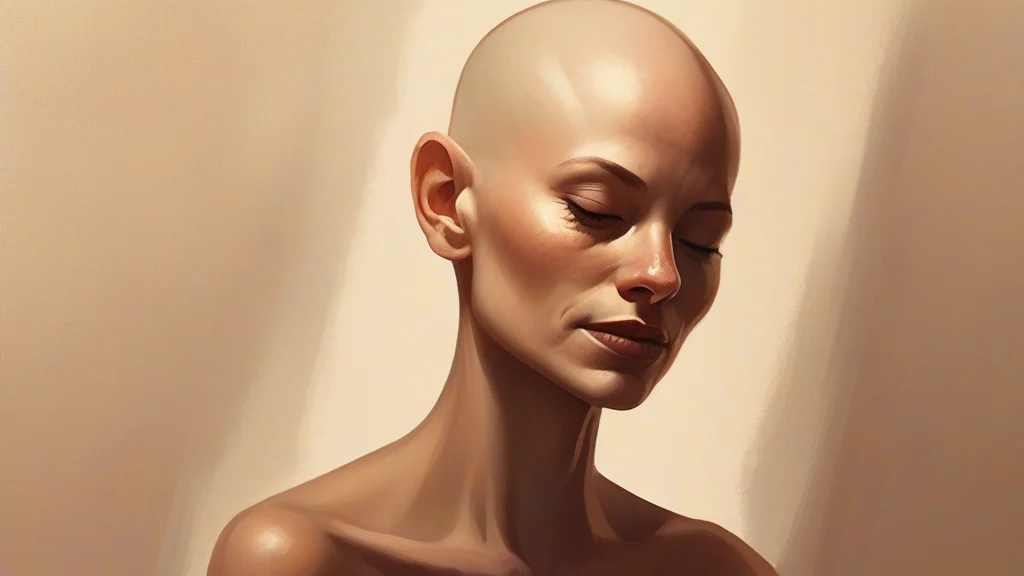
What does hairless mean?
Hairless is an adjective meaning that something has no hair. It can describe a naturally hairless animal, a person or body part that has lost its hair, or an object or surface with no visible hair. The word is especially common in descriptions of animals such as hairless dog breeds and in discussions of skin conditions or hair removal. It is broader than bald, which normally refers specifically to the head, and it may carry a humorous or affectionate tone when applied to people. In technical and biological writing, related terms such as glabrous and depilated may be preferred. Hairless is also useful when the absence of hair itself is significant, as in distinguishing a naturally hairless species from a furry one or describing a characteristic surface or condition.
adjectiveHaving no hair; lacking hair, whether naturally, because of removal, or because of a particular condition.
- Having no hair or lacking a natural covering of hair.
"The hairless dog curled up beside the radiator."
"The hairless dog looked up at us expectantly."
"A hairless patch appeared on the animal's back."
A hairless body is not necessarily a bald one: bald describes the head, while hairless can describe skin, animals, or an entire body surface.
Reviewed by Deb Chak, Editor. AI-assisted content curated by RJS Tech Solutions LLP.
Where does hairless come from?
Hairless is formed in English from hair and the suffix -less, meaning “without” or “lacking.” English hair descends from Old English hær, while -less continues the Old English element lēas, meaning “without.” The two components have cognates in other Germanic languages, including German Haar and Dutch haar for “hair,” as well as German haarlos and Dutch kaal for “hairless” or “bald.” The compound developed as a descriptive word within English before becoming common in modern descriptions of people, animals, and surfaces.
Related word forms
How hairless is actually used
The adjective is neutral and can describe people, animals, body parts, and objects. It is often used humorously or affectionately when referring to a person, while technical contexts may prefer terms such as glabrous or depilated.
Easily confused with hairless
Bald specifically describes a lack of hair on the head, whereas hairless can describe a person, animal, body part, or surface more generally.