What does flame mean?
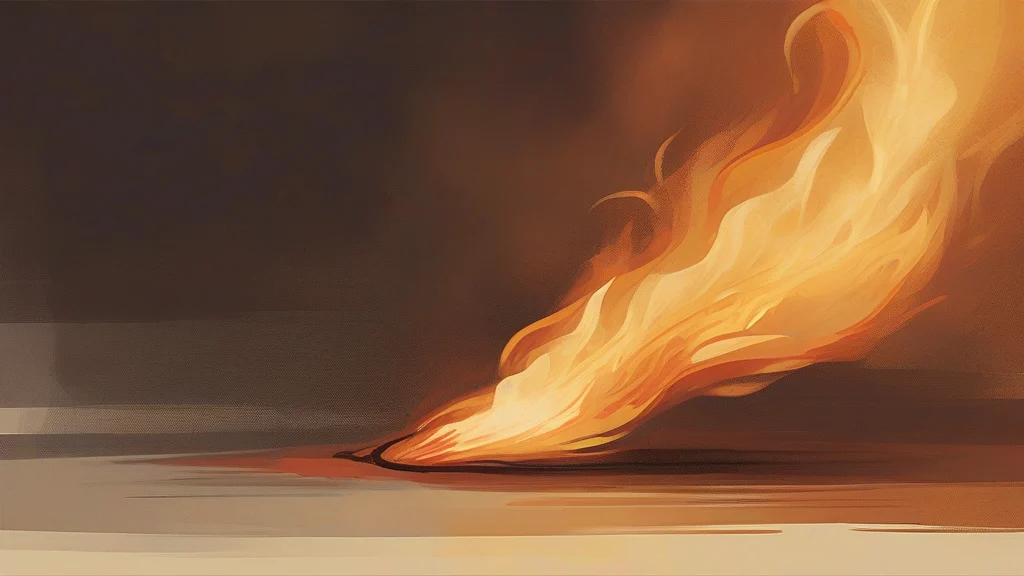
A flame is the visible, luminous region of burning gas produced by combustion — the dancing, orange-yellow tongue of light we associate with candles, matches, campfires, and torches. Scientifically, it marks the zone where fuel and oxygen react intensely enough to emit both heat and light. Beyond physics, the word carries rich figurative weight: because fire suggests warmth and intensity, a 'flame' has long stood for passionate emotion, especially romantic love, so a former lover is known as an old flame. As a verb, flame means to burn brightly or suddenly ignite. In modern digital slang it also names the act of sending angry, abusive messages online. Few words move so naturally between chemistry and feeling, making flame equally at home in a laboratory report, a love letter, and a heated comment thread.
The visible, gaseous part of a fire that emits light and heat; figuratively, a passionate feeling or a former lover.
"The flame of the candle guttered in the draughty hall."
In the figurative romantic sense, most common in expressions like 'an old flame'.
To burn with flames; to ignite suddenly or glow brightly.
"The dry logs flamed up the moment the kindling caught."
Standard plural, used both literally (multiple tongues of fire) and figuratively (passionate feelings, former lovers).
"The building was engulfed in flames within minutes."
The word 'flame' travelled from Latin 'flamma' through Old French before reaching English — and it gave us 'flammable', which is why that odd spelling exists at all.
Reviewed by Deb Chak, Editor. AI-assisted content curated by RJS Tech Solutions LLP.
Etymology of flame
'Flame' comes from Latin flamma, meaning 'a burning blaze', via Old French flambe or flame, entering Middle English in the medieval period. The Latin root also gives us flammable, inflammation, and flamboyant — literally 'flaming' in style — as well as the flamingo, named for its fire-coloured plumage. Romance languages preserve direct cognates such as Italian fiamma and French flamme.
Related word forms
How flame is actually used
As a noun, flame is standard across registers. The romantic sense is figurative but fully established, especially in the phrase 'old flame'. The internet-slang sense of flaming hostile messages is informal and mostly tied to email and forum culture.
Easily confused with flame
A flare is a sudden brief burst of bright light or a signal device, while a flame is the sustained visible body of burning gas.