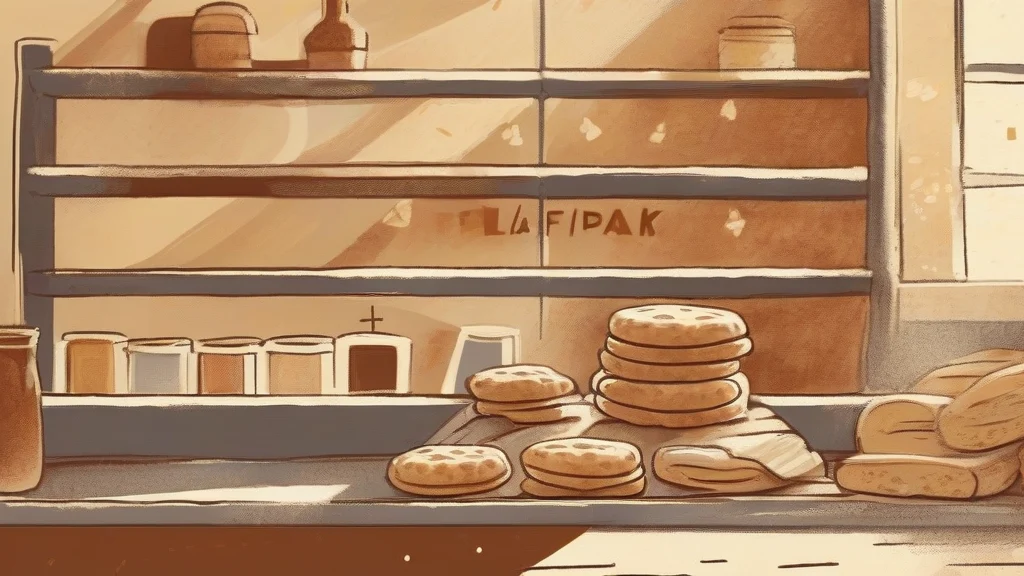
What does flapjack mean?
A flapjack is, depending on where you are, one of two quite different foods. In Britain and Ireland it is a sweet, chewy tray-bake made from rolled oats held together by melted butter, sugar, and — traditionally — golden syrup; baked in a shallow tin and cut into squares, it is a staple of home baking, school lunchboxes, and café counters. In North America, by contrast, 'flapjack' is an older, folksy name for a thick pancake, often served in stacks with butter and maple syrup. The word dates to the early seventeenth century, when it referred to a flat cake turned or flipped in cooking — hence 'flap' plus 'jack', a common term for a generic fellow or thing. That early sense of a flipped flat cake survives in the American usage, while the British oat bar is a much later development. The word's double life makes it a striking example of how regional vocabulary can divide even a single, familiar food name, so speakers are wise to know which flapjack they are promising before they bake.
nounIn British English, a flapjack is a sweet baked bar made from rolled oats bound with melted butter, sugar, and golden syrup. In North America, the word instead means a thick pancake, often cooked on a griddle.
- (British English) A sweet, chewy bar made of rolled oats bound together with butter, sugar, and usually golden syrup, baked in a flat tin and cut into squares or fingers.
- (North American) A thick pancake, typically served stacked with butter and syrup.
"She cut the warm flapjack into squares before the golden syrup had fully set."
"He packed a homemade flapjack in his rucksack for the long hike up the ridge."
"At the diner, she ordered a tall stack of flapjacks dripping with maple syrup."
Regular plural; commonly used because flapjacks are typically made and served in batches or stacks.
"She wrapped the leftover flapjacks in foil for the journey home."
The same word means a chewy oaty tray-bake in Britain and a fluffy griddle pancake in America — order one abroad and you may get a very different breakfast than you bargained for.
Reviewed by Deb Chak, Editor. AI-assisted content curated by RJS Tech Solutions LLP.
Etymology of flapjack
Flapjack first appears in English in the early seventeenth century, formed from 'flap' — referring to flipping or turning a flat cake while cooking — combined with 'jack', a suffix long used to form names for ordinary objects or generic fellows. Its original meaning was a small flat cake or pancake turned in the pan, a sense preserved today in North American usage. The British sense of a baked oat-and-syrup bar developed much later, in the twentieth century, and became the dominant meaning in Britain and Ireland.
How flapjack is actually used
The word carries sharply different meanings on either side of the Atlantic, so context or region matters when using it. In Britain, 'flapjack' almost always denotes the oat bar, which has a homely, tea-time connotation; in the US and Canada it is an informal, somewhat old-fashioned name for a pancake. The word is casual and domestic in register in both regions rather than formal.
Easily confused with flapjack
In Britain, pancakes and flapjacks are different foods — a pancake is a thin batter fried in a pan, while a flapjack is a baked oat bar; in North America, however, 'flapjack' itself refers to the pancake.