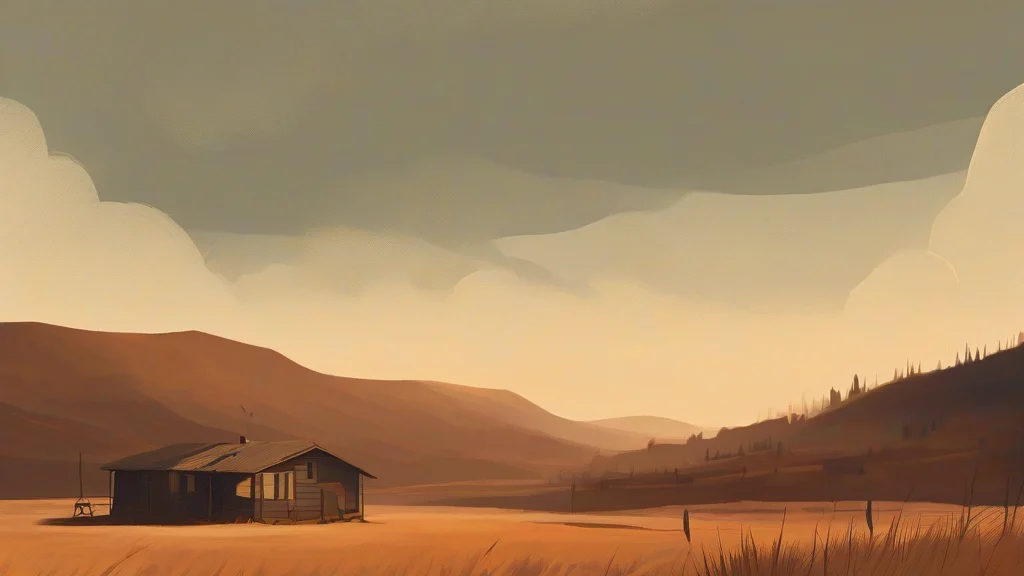
What does flatlander mean?
A flatlander is a person who lives in, or hails from, a flat expanse of country — prairies, plains, coastal lowlands — rather than hilly or mountainous terrain. The word is informal, and its tone depends heavily on who is using it: in mountainous parts of the United States and Britain, locals deploy it with wry affection or mild derision to describe tourists and transplants who struggle with steep grades, thin air, or winding roads, so a Vermonter or Coloradan might jokingly dismiss a newcomer from Illinois as a flatlander. Beyond geography, the term has acquired a curious intellectual afterlife: Edwin Abbott's 1884 satirical novella "Flatland", which imagines a two-dimensional world, led mathematicians and physicists to use "flatlander" for a hypothetical being confined to a plane, a device still used in dimensional thought experiments. The word derives simply from "flat" plus the agentive suffix "-er", its opposite being figures like the highlander or mountaineer. It endures because it compresses landscape into identity: where you live, it implies, shapes what you find ordinary.
nounA person who lives in or comes from a flat, level region of country — especially plains or lowlands — as opposed to mountainous or hilly terrain.
- A person who lives in or comes from flat, low-lying terrain such as plains, prairies, or coastal lowlands, often used (sometimes teasingly) by people from hillier regions.
- In mathematics and science fiction contexts influenced by Edwin Abbott's Flatland, a hypothetical being confined to a two-dimensional plane.
"To a seasoned flatlander from Kansas, the switchback roads of the Alps were utterly bewildering."
"Vermonters can spot a flatlander instantly by the out-of-state plates and the panic on any road steeper than a ramp."
"In the novella's tradition, physicists sometimes model a flatlander to explore how a two-dimensional being would perceive a three-dimensional world."
Standard plural; the term is typically applied collectively to tourists or newcomers, so the plural is very common in use.
"Every ski season, the resort town fills up with flatlanders eager to see snow for the first time."
The word got an unexpected second life thanks to a Victorian mathematician: Edwin Abbott's 1884 novella "Flatland" imagined a society of two-dimensional beings — making "flatlander" a term physicists and math fans still use today for creatures living in fewer dimensions than we do.
Reviewed by Deb Chak, Editor. AI-assisted content curated by RJS Tech Solutions LLP.
Etymology of flatlander
The word is formed transparently in English from "flat" — a Germanic root meaning level or smooth ground — combined with the agentive suffix "-er", denoting a person associated with something, on the same pattern as "islander" and "mainlander". It arose as a colloquial regional term, most strongly associated with rural and mountain communities describing outsiders from level country, and its exact first appearance is not pinned down precisely enough to date confidently. It shares its root with other English terrain terms built on "land", such as "lowland", "highland", and "mainland".
How flatlander is actually used
The term is informal and often carries a mildly pejorative or affectionate teasing tone when used by residents of mountainous areas (parts of New England, Appalachia, and the Rockies) about visitors or newcomers from flatter places. In scientific and mathematical writing, it is used neutrally as a thought-experiment label.
Easily confused with flatlander
"Flatland" refers to the flat terrain itself (or Edwin Abbott's 1884 novella of that name), while "flatlander" refers to a person who inhabits such terrain.