What does florin mean?
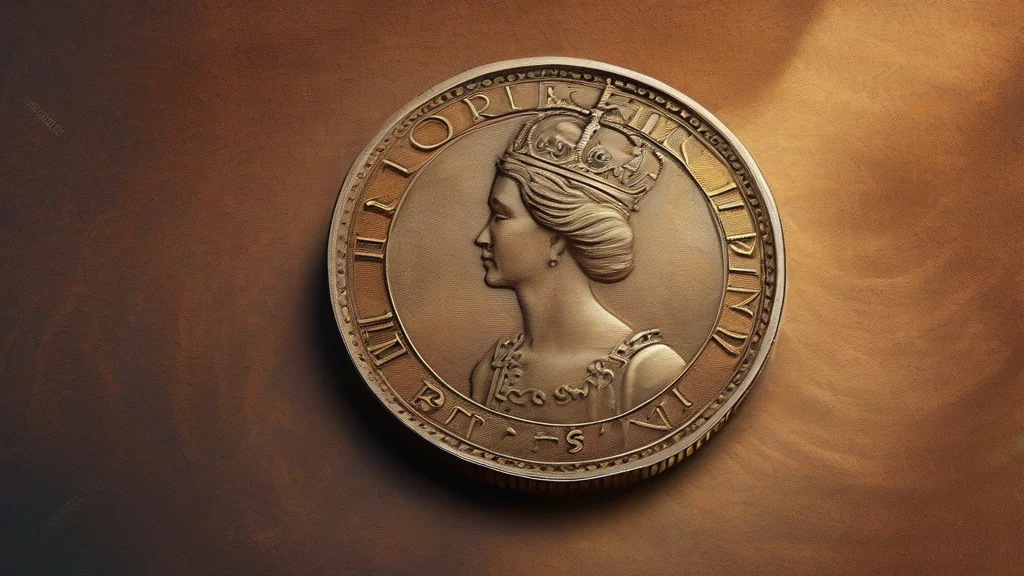
The florin is a noun denoting several distinct currencies united by a single name. Most familiarly, it names the British coin worth two shillings — one tenth of a pound — introduced in 1849 as a deliberate stepping stone toward decimal currency, a reform not completed until 1971. The name originally derives from the gold florin first struck in Florence in 1252, one of the most trusted coins of medieval Europe, whose fame led states from Hungary to the Netherlands to strike coins under the same name; the Dutch guilder was long called a florin. Today the name survives as the official currency of Aruba, where the Aruban florin circulates alongside its historical associations. For collectors, the term evokes numismatic history; for travellers, a practical unit of exchange; and for general readers, a reminder of how a single Tuscan city's coinage shaped European monetary vocabulary for seven centuries.
A former British silver coin worth two shillings, equal to one tenth of a pound sterling, issued from 1849 until decimalisation.
"Grandmother still had a jar of florins left over from her working days."
Often encountered by collectors and historians rather than in circulation.
A gold coin first minted in Florence in 1252, or any of the various European coins modelled on it.
"Merchants across Europe priced their goods in ducats and florins during the late Middle Ages."
This sense appears mainly in historical writing about medieval and Renaissance commerce.
The basic monetary unit of Aruba, subdivided into 100 cents.
"The hotel quoted its rates in Aruban florins."
The standard plural applies across all senses, whether counting British coins or Aruban currency.
"He exchanged his remaining pounds for florins at the airport."
Britain introduced the florin in 1849 as a first step toward decimal currency — a transition it finally completed 122 years later, in 1971.
Reviewed by Deb Chak, Editor. AI-assisted content curated by RJS Tech Solutions LLP.
Etymology of florin
The word florin takes its name from the Latin Florentinus, 'of Florence', after the fiorino d'oro (gold florin) first minted in that Tuscan city in 1252. So reliable was the coin's weight and gold content that it became the standard currency of European trade, and many states issued imitations bearing the same name, including the Hungarian florin and the Dutch florin (better known as the guilder). Britain adopted the name in 1849 for its new two-shilling silver coin, explicitly intended as a tenth-of-a-pound unit to ease the eventual shift to decimal money.
How florin is actually used
In everyday modern usage, 'florin' most often surfaces in historical, numismatic, or travel contexts rather than daily transactions. In Britain it carries nostalgic connotations of the pre-decimal money system of pounds, shillings, and pence. When referring to Aruban currency, it is usually specified as the 'Aruban florin' to distinguish it from the historical European coins of the same name.
Easily confused with florin
'Florid' is an adjective meaning excessively ornate or ruddy in complexion, whereas 'florin' is a noun naming a coin or currency; the words merely share a similar opening.