
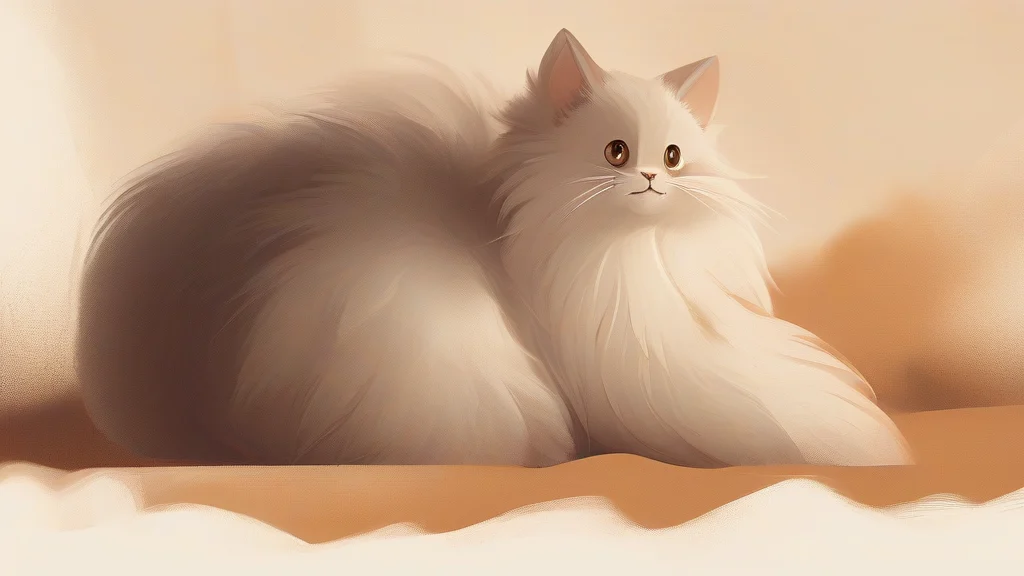
What does fluffier mean?
'Fluffier' is the comparative form of 'fluffy,' an adjective describing things that are soft, light, and airy in texture. When something is fluffier than another, it possesses more of that downy, voluminous quality — think of towels fresh from the dryer, whipped egg whites folded into pancake batter, a cat's thick winter coat, or clouds drifting across a summer sky. The word carries warm, comforting connotations and appears mostly in casual, domestic contexts: cooking, laundry, pet care, and descriptions of weather or bedding. Because it is inherently a comparison, it typically pairs with an explicit or implied standard ('much fluffier than before'). Its base noun, 'fluff,' refers to light, fuzzy material such as lint or down, giving the whole family of words a tactile, sensory character that has made 'fluffy' and its derivatives enduring favorites in everyday English description.
adjectiveComparative form of the adjective 'fluffy': covered with or consisting of soft, light, airy material or texture to a greater degree than something else.
- Soft, light, or airy in texture to a greater degree; used especially of fabrics, hair, baked goods, and animals.
"The freshly laundered towels felt much fluffier after she switched to the new detergent."
"The cat looked even fluffier after its winter coat grew in."
"Whipping the egg whites separately makes noticeably fluffier pancakes."
'Fluffier' belongs to a tiny club of English adjectives that exist almost solely as comparatives — you'll rarely hear anyone say a blanket is simply 'more fluff.'
Reviewed by Deb Chak, Editor. AI-assisted content curated by RJS Tech Solutions LLP.
Etymology of fluffier
'Fluffier' derives from 'fluffy,' an adjective formed from the noun 'fluff,' which emerged in English around the late eighteenth century and likely arose from imitative or descriptive origins related to light, loose fibrous material. The comparative suffix '-ier' follows the standard English pattern for adjectives ending in '-y.' The word family remains closely tied to notions of softness and airiness across all its forms.
Related word forms
How fluffier is actually used
A comparative adjective, so it requires a basis of comparison — either explicit ('fluffier than') or implicit between two things. Commonly used in informal everyday contexts involving textiles, baked goods, pets, and hair.
Easily confused with fluffier
'Fluffier' describes something soft, light and airy in substance, while 'fuzzier' can describe either a fine hairy surface or, figuratively, something unclear or indistinct.