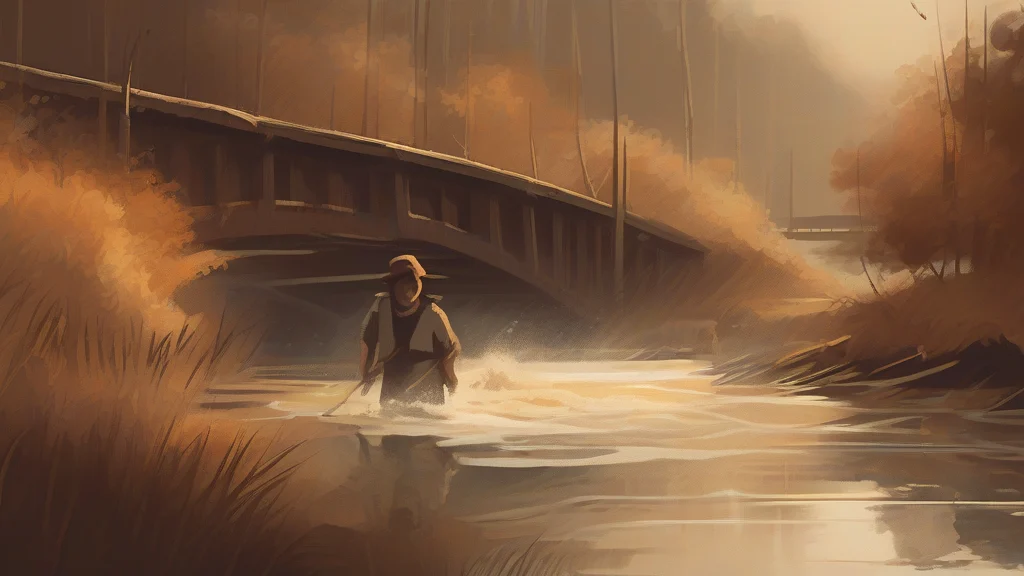
What does forded mean?
"Foreded" is the past tense of the verb "ford," which means to cross a river, stream, or other body of water by wading or driving directly through it at a shallow point, rather than using a bridge, ferry, or boat. The practice is ancient: before bridges were common, travellers, armies, and migrating peoples relied on known fording places, many of which survive today in place-names such as Oxford, originally a spot where oxen could cross the Thames. To say an army "forded the river" or that pioneers "forded the creek" evokes a practical, often hazardous act of determination — crossing against the push of the current with carts, supplies, or wounded comrades in tow. The word carries a distinctly historical and adventurous flavour, appearing chiefly in narrative, military, and travel writing. Its base noun "ford" names both the shallow crossing itself and the act of crossing it.
verbPast tense and past participle of the verb "ford": to cross a river or stream by walking or driving through the water at a shallow point rather than using a bridge or boat.
- To have crossed a river or stream on foot or by vehicle through shallow water, rather than by bridge, ferry, or boat.
"The pioneers forded the river at its narrowest point, their wagons creaking through the knee-deep current."
"The cavalry forded the swollen river just before dawn."
"We forded the creek carefully, feeling for stable stones beneath our boots."
Before bridges, armies lived or died by this verb — Julius Caesar's legions and American wagon trains alike forded rivers at exactly the spots place-names like Oxford still record today.
Reviewed by Deb Chak, Editor. AI-assisted content curated by RJS Tech Solutions LLP.
Etymology of forded
The underlying word "ford" derives from Old English "ford," meaning a shallow place for crossing water, which traces back to Proto-Germanic *furdu-. It shares this Germanic root with the Old Norse cognate that gave English the words "firth" and ultimately "fjord," all naming sea- or river-crossings and inlets. The form "forded" is simply the ordinary past tense of the verb sense of "ford," which developed from the noun in early usage.
Related word forms
How forded is actually used
"Forded" is exclusively a verb form and appears mostly in narrative, historical, travel, and military writing. It carries a slightly old-fashioned, adventurous connotation, evoking pre-bridge travel. It should not be used as a noun.
Easily confused with forded
"Ford" is the base word — a shallow river crossing point or the act of crossing it — while "forded" is simply its past-tense form describing that a crossing has already been made.