What does forgeman mean?
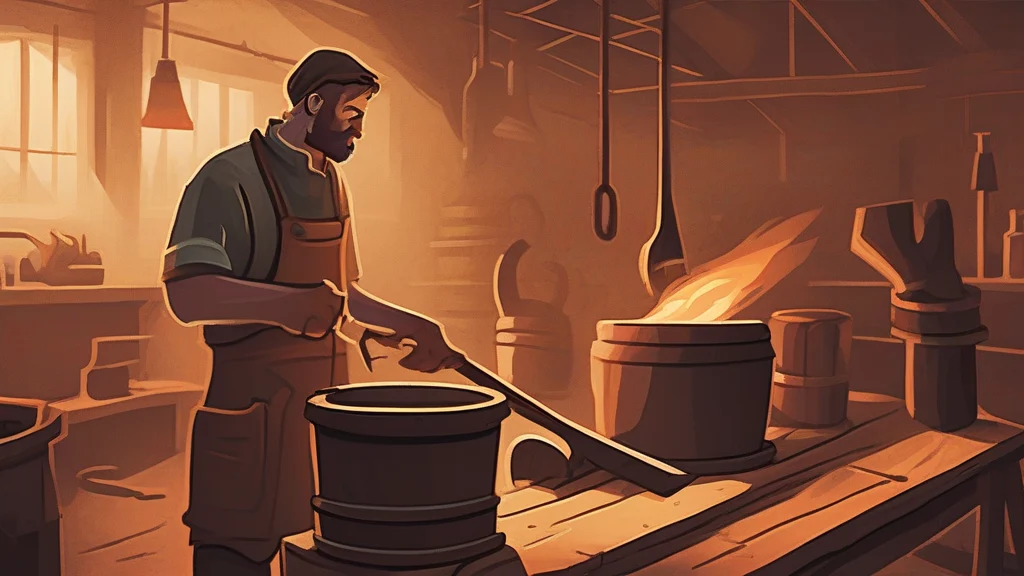
A forgeman is a craftsman who works metal at a forge, heating iron or steel in a furnace until it glows and then shaping it with hammer and anvil. The term belongs to the world of the smithy and the industrial forge, describing the skilled hands behind horseshoes, tools, chains, ship fittings, and structural ironwork. Historically common in Britain and America during the age of blacksmithing and heavy industry, the word has faded as mechanised forging replaced manual labour, surviving today mainly in historical accounts, heritage trades, and regional speech. The forgeman carries connotations of strength, craft, and tradition — a figure associated with sparks, sweat, and hard-won expertise, judging heat by colour and striking with precision. Though largely obsolete as a job title, it remains a useful and evocative word for describing traditional metalworking and the people who practised it.
nounA forgeman is a man who works at a forge, shaping metal by heating and hammering it; a worker in an ironworks or smithy, especially one skilled in forging.
- A man who works at a forge, shaping heated metal by hammering; a skilled metalworker in a smithy or ironworks.
"The forgeman hammered the glowing iron bar into shape on the anvil."
"The old forgeman could judge the temperature of the iron by its colour alone."
"As a young forgeman in the shipyard, he spent his days swinging a heavy sledge beside the furnace."
As a compound ending in '-man', the word takes the plural '-men', consistent with similar occupational compounds such as 'craftsmen' and 'oarsmen'.
"Three forgemen worked in shifts to keep the great forge hammer running day and night."
While 'forgery' evokes counterfeit paintings and fake signatures, the forgeman's forge is where honest fire and hammer turn raw iron into tools, rails, and anchors — the two meanings of 'forge' couldn't be further apart.
Reviewed by Deb Chak, Editor. AI-assisted content curated by RJS Tech Solutions LLP.
Etymology of forgeman
"Forgeman" derives from "forge," the hearth or furnace where metal is heated and shaped, combined with the suffix "-man" denoting a male worker of that trade. The word "forge" itself comes from Old French "forge," which traces back through Latin "fabrica" (a workshop), ultimately rooted in Latin "faber," meaning a craftsman or smith. This same Latin root gives English related words such as "fabricate" and connects the term to the broader family of craft and making words.
Related word forms
How forgeman is actually used
"Forgeman" is a somewhat dated occupational term, now largely superseded by titles like "forging operator" or "smith" in industrial contexts. It appears chiefly in historical writing, regional usage, and descriptions of traditional trades. The standard plural is "forgemen."
Easily confused with forgeman
A 'forger' most commonly means someone who counterfeits documents or money (or, in one sense, a metal forger), whereas a 'forgeman' specifically denotes a workman employed in forging metal at a forge.