What does forging mean?
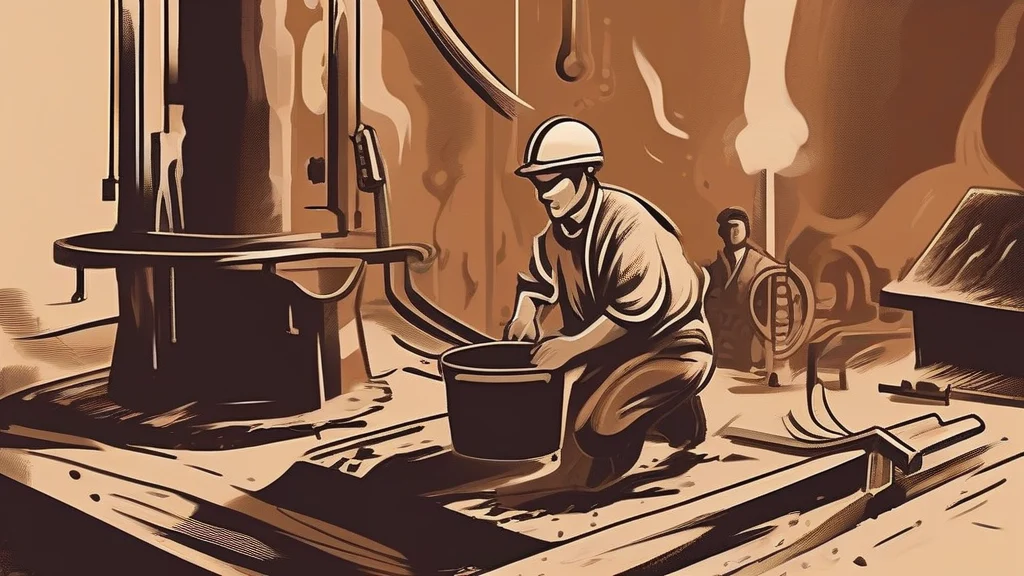
Forging is the process of shaping metal, usually iron or steel, by heating it until malleable and then hammering or pressing it into a desired form. A cornerstone of blacksmithing and modern manufacturing alike, forging produces strong components because the metal's internal grain structure aligns with its shape. The word also thrives in metaphor: people speak of forging alliances, forging a career, or forging national identity, always implying patient, effortful creation from raw material. A darker sense exists too — forging can mean fraudulently imitating a signature, document, or work of art, which is why 'forgery' is a familiar word in courtrooms. This duality makes 'forging' unusually rich: the same word describes both honest craftsmanship at the anvil and deception on paper. Whether encountered in a factory, a history book about empires 'forging' trade routes, or a news story about counterfeit cheques, the word consistently signals transformation through deliberate human effort.
The act or process of shaping metal by heating and hammering; also, figuratively, the act of establishing or creating something through sustained effort.
"The forging of the ship's anchor took place in the yard's oldest workshop."
In industrial contexts this is often called 'forging' as distinct from casting or machining.
The act of fraudulently imitating a signature, document, or object.
"He was arrested for the forging of his employer's signature on company cheques."
Every time you 'forge ahead,' you're echoing the image of a blacksmith hammering stubborn metal into shape.
Reviewed by Deb Chak, Editor. AI-assisted content curated by RJS Tech Solutions LLP.
Etymology of forging
The word traces back through Old French 'forger' to Latin 'fabricare', meaning to fashion or build, itself rooted in 'faber', a craftsman or smith. English adopted 'forge' as both a noun for the smithy furnace and a verb for shaping hot metal, so 'forging' naturally named the resulting process. Because the same verb came to mean creating something by determined effort, 'forging' extended figuratively to relationships and institutions, and later acquired its negative sense of counterfeiting. Cognates and relatives include 'fabricate' and words built on the same craftsman root, while the idiomatic phrase 'forging ahead' preserves the image of relentless hammer blows.
Related word forms
How forging is actually used
As a noun, 'forging' most often appears in technical and industrial contexts relating to metalworking; its figurative use ('the forging of a national identity') carries a positive connotation of effortful creation. When associated with documents or signatures, it acquires a strongly negative, criminal sense and is closely related to the legal term 'forgery.' The verb phrase 'forging ahead' is idiomatic and means to advance steadily despite obstacles.
Easily confused with forging
The noun 'forge' refers to the furnace or workshop where metal is heated and shaped, while 'forging' denotes the process itself or, figuratively, the deliberate creation or falsification of something.