
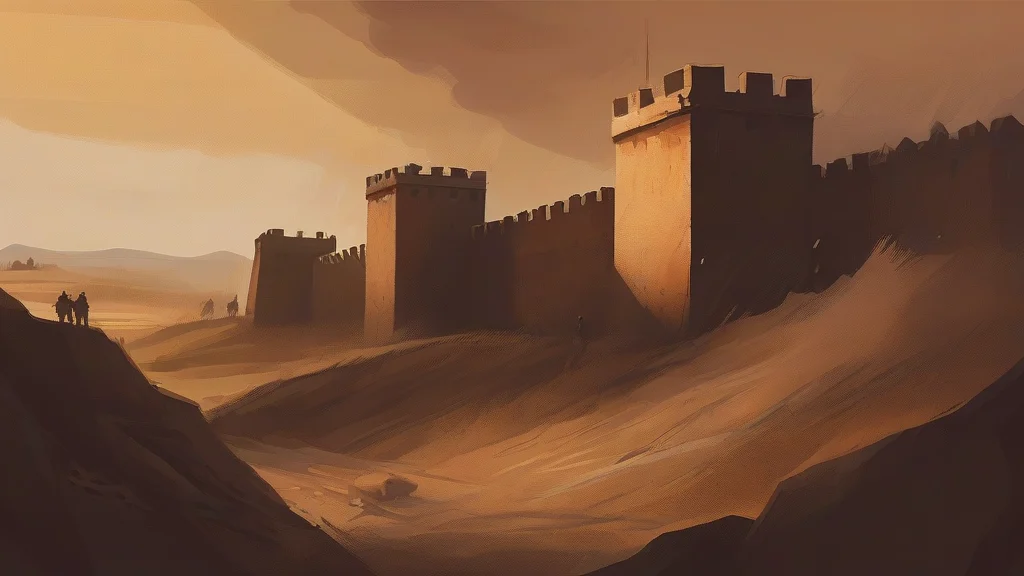
What does fortification mean?
Fortification most often refers to defensive works—such as walls, towers, ditches, and fortified buildings—constructed to protect a settlement, installation, or military position. It can also name the broader process of making a place or position harder to attack. The word is usually formal and carries a clear association with military defense, siege warfare, and historical architecture, although modern planning and security work also use it in this sense. A specialized but important meaning is the addition of vitamins, minerals, or other nutrients to food, as in the fortification of flour with iron. Thus, fortification can designate both the means of protection and the act of strengthening what is already in place. As a countable noun, plural “fortifications” commonly refers to a system or collection of defensive structures. The word is useful because it connects a physical barrier with the broader idea of reinforcement, while its food-related sense shows how the same concept of making something stronger can apply outside military history.
nounDefensive works or structures built to protect a place, especially in a military context; also, the process of making a place, structure, or position more secure against attack.
- Defensive structures or works built to protect a place or military position.
- The act or process of making a place, structure, or position more secure against attack.
- The deliberate addition of vitamins, minerals, or other nutrients to food to improve its nutritional value.
"The medieval fortification was designed to withstand prolonged sieges."
"The engineers reinforced the fortification with deeper trenches and stronger ramparts."
"Mandatory food fortification has helped reduce vitamin deficiencies in many populations."
Usually countable when referring to defensive structures or a system of defenses. It is commonly uncountable in expressions such as “the fortification of the walls” and in the technical sense of food fortification.
"Several military fortifications were established along the coast."
Fortification has a double life: it names both the defenses protecting a settlement and the process of adding valuable nutrients to food.
Reviewed by Deb Chak, Editor. AI-assisted content curated by RJS Tech Solutions LLP.
Where does fortification come from?
The English word entered through Old French fortification, which continued the Latin noun fortificātiō, meaning an act of fortifying or the means of defense. Latin fortificāre, “to strengthen” or “fortify,” combined fortis, “strong,” with facere, “to make.” Related English words include fortify, fortress, fortitude, and fort, all reflecting the same tradition of strength and protection.
How fortification is actually used
The word is formal and especially common in military, historical, architectural, and technical contexts. When referring to defensive structures, it is normally countable; it can be uncountable when referring to the general process of strengthening something.
Easily confused with fortification
Fortitude means courage or strength of character, whereas fortification means defensive structures or the process of strengthening something against attack.