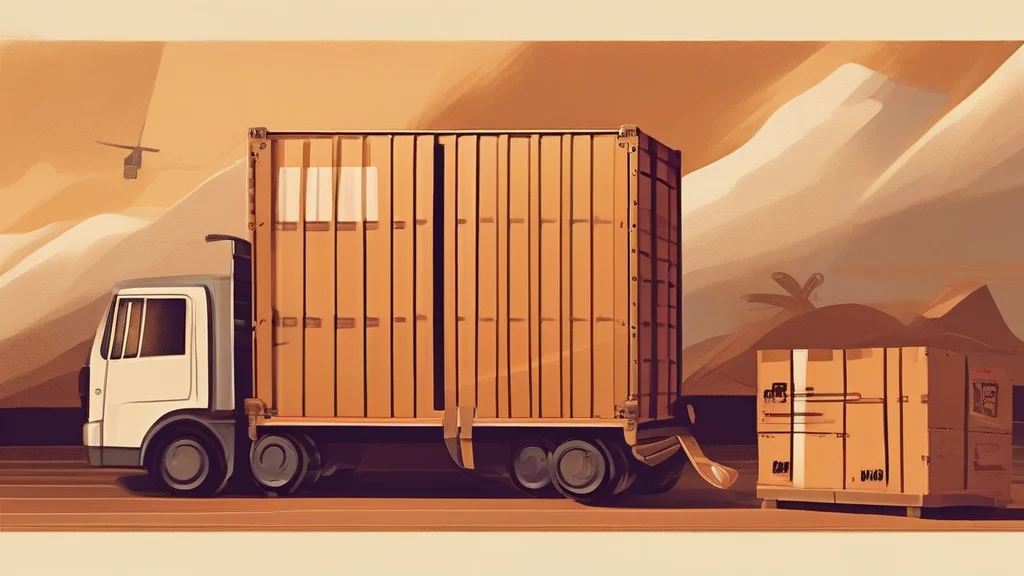
What does forwarder mean?
A forwarder is an intermediary that sends things onward rather than being their origin or final destination. Its dominant modern use is in international trade, where a freight forwarder acts as an agent for exporters and importers: booking space with carriers, consolidating shipments, arranging insurance, and handling the dense web of customs documentation required when goods cross borders. Crucially, a forwarder does not usually own ships, planes, or trucks; its value lies in expertise and coordination, which has made it one of the most important yet least visible figures in global logistics. Beyond commerce, the word applies to anyone or anything that passes items along — a postal forwarder redirecting mail, or a software forwarder relaying emails and network traffic to another address. Derived simply from 'forward', meaning to send on toward a destination, the word carries a neutral, functional tone and appears mainly in professional, logistics, and technical contexts.
nounA person or company that forwards goods, messages, or mail on to a destination; in commerce, especially an intermediary (freight forwarder) that arranges the shipment and documentation of goods on behalf of shippers.
- A freight forwarder: a company that organizes shipping, customs, and transport of goods on behalf of clients.
- More generally, any person or system (including software) that passes mail, messages, or data along to another recipient.
- A forwarding agent in postal contexts: one who arranges for mail or parcels to be redirected.
"The freight forwarder handled customs paperwork and booked the container from Shanghai to Rotterdam."
"Our forwarder consolidated three smaller shipments into one full container to cut costs."
"The email forwarder silently relayed every message sent to support@ to her personal inbox."
Regular plural; commonly seen in trade writing as 'freight forwarders'.
"Most small exporters work with one of the large international forwarders."
Behind almost every parcel that crosses a border stands a forwarder — the invisible middleman of global trade who never owns the cargo but moves nearly all of it.
Reviewed by Deb Chak, Editor. AI-assisted content curated by RJS Tech Solutions LLP.
Etymology of forwarder
'Forwarder' derives straightforwardly from the verb 'forward', itself formed from Old English 'foreweard', combining 'fore-' (before, in front) with '-weard' (-ward, indicating direction), originally meaning 'toward the front' or 'earlier'. By the sixteenth century 'forward' had come to mean sending something on to a destination, and the agent noun 'forwarder' followed naturally, denoting a person who forwards goods or correspondence. It shares this Germanic root with words such as 'forthcoming', 'further', and other '-ward' formations.
Related word forms
How forwarder is actually used
'Forwarder' is chiefly a commercial and technical term. In logistics it almost always means 'freight forwarder', a neutral term used worldwide in trade documents. The computing sense (a forwarding server or service) is common in technical registers but rarely used informally.
Easily confused with forwarder
'Foreword' is an introductory passage at the front of a book, while 'forwarder' is an agent that sends things onward.